
Get Exclusive App Deals
Kyoto Station Area











Top 10 Must-Do Experiences and Attractions in Kyoto Station Area


![[Up to 500 yen off] VIE presents ZEN NIGHT Kyoto Tofuku-ji Temple Premium Nighttime Viewing Admission Ticket (Kyoto, Event)](https://image.kkday.com/image/get/c_fill%2Ch_153%2Cq_55%2Ct_webp%2Cw_272/s1.kkday.com/product_183518/20260701012824_02Zo3/jpg)
![[JR PASS] Kansai WIDE Area Excursion Pass E-Ticket](https://image.kkday.com/image/get/c_fill%2Ch_153%2Cq_55%2Ct_webp%2Cw_272/s1.kkday.com/product_119079/20210428020022_bJY2V/jpg)
![[Guaranteed Departure for Solo Traveler] Kyoto and Nara Day Tour | Fushimi Inari Shrine, Arashiyama, and Nara Park | Upgrade to Kuroge Wagyu "Kobe Beef" Shabu-Shabu Lunch (Pick-Up in Osaka and Kyoto)](https://image.kkday.com/image/get/c_fill%2Ch_153%2Cq_55%2Ct_webp%2Cw_272/s1.kkday.com/product_scm_12865/20260407012929_vgad6/jpg)

![[Guaranteed Departure for Solo Traveler] Kyoto & Nara Day Tour | Arashiyama, Fushimi Inari Taisha, Kinkaku-ji, and Nara Park | Optional Upgrade to Wagyu “Kobe Beef” Shabu-Shabu Lunch (Departing from Osaka or Kyoto)](https://image.kkday.com/image/get/c_fill%2Ch_153%2Cq_55%2Ct_webp%2Cw_272/s1.kkday.com/product_scm_12102/20260508093822_IDHNY/jpg)

Kyoto Station Area Trending place to visit

Latest launches and promotions in Kyoto Station Area
![The annual Kamiari Festival | Three limited-time experiences! Izumo Taisha Shrine, Adachi Museum of Art Autumn Special Exhibition, and Yuushien Garden Autumn Leaves Illumination - 2-day tour [Departing from Osaka, Kyoto, or Kobe]](https://image.kkday.com/image/get/c_fill%2Ch_153%2Cq_55%2Ct_webp%2Cw_272/s1.kkday.com/product_scm_23586/20260625023054_azUcx/jpg)

![Enjoy a full course meal featuring spiny lobster | Wakayama Day Trip Bus Tour [Departing from Osaka (Umeda/Namba) and Kyoto]](https://image.kkday.com/image/get/c_fill%2Ch_153%2Cq_55%2Ct_webp%2Cw_272/s1.kkday.com/product_scm_23759/20260618100434_IPTaU/jpg)
![Fireworks Viewing & Dinner Bus Tour | Wakayama Marina City "Starlight Illusion 2026" [Departing from Osaka (Umeda/Namba) and Kyoto]](https://image.kkday.com/image/get/c_fill%2Ch_153%2Cq_55%2Ct_webp%2Cw_272/s1.kkday.com/product_scm_23602/20260616082412_E8NY5/jpg)



![A 2-day New Year's Day trip to Amanohashidate, one of Japan's three most scenic spots, and Yamashiro Onsen, a famous hot spring resort with a history of approximately 1300 years. [Departing from Osaka (Umeda) or Kyoto]](https://image.kkday.com/image/get/c_fill%2Ch_153%2Cq_55%2Ct_webp%2Cw_272/s1.kkday.com/product_scm_23381/20260611063239_zrpQe/jpg)

Recommended travel destinations near Kyoto Station Area
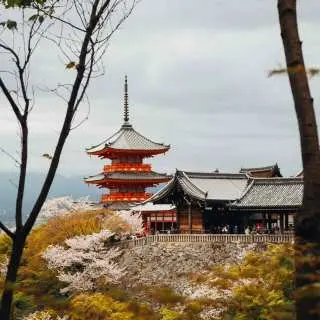
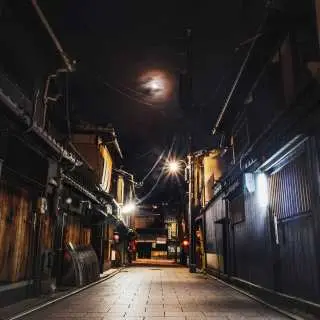
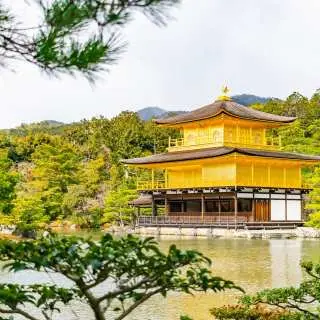
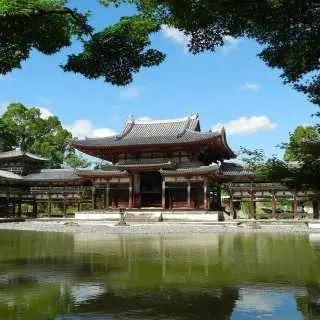
Reviews of Kyoto Station Area activities
![[Up to 500 yen off] VIE presents ZEN NIGHT Kyoto Tofuku-ji Temple Premium Nighttime Viewing Admission Ticket (Kyoto, Event)](https://img.kkday.com/v2/image/get/w_600%2Cc_fit/s1.kkday.com/product_183518/20260520015831_sG3SP/jpg)


Kyoto Station Area Weather, Climate and Best Time to Visit
Data source:Meteostat
Update date:2025-09
Kyoto Station Area year round climate
- Spring (March–May): Average 50–66°F, mild climate but with relatively high rainfall, especially in April. Common activities: Cherry blossom viewing, visiting temples and shrines, Fushimi Inari Shrine. Recommended clothing: Light jacket, long-sleeved shirt, rain gear.
- Summer (June–August): Average 74–85°F, hot and humid with abundant rainfall, especially in June and August. Common activities: Visiting Kiyomizu-dera Temple, Kinkaku-ji Temple, Arashiyama, evening activities. Recommended clothing: Light and breathable clothing, sweat-wicking clothing, sun hat, rain gear.
- Autumn (September–November): Average 66–80°F, comfortable and pleasant with gradually decreasing rainfall. Common activities: Maple leaf viewing, strolling through Kyoto, experiencing the tea ceremony. Recommended clothing: Light jacket, long-sleeved shirt.
- Winter (December–February): Average 41–44°F, cold and dry with low rainfall. Common activities: Experiencing onsen (hot springs), visiting indoor attractions. Recommended clothing: Warm coat, sweater, scarf, gloves.
Kyoto Station Area climatological average
Annual average temperature: approx. 62.6°F / Annual rainfall: approx. 1656 mm / Summer humidity: 70%–80% / Rainiest month: August
Kyoto Station Area monthly average temperature and precipitation
Month
Air temperature (°F)
Precipitation (mm)
January
41.2°F
47.4
February
43°F
72.5
March
50.9°F
131.3
April
61.5°F
182.2
May
66.7°F
199.8
June
74.7°F
248.8
July
84°F
176
August
85.1°F
254.7
September
80.8°F
127.3
October
66.4°F
105.2
November
57°F
91.9
December
45°F
19.2
Kyoto Station Area weather for the next seven days
7/20
Monday
Partly Cloudy
95.5°F/77.4°F
7/21
Tuesday
Sunny
95.2°F/77.5°F
7/22
Wednesday
Partly Cloudy
96°F/77.7°F
7/23
Thursday
Sunny
98.3°F/75.4°F
7/24
Friday
Sunny
99.5°F/74.4°F
7/25
Saturday
Sunny
96.9°F/77.9°F
7/26
Sunday
Patchy rain nearby
89.2°F/73.9°F


