



Three-day tour from Chengdu to Siguniang Mountain/Bipenggou/Dagu Glacier
- Efficiently connecting three iconic scenic spots in western Sichuan
- Experience a three-dimensional landscape composed of snow-capped mountains, forests, waterfalls, and lakes.
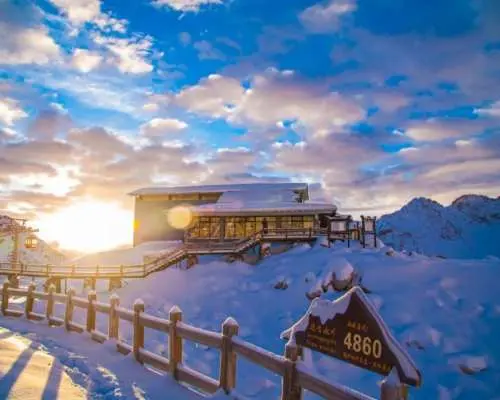
- Take the world's highest-altitude cable car and get up close to the world's lowest-altitude and youngest glacier.
- Enjoy the rustic and unique Tibetan village architecture in Yangronghade and experience the tranquil valley life.
- Includes transportation, accommodation, attraction tickets, and necessary transportation tickets within the attraction. A driver familiar with the local area is provided, offering basic support and eliminating travel hassles.
Product Info
Purchase Notice
- After you place your order, we will contact you promptly via Kkday message to confirm details. Please check your Kkday messages. If you have an email address, please leave it for easier communication.
- Due to network issues, to ensure smooth communication during your trip, we recommend using a mainland China phone number or WeChat.
- Baggage allowance: Each person is limited to one suitcase of 24 inches or smaller. If you have large or excess baggage, please contact us and we can adjust the vehicle arrangement accordingly, which may incur additional charges.
- We will arrange hotels according to your selection. If you wish to specify a hotel or change hotels, please contact us. Additional charges may apply.
Recommended hotels:
Lixian County, Zhui Shan Mi Jing/Lan Yue Xi/Sengge or similar
Blackwater Parkway/Platinum View or similar
- If there are children, only one child aged 6 and under can stay for free per room. If there are more than one child over the age limit, please contact customer service.
- Tickets must be purchased using real names. Please provide the accurate identity information of all travelers.
- Please provide an accurate pick-up and drop-off address. This product covers pick-up and drop-off within 12km of Chengdu Tianfu Square. Outside this area, a charge of RMB 50-100 will be applied depending on the situation.
- This trip will take you to a high-altitude area. Please have a medical check-up before departure to ensure your health condition is suitable for travel. Travelers aged 60 and above must present a hospital medical report. Mild altitude sickness is normal in high-altitude areas; however, the trip may be cancelled at any time if severe altitude sickness occurs. Our company will not be liable for any impact or loss caused by altitude sickness.
- Tourists with serious heart, lung, brain, or respiratory diseases, severe anemia, or other related conditions should not travel and must not conceal their condition. Our company will not be responsible for any consequences arising from travel undertaken by concealing medical conditions.
- If you have any other needs, please contact us.
Reminders
FAQ
Siguniang Mountain is situated in Xiaojin County, Aba Tibetan and Qiang Autonomous Prefecture, Sichuan Province, China. It forms part of the Qionglai Mountains, marking the eastern edge of the Qinghai-Tibet Plateau. This tour combines Siguniang Mountain with Bipenggou and Dagu Glacier, both also located in the Aba Prefecture. These areas are renowned for their stunning high-altitude lakes, dense forests, and impressive glaciated peaks, offering a diverse natural experience in Western Sichuan.
The journey from Chengdu to the Siguniang Mountain area, which serves as a gateway to Siguniang Mountain, Bipenggou, and Dagu Glacier, typically takes approximately 4 to 6 hours by road. Travel time can vary depending on traffic conditions and road situations in the mountainous terrain of Western Sichuan. The tour provides a dedicated vehicle and driver to manage these transitions efficiently, allowing you to comfortably enjoy the scenic drive.
Siguniang Mountain, which translates to "Four Girls Mountain," gets its name from a captivating local legend. According to the tale, four beautiful sisters transformed into the four prominent peaks to safeguard their homeland from malevolent forces. The peaks are individually known as Da Feng (Big Peak), Er Feng (Second Peak), San Feng (Third Peak), and Yaomei Feng (Youngest Peak), with the latter also recognized as Mount Siguniang, being the highest. This legend reflects the deep reverence the local Tibetan and Qiang communities hold for nature and their rich ancestral heritage.
At Siguniang Mountain, the popular valleys like Shuangqiao Valley are generally at altitudes ranging from approximately 3,000 to 3,800 meters. Dagu Glacier features significantly higher elevations, with the highest point accessible by cable car reaching around 4,860 meters. To mitigate altitude sickness, it is advisable to ascend gradually, stay well-hydrated, avoid strenuous activities on the first day, and consider carrying oxygen or consulting a doctor about preventive medication if you are prone to altitude sickness.
The optimal visiting season for Siguniang Mountain, Bipenggou, and Dagu Glacier varies, but autumn (September to November) is generally highly recommended. During this period, the weather is typically clear, offering vibrant fall foliage, comfortable temperatures, and excellent visibility for photography and hiking. Spring (April to May) showcases blooming rhododendrons and majestic snow-capped peaks, while summer (June to August) offers lush greenery, though with a higher chance of rainfall. Winter (December to March) provides breathtaking snowscapes, especially at Dagu Glacier.
This three-day tour package offers comprehensive transportation from Chengdu. It includes a dedicated vehicle and an experienced driver for the entire duration, ensuring seamless and comfortable travel between Siguniang Mountain, Bipenggou, and Dagu Glacier. Additionally, the tour package covers essential in-景区 transportation tickets, such as the use of the world's highest cable car for accessing the Dagu Glacier. This inclusive approach eliminates logistical planning, allowing you to focus on enjoying the natural beauty of each destination.
To fully immerse yourself in the natural beauty of Siguniang Mountain National Park's main attractions, such as Changping Valley or Shuangqiao Valley, a full day is generally recommended for exploring each valley. This allows for leisurely hiking, ample time for photography, and appreciating the diverse landscapes without feeling rushed. The structured three-day tour is designed to provide sufficient time to experience these iconic locations, ensuring a comprehensive visit.
Yes, it is occasionally possible to glimpse the majestic peaks of Siguniang Mountain from Chengdu. This rare sight typically occurs on exceptionally clear days, often following periods of rain or during times of excellent air quality. The visibility is highly dependent on prevailing weather conditions and the level of air pollution. The best opportunities usually arise during crisp autumn or winter mornings when the atmospheric clarity is at its highest.
Get Help


