


Kitakyushu Culture and Food Day Trip | Moji Port & Karado Seafood Market, Kokura Castle, Miyajidake Shrine / Kawachi Fuji Garden / Outlet Mall | Departing from Hakata Station
- Departing from Hakata Station: A day trip to representative attractions of Northern Kyushu, perfect for families, friends, or independent travelers.
- Experience the history and culture of Kitakyushu: Moji Port nostalgic district, Kokura Castle
- Enjoy freshly caught seafood in Karato: savor popular fresh sushi, sea urchin, pufferfish, and other local delicacies, experiencing the most authentic flavors of a Japanese fishing port.
- Stroll along Moji Port: Experience the romantic atmosphere of the Taisho era and visit popular attractions such as retro architecture, the Blue Wing Pedestrian Bridge, and the Banana Man Statue.
- Kokura Castle Keep: Gain a deeper understanding of samurai culture and enjoy a 360-degree panoramic view of Kitakyushu City.
- A must-visit for spring flower viewing: Hanoi's Wisteria Garden, where the blooming period varies slightly each year (approximately April 18th – May 6th, 2026), offers stunning views of the world-famous wisteria tunnel and vibrant sea of flowers.
Package Options


Sightseeing Tours
| Tour Type | Shared tour |
| Transportation method | Transfer from meeting point |
| Minimum participant requirement | 2 travelers |
| Meal arrangement | Arrange yourself |
| Sightseeing type | Natural sights, Traditional markets, Temples & shrines, Bus tour |
| Transport | Bus tour |
Product Info
The content of this product is provided by machine translation and may not reflect the actual information, please take this into consideration before booking.
—Itinerary Overview—
Explore the highlights of Northern Kyushu in one day, experiencing natural scenery, historical architecture, Japanese cuisine, and shrine culture. This itinerary will take you across the strait where Honshu and Kyushu meet, visiting classic sites where history and local customs intertwine: the bustling Karato Market, where you can enjoy fresh seafood; the nostalgic Moji Port area, brimming with retro romance; Kokura Castle, a blend of samurai spirit and modern charm; and the sacred Miyajidake Shrine or the world-famous Kawachi Wisteria Garden.
Special arrangements:
- The Hanoi Wisteria Garden will be open from April 18 to April 26 and from April 28 to May 6 in 2026, showcasing tunnels of purple, white, and pink wisteria blossoms. The blooming period varies slightly each year.
- Miyajidake Shrine: Visit on April 27 and other non-flowering dates. It is famous for its "Path of Light" and the largest shimenawa (sacred rope) in Japan.
- Kitakyushu Outlet Mall: Special arrangements are made from January 1st to 3rd each year, allowing free shopping.
Whether you're a first-time visitor to Kyushu or a seasoned traveler seeking an in-depth local experience, you can easily enjoy your trip with a professional Chinese-speaking driver-guide. No need to worry about transportation or language issues; every stop offers a dual enjoyment for both the eyes and the soul.
—Important Notice—
- Each person can bring one piece of luggage for free. Any additional luggage will be charged at 2,000 yen per piece, regardless of size (please inform us in advance when registering, otherwise a fee will be charged on-site).
- Children aged 0-2 years old can be held in arms for free if they do not occupy a seat; children aged 3 years and above are treated the same as adults.
- If there are not enough seats on the bus because a child under the age of 3 who does not occupy a seat was not reserved, the passenger will be refused boarding and the fare will not be refunded.
- The tour guide will not contact the tourists in advance. On the day of the tour, tourists need to go to the meeting point on their own and report to the tour guide or staff wearing yellow vests or holding GOGODAY flags. Please understand and cooperate with each other and follow the tour guide's arrangements.
- Driver and guide service (small group of 4-13 people: driver and guide service; group of 13 or more: driver and tour guide service).
- Reference vehicle types: 5-8 seater: Toyota Alphard; 9-14 seater: Toyota Hice or equivalent; 18-22 seater: minibus; 22 seater and above: large bus. The above vehicles are for reference only, and the actual vehicle type will be adjusted according to the number of participants on the day of the tour.
Other recommended Kyushu itineraries:
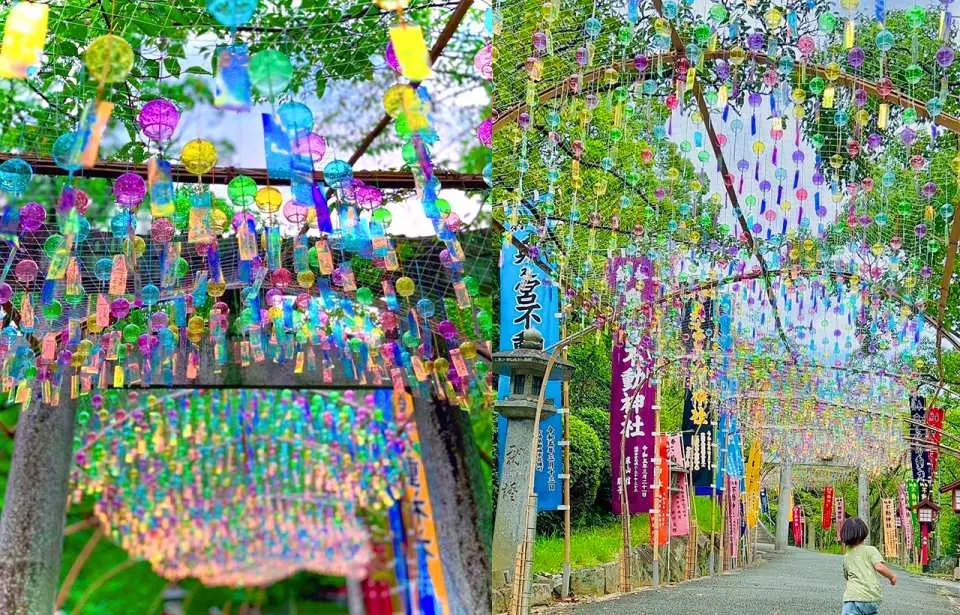
Miyajidake Shrine: It became famous after being used as a filming location for the Japanese drama "Amachan". This shrine leads to the torii gate and faces the Genkai Sea. Every spring and autumn, when the setting sun shines on the end of the approach, it forms the "Path of Light", a spectacular sight known as a mysterious energy field in Japan. The entire approach is illuminated by the golden sunset, making it sacred and dreamlike, attracting a large number of photographers and worshippers.


Miyajidake Shrine is not only famous for its "Path of Light," but also a sacred shrine with festivals throughout the year and a rich cultural atmosphere. From the iris flower festival in spring, the kaya no wa purification and new moon worship in summer, to the grand release ceremony and the sunset spectacle of the "Path of Light" in autumn, and the Hatsumode and Tsuoyō candle ritual in winter, each season has its own unique and exciting events to look forward to.

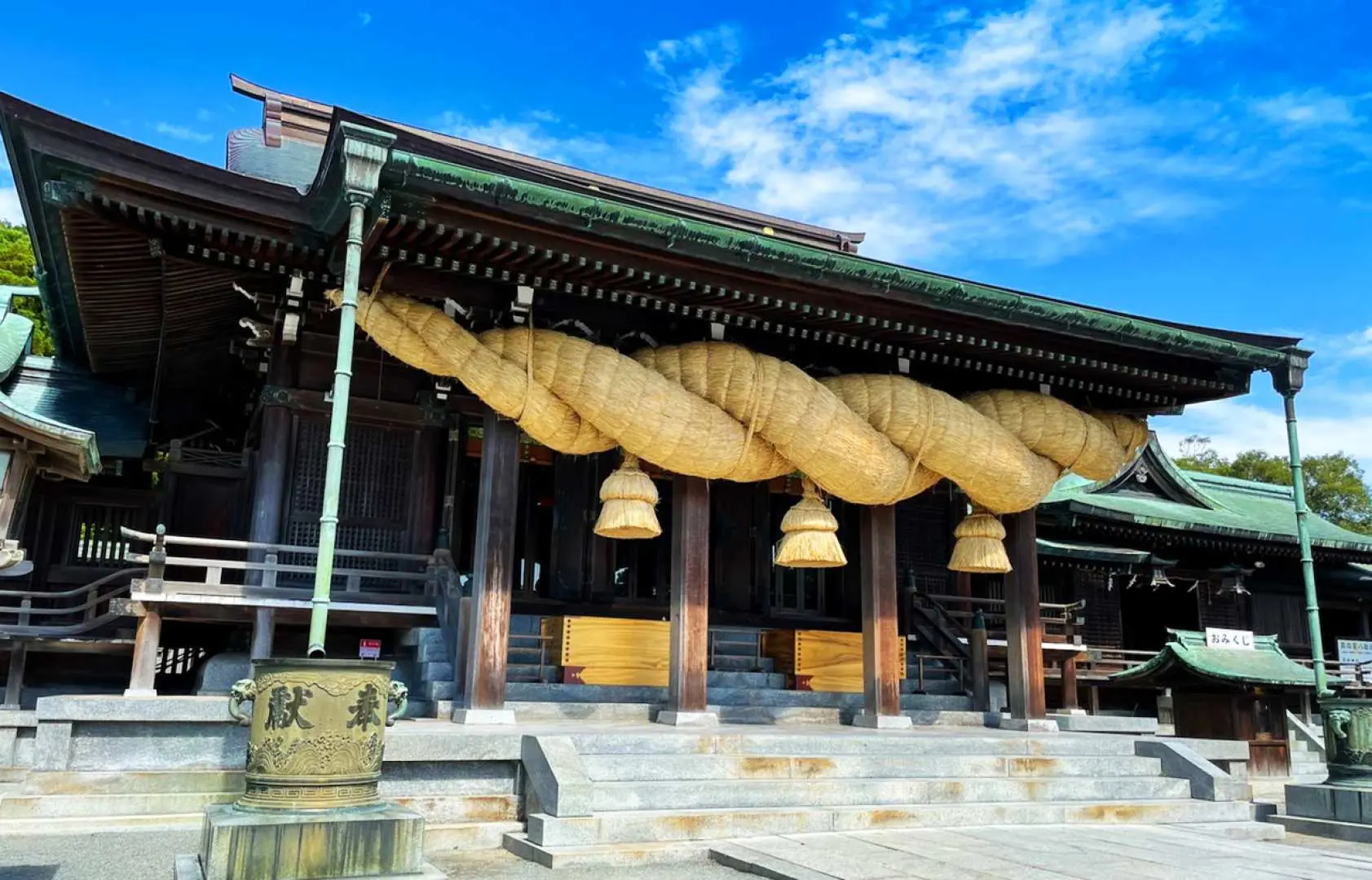
Miyajidake Shrine is also known for its "Three Great Firsts of Japan", which are as follows: The Giant Shimenawa (Shimenawa Rope) is 13.5 meters long and weighs 3 tons. It is the largest shimenawa in Japan and is hung in front of the main hall to symbolize the exorcism of evil spirits and disasters.

Spring: Cherry blossoms bloom throughout the area, making it a famous cherry blossom viewing spot in Fukutsu City. Autumn: The "Path of Light" spectacle reappears, with maple leaves adorning the shrine approach. Winter: The Lighting Festival offers a heartwarming festive atmosphere. Year-round: The "New Moon Worship" is held on the 1st of each month, where many locals come to pray for good fortune from the new moon.


Recommended attractions: Moji Port Nostalgia Area: Step into the romantic harbor of the Meiji and Taisho eras, with red brick warehouses, the former British Consulate, and the Blue Wing Pedestrian Bridge. The retro buildings stand side by side, as if you have stepped back in time.


Recommended attractions: Karato Market: Located in Shimonoseki City at the westernmost tip of Honshu, this seaside market not only offers freshly caught tuna, pufferfish, sea urchins and oysters, but also a wide variety of ready-to-eat nigiri sushi, skewers and tempura available for purchase and enjoy on-site.


Kokura Castle: The only ancient castle ruin in Kyushu where you can climb the castle tower! Kokura Castle was originally built in 1602, and the rebuilt castle tower now incorporates multimedia interactive exhibitions, showcasing the Sengoku culture and Kokura history.


The five-story castle tower: Unlike typical Japanese castles with their gradually shrinking exteriors, Kokura Castle adopts a unique "Tang-style" design, where each of the four stories is wider than the third, resulting in a magnificent and distinctive appearance. Inside, interactive multimedia presentations combine historical and modern elements to introduce the castle's historical background, stories of warlords during the Sengoku period, and the legacy of the Ogasawara family. Costume rental: Samurai and ninja costumes can be rented for photo opportunities, a favorite among families and foreign tourists. Observation deck: Climbing to the top offers panoramic views of the Murasaki River and Kitakyushu City, providing a great vantage point for photographing the castle tower and cherry blossoms.


Kokura Castle Garden: Besides the castle tower, Kokura Castle also boasts a Japanese garden. The Kokura Castle Garden recreates the cultural facilities of a daimyo's residence and garden on the site of the former villa of the Ogasawara clan, lords of the Kokura Castle Domain during the Edo period. The garden is a "pond-and-pond strolling style," allowing visitors to walk along the pond and enjoy the scenery. From the Japanese-style rooms facing the garden, visitors can appreciate the different views of the four seasons.


Purchase Notice
[Tourism Conditions]
Travel departure point and destination: Fukuoka
Trip duration: Day trip
Transportation: Bus
Bus company name: Reisei Tourism Industry Co., Ltd.
Meals provided: Breakfast 0 times, Lunch 0 times, Dinner 0 times
Accommodation facilities: None
Minimum group size: 2
Team Leader: 1
【Travel Planning/Implementation】
Operating Company Name: TuYi Group Japan Co., Ltd.
Address: 722 Shuzenji, Izu City, Shizuoka Prefecture
License exemption number: Registration number Shizuoka Prefecture Governor Registration Travel Industry No. 2-633
Name of travel industry association: Japan Travel Industry Association (full member)
Reminders
A minimum of 2 traveler(s) are required for the tour to depart. If the number of participants does not reach the minimum requirement, the tour will be canceled. An email regarding tour cancellation will be sent 4 day(s) before the departure date
In the event of inclement weather such as typhoons or snowstorms, a decision on whether to cancel the tour will be made 1 day(s) before departure (local time 18:00). Notifications will then be sent via email
Travelers with the following conditions or other health issues that could be worsened by excessive stimulation should not participate in this activity: Asthma, Epilepsy
Please arrive at the designated location 10 minute(s) before the scheduled departure time, as the tour will depart on time
This is a fixed route shared by passengers. You will need to share a ride with other passengers throughout the trip. You may not stop at attractions.
The time allotted at each attraction has been optimized; please strictly adhere to the time limits to avoid affecting the overall itinerary.
Depending on the number of participants on the day, a driver-guide car may be used. Please cooperate with the staff throughout the trip. The driver will mainly focus on driving and will provide relatively brief explanations.
Please be punctual for the meeting: If you do not participate in the trip due to personal reasons (being late/getting lost/feeling unwell, etc.), no refund will be given. Please note that no refunds will be issued.
No refunds will be given for any absences or cancellations due to personal issues, lateness, or other reasons. Please take note.
If you leave the group midway through the trip, the transaction will be considered invalid, and no refund will be given. Furthermore, you will be solely responsible for any personal injury or property damage resulting from this.
Leaving the group after the trip has started or leaving the group midway will be considered as automatically forfeiting the service, and no refund will be given. You will be responsible for your own safety during the period you are away from the group.
Trip schedules may be adjusted due to force majeure events such as traffic, weather, and crowds. In case of delays or partial changes to the itinerary, we regret that we cannot provide a refund or compensation. We appreciate your understanding of the uncertainties of travel.
Traffic congestion may occur during holidays and peak periods. The driver/guide will adjust the itinerary flexibly as needed. Please be prepared for this. Thank you for your understanding and cooperation.
To maintain the cleanliness of the carriage, please refrain from eating or drinking inside. Any resulting soiling will incur cleaning fees according to local standards. Let's work together to create a comfortable travel environment.
The bus does not go to the Shimonoseki area. If you wish to visit attractions such as Karato Market or Akama Shrine, please take the ferry yourself at your own expense.
The "Seafood Stalls Street" at Karato Market is only open on Fridays, Saturdays, Sundays, and Japanese public holidays. It may be closed at the end of the year and the beginning of the new year. Please refer to the on-site announcements for the actual business situation.
Tickets for Kokura Castle and related facilities are not included and must be purchased separately. Opening hours and admission arrangements are subject to the announcements made by the attractions on the day of the visit.
From January 1st to January 3rd each year, the itinerary is changed to visit Kitakyushu Premium Outlets instead of Miyajidake Shrine.
Our company has pre-booked tickets for the Hanoi Wisteria Garden, so guests do not need to purchase tickets separately. The estimated flowering period for 2026 is April 18-26 and April 28-May 6. The flowering period and admission time are subject to the arrangements of the garden. Tickets are at your own expense and can be paid on-site on the day of purchase.
FAQ
Mojiko Port is famous for its charming Retro District, featuring numerous well-preserved Western-style buildings from the Meiji and Taisho eras. Key landmarks include the historic Mojiko Station, the Old Moji Customs House, and the iconic Blue Wing Footbridge, Japan's only pedestrian drawbridge, which opens several times a day. You can also visit the Mojiko Retro Observation Room for panoramic views of the port and the Kanmon Strait, and spot the unique Banana Man statue.
Mojiko Port holds significant historical importance as a thriving international trade port during the Meiji and Taisho periods. It served as a vital gateway to Kyushu, facilitating the export of coal and rice while importing foreign goods. This prosperity led to the construction of many Western-style buildings, giving the area its distinctive retro atmosphere. Its strategic location at the Kanmon Strait made it a crucial hub for maritime commerce and cultural exchange, shaping the development of Kitakyushu.
To reach Mojiko Port from Hakata Station, the most convenient option is by train. You can take the JR Kagoshima Main Line directly to Mojiko Station. Alternatively, take the Shinkansen from Hakata to Kokura Station (approx. 15-20 minutes), then transfer to the JR Kagoshima Main Line for another 15 minutes to Mojiko Station. There are also highway buses available, offering a direct route, though train travel is generally faster and more frequent for this route.
Mojiko Port is situated at the northern tip of Kyushu, in Kitakyushu city, Fukuoka Prefecture, Japan. It faces the scenic Kanmon Strait, which separates Kyushu from Honshu. Its uniqueness stems from its beautifully preserved Taisho-era Western architecture, creating a nostalgic "Mojiko Retro" atmosphere. This blend of historical charm, picturesque waterfront views, and fresh local cuisine, especially seafood, makes it a distinct and popular travel destination.
Kitakyushu offers a range of delicious regional culinary specialties. A must-try is "Yaki Curry," a baked curry dish with cheese and an egg, famously associated with Mojiko. At Karato Seafood Market, you can savor incredibly fresh sushi, sashimi, and even local delicacies like pufferfish (fugu) in season. Other local favorites include various styles of ramen and a vibrant yakitori (grilled skewers) scene, reflecting the city's diverse food culture.
The most suitable times to explore Kitakyushu's attractions are generally spring (March to May) and autumn (September to November). In spring, the weather is mild, and Kokura Castle grounds are beautiful with cherry blossoms. Autumn offers pleasant temperatures, ideal for strolling Mojiko Port and exploring. Summer can be hot and humid, but brings local festivals. Winter is cooler, offering a quieter experience and the best season for fugu (pufferfish) at Karato Market.
Karato Seafood Market is renowned for its exceptional and diverse fresh seafood offerings. Visitors can indulge in a wide variety of sushi and sashimi, often sold individually, allowing for a personalized tasting experience. A prominent specialty is pufferfish (fugu), available in various forms like sashimi, fried, or in hot pots, especially during winter. You'll also find fresh seafood bowls, fried seafood delights, and other local catches, providing an authentic fishing port culinary experience, especially during the "Iki-Iki Bakangai" weekend market.
At Kokura Castle, visitors can delve into the history of samurai culture and the local domain. The main keep houses engaging exhibits that showcase the castle's past, historical artifacts, and interactive displays. Ascend to the top floor for a panoramic 360-degree view of Kitakyushu city. Surrounding the castle is Katsuyama Park, perfect for a leisurely stroll, and a Japanese garden that offers a serene atmosphere. It's a blend of historical immersion and scenic beauty.
Get Help


