
Two-Day Shiga Lake Biwa Tour: Miho Museum, Omihachiman, Shirahige Shrine Water Torii Gate, and Lake Biwa
Built in 991 AD, Hinamure Hachimangu Shrine boasts a history of over 1,500 years. Within its vast 44,000 square meter grounds, the shrine's lush greenery, like that of Mount Ali, is a striking sight.
Lake Biwa, a freshwater lake in the mountainous region of west-central Japan near Kyoto, is a symbol of Japan, a national park, and its largest lake. It is designated a lake under the Law on Special Measures for the Conservation of Lake and Marsh Water Quality and is listed as a Wetland of International Importance under the Ramsar Convention. Like Mount Fuji, Lake Biwa is considered a symbol of Japan by the Japanese and is affectionately called the "Lake of Life."
Package Options


Product Info
Purchase Notice
Infants aged 0-2 years old who do not include meals, do not occupy a bed, and do not occupy a seat are free of charge. Please inform us in advance. If you fail to inform us and the bus is overcrowded, the driver or guide has the obligation to refuse boarding.
*The above itinerary schedule may be adjusted due to weather, road conditions, and traffic congestion. Please understand that the length of stay at each attraction may be adjusted.
The above itinerary schedule may be adjusted accordingly due to weather, road conditions, etc. Please understand.
Each person is allowed one piece of luggage free of charge. Backpacks do not count. Please carry valuables with you. Pregnant women, those with heart problems, those with acrophobia, and other special needs are not recommended for this tour. Please arrive at the meeting point 10 minutes before departure. The bus will depart on time, so please be sure to meet the departure time. The company is not responsible for any late arrivals.
Smoking is prohibited on the bus and there are no restrooms.
Seat assignments are not possible.
The company will not refund if the passenger abandons the tour due to personal reasons.
Reminders
A group of 4 people will be notified 3 days in advance whether the group will be formed. A full refund will be given if the group is not formed.
Notes on the trip:
Due to unpredictable factors such as traffic conditions, weather, holidays, and crowds, the arrival time of each tour is subject to change. Japanese law stipulates that drivers can work a maximum of 10 hours. To ensure driver safety and smooth operation, we may adjust the itinerary based on actual circumstances, including shortening or eliminating certain attractions. We sincerely hope that our passengers will understand and support these adjustments made while ensuring safety.
In the event of any of the above or other force majeure circumstances, we deeply regret any inconvenience this may cause you. Please understand that we cannot offer refunds. This decision is made out of a commitment to the safety of our drivers and passengers, and to ensure the smooth operation of our entire team.
We are always committed to providing you with the best travel experience possible, but in some cases, we may need to flexibly adjust your itinerary based on actual conditions. Thank you for your understanding and support.
Other force majeure factors may include but are not limited to:
Natural disasters: Natural disasters such as earthquakes, volcanic eruptions, floods, typhoons, etc. may affect your itinerary.
Traffic accidents: Road accidents, traffic jams, etc. may cause travel delays.
Weather conditions: Severe weather conditions, such as heavy snow, rain, fog, etc., may affect transportation and itinerary arrangements.
Government regulations: Emergency regulations, traffic controls, etc. issued by the government may result in changes to the itinerary.
Health Emergencies: Sudden health issues experienced by passengers or group members may require first aid and urgent treatment, resulting in itinerary changes.
Social events: Strikes, protests, social unrest, etc. may have unpredictable impacts on traffic and schedules.
Mechanical breakdown: Mechanical breakdown of a means of transport (e.g. vehicle) may cause delays to your journey.
Cancellation Policy
- Cancellations 9 day(s) (inclusive) before the selected date are allowed. Unused orders can be canceled for free
- For cancellations made 5 to 8 days prior to selected date, a cancellation fee of 50% will apply
- Cancellation is not allowed between 0–4 days from the selected date. Orders cannot be canceled or modified, and refunds will not be granted.
- Due to time zone differences, the confirmed cancellation date is based on the supplier’s local time. Please allow 2–5 business days to process your cancellation request, after which the cancellation fee will be charged according to the product’s cancellation policy. Once the cancellation is confirmed, you will receive your refund within 14 working days.
FAQ
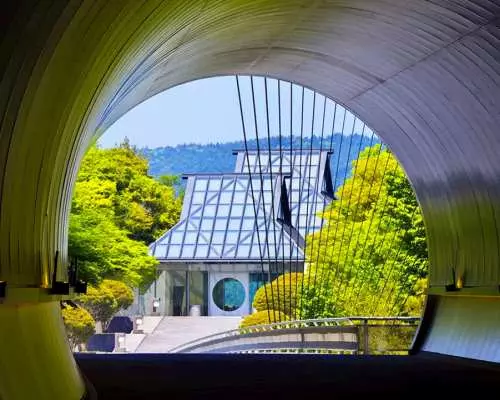
The Miho Museum is highly worthwhile for its unique blend of art, nature, and architecture. Designed by I.M. Pei, it offers a tranquil experience where 80% of the building is harmoniously integrated into the mountains. Visitors can admire stunning artworks from various ancient civilizations within a breathtaking natural setting, embodying the concept of "Peach Blossom Spring." It's an immersive experience for those appreciating thoughtful design and serene beauty.
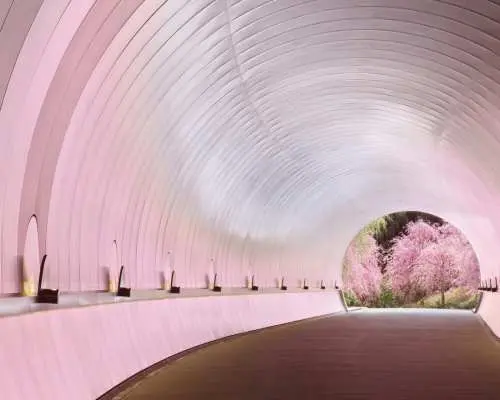
The Miho Museum's design by I.M. Pei is renowned for its "Peach Blossom Spring" concept, where visitors journey through a tunnel and suspension bridge, gradually revealing the museum. Its uniqueness lies in 80% of the structure being built underground within the mountains, minimizing environmental impact. This design creates a profound connection between architecture, art, and the surrounding lush natural landscape.
To thoroughly experience the Miho Museum, including the walk through the tunnel and bridge, and to appreciate both the architecture and the art collections, a visit of approximately 2 to 3 hours is recommended. This allows ample time for contemplation of the exhibits and enjoying the serene natural surroundings without rushing.
Omihachiman offers rich historical and cultural experiences. Visitors can explore the charming old town with its traditional merchant houses, take a boat ride along the Hachiman-bori Canal, and visit the Hinamure Hachimangu Shrine, known for its over 1,500-year history and lush greenery. The area also boasts scenic views and a tranquil atmosphere, making it a captivating destination.
The most ideal seasons to visit Omihachiman are spring (March to May) and autumn (September to November). In spring, the cherry blossoms add to the picturesque scenery, while autumn offers beautiful foliage along the canals and surrounding areas. Summer can be warm and humid, and winter may bring colder temperatures, though it offers a quieter atmosphere for exploration.
From Kyoto or Osaka, the most convenient way to reach Omihachiman is by train. Take the JR Tokaido-Sanyo Line (Biwako Line) to Omihachiman Station. The journey from Kyoto typically takes about 30 minutes, and from Osaka around 1 hour. From the station, local buses or taxis are readily available to take you to the main attractions of Omihachiman.
The Shirahige Shrine Water Torii Gate is a profound and iconic landmark, often called the "floating torii" of Lake Biwa. It is the largest torii gate built in the water on Lake Biwa, and it creates a breathtaking sight, especially at sunrise or sunset. The shrine itself is dedicated to Sarutahiko-no-Mikoto, revered for longevity and safe travel, adding spiritual significance to its stunning visual appeal.
Lake Biwa, Japan's largest freshwater lake, is a designated national park and Ramsar Convention wetland. Visitors can enjoy its vast scenic beauty, take boat cruises to explore various islands, or engage in watersports during warmer months. The lake's surroundings offer hiking trails, cycling paths, and opportunities to appreciate its rich biodiversity and serene "Lake of Life" atmosphere, making it a tranquil escape.
Get Help


