



【Samurai Calligraphy】The Last Brush in the world before the War near Osaka Castle
We will not suddenly pick up a brush and start writing. Beginning with an explanation of the meaning of resignation, the honor of the samurai, and the attitude and tools of calligraphy, we will deepen your understanding of the culture of “bushido” and ‘shodo’ and the history of “shodo” in Japan.
➤Practice
Let's practice some basic calligraphy techniques, such as “clasping”, ‘springing’, and “splitting”. Each kanji has its own meaning, so let's know what meaning the last character you chose has. Let's learn the stroke order of the kanji.
➤Perfumance
Reflecting on your life up to now, imagine a story about what kind of feelings you want to entrust to us, and think about the design of the last character in this world and assemble it.
➤A one-character work that “bids farewell to this world.”
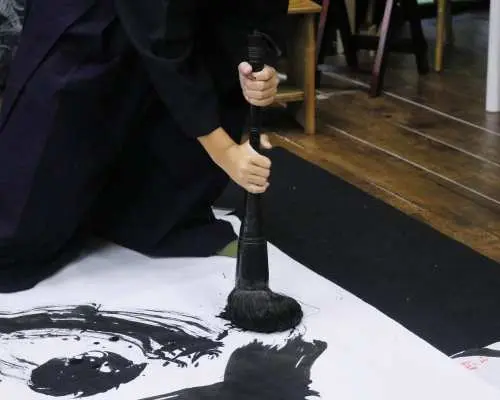
The resignation works, written with an oversized brush, can be taken home as souvenirs. This is Bushido, the way of the Samurai, and a souvenir unique to Japan.
Package Options
Cultural Experiences
| Activity time | Morning, Afternoon, Evening |
| Transportation method | Get there on your own |
| Location | Indoor |
| Activity level | Beginner |
| Experience type | Language learning, Costume rental, Art |
| Rental duration | 2 hours |
| Outfit type | Kimono, Yukata |
| Additional service & facility | Photography service, Luggage Storage |
| Minimum participant requirement | 1 traveler |
| Cultural experience type | Ninja/Samurai experience, Calligraphy |
Product Info
What You Can Expect
1 Day
- ➤Preparation Resignation is the last character to be written in this world in preparation for death.Calligraphy is imbued with the aesthetic sense of Japanese culture, but before you experience it, please imagine yourself saying goodbye to this world soon. Before you experience it, imagine that you will soon have to say goodbye to this world.You will be dressed in kimono or hakama like a samurai.
- ➤Last kanji character Reflecting on your life so far, choose one kanji character as your last word in this world. Each kanji character has its own meaning Kanji characters themselves are very popular among foreigners, as each character has its own meaning and the appearance of the calligraphic style is perceived as beautiful. Customers are asked to choose such Kanji characters.
- -Each kanji has its own meaning, so you should know what the last kanji you chose means.
- ➤Practice There are basic calligraphy techniques such as “tome,” “hane,” and “harai” that you should practice.Each kanji character has its own meaning, so know what meaning the last character you chose has.Learn the stroke order of the kanji.
- ➤Imagine Looking back on your life, what thoughts do you entrust to a single letter? The calligraphy of resignation strongly expresses the life philosophy of the person who wrote it. Unlike regular calligraphy, where the mind is quiet and focused, facing a half-sheet of paper alone, the calligraphy is written with a heavy brush on a huge full-size sheet of paper. This writing process is expressed as a performance.
- ➤Writing Brush / Performance Reflecting on your life up to now, imagine a story about what kind of feelings you want to entrust to us, think about the composition (design) of the last character in this world, assemble it, and write a soulful character by wielding the brush with your whole body.
- ➤Sign your foreign guest's name in Kanji or his/her native language Not only can you write your favorite Kanji characters as calligraphy, but a master calligrapher can also apply the Kanji to your foreign guest's name and write his/her guess. Each kanji has its own meaning, so it will be refreshing and fun to learn the meaning of the kanji used in your name.
- ➤Remembering the Resignation Experience They say that life is fleeting, and the single character of the samurai who lived in a time when tomorrow was uncertain is a painful reminder of the transience of life. But it is not a lament for oneself. They look back on their lives up to the present, and use the calligraphy and photo shooting as their last words in this world.
- ➤Samurai Calligraphy Works as Memories The kanji written with an oversized brush can be taken home as a souvenir. It is a souvenir unique to Japan.


Purchase Notice
Clothing and personal belongings
You will change from casual clothes to Iaidogi (Hakama), so you can wear whatever you want.
About Rental Items (FREE)
Dressing of guests when dressing
When you wear hakama for a sword fight, you will sweat and get sweaty easily, so please wear the following clothing.
① His upper body is a long-sleeved undershirt. I ask you to put on a samue.
② The lower part of the body is an easy to move samue.
③ We have tabi socks for your feet.
④ Swim caps are available for the head.
Assistant staff will do things like wearing hakama and armor. You can't wear it alone
Includes/Excludes
- Bottled water
- Tips
- Consumption tax
- Service charge
- Tickets
- Photo Shooting - Send data to designated e-mail address
- Samurai Calligraphy Works
- English guide
- 10% Service charge
- Material fee
- Taxes
- Experience fees
- Professional coach
- Clean clothes
- Personal expenses
- Accommodation
- Transportation fare
- Insurance
- Hotel transfer
- Movie Shooting *Paid option
- Round-trip shuttle
Eligible Users
Notes
- Children (6 years and older) Adults (90 years and younger)
Reminders
time one is supposed to meet
Please arrive 30 minutes before your appointment time to change into kimono and prepare for your appointment.
Cancellation
Cancellations and changes must be notified by e-mail at least 24 hours in advance.
How to Redeem Your Voucher
How to Use Your Voucher
- Please present the e-voucher on-site
Experience Location
Location Name: SAMURAI HONOR
Address: 日本、〒536-0014 大阪府大阪市城東区鴫野西2丁目3−19 エクセレンス高山 1F
Monday 10:00–21:00 (Last Entry Time: 20:00)
Tuesday 10:00–21:00 (Last Entry Time: 20:00)
Wednesday 10:00–21:00 (Last Entry Time: 20:00)
Thursday 10:00–21:00 (Last Entry Time: 20:00)
Friday 10:00–21:00 (Last Entry Time: 20:00)
Saturday 10:00–21:00 (Last Entry Time: 20:00)
Sunday 10:00–21:00 (Last Entry Time: 20:00)
Cancellation Policy
- Cancellations 1 day(s) (inclusive) before the selected date are allowed. Unused orders can be canceled for free
- Cancellation is not allowed between 0–0 days from the selected date. Orders cannot be canceled or modified, and refunds will not be granted.
- Due to time zone differences, the confirmed cancellation date is based on the supplier’s local time. Please allow 2–5 business days to process your cancellation request, after which the cancellation fee will be charged according to the product’s cancellation policy. Once your refund request is confirmed, KKday will initiate the refund to your original payment method within 15 days. The actual refund timing depends on your card-issuing bank’s policy.
FAQ
1. Was calligraphy an important practice for samurai in history?
Yes, calligraphy was highly valued by samurai. It wasn't merely an artistic pursuit; it was considered a vital discipline for cultivating spiritual strength, inner peace, and focus. This practice allowed samurai to hone their concentration and precision, reflecting their dedication to mastering both martial skills and cultural arts, which was integral to their personal development.
2. What is the philosophical purpose behind samurai practicing calligraphy?
Samurai practiced calligraphy to embody philosophical principles often rooted in Zen Buddhism. It was a rigorous exercise in focus, precision, and mindful presence, essential qualities for a warrior. Each brushstroke demanded total concentration, mirroring the intensity of battle and fostering spiritual depth, self-reflection, and a disciplined mindset.
3. What are the common names and terminology for Japanese calligraphy?
Japanese calligraphy is primarily known as 'Shodo' (書道), which translates to 'the way of writing.' Other important terms include 'Bushido' (武士道), the way of the warrior, which influences the philosophical approach to the art. The individual characters written are called 'kanji' (漢字), and the essential tools include brushes (fude), ink (sumi), and paper (washi).
4. What are the major styles and forms within Japanese calligraphy?
Japanese calligraphy encompasses several prominent styles. These include Kaisho (楷書), known as the block or standard script, which is clear and precise; Gyosho (行書), a semi-cursive script that offers more fluidity; and Sosho (草書), a highly cursive, flowing grass script characterized by its dynamic movement. Each style allows for distinct artistic expressions.
5. Are there specific script styles associated with samurai calligraphy?
While samurai utilized various standard calligraphy styles like Kaisho and Gyosho, their personal approach often emphasized strength, clarity, and directness in their brushwork, reflecting their martial ethos. Many warrior-scholars developed unique, powerful individualistic styles that conveyed their personal philosophy and resolve, rather than adhering to a single, universally recognized 'samurai script.'
6. What core principles of Bushido are explored in the Samurai Calligraphy experience?
The Samurai Calligraphy experience deeply explores core Bushido principles such as honor, discipline, and the profound understanding of impermanence, often termed 'resignation.' Participants delve into the warrior's mindset, appreciating the meticulous dedication required for self-mastery through brushwork, much as samurai cultivated inner strength and focus alongside their martial prowess.
7. What foundational techniques are taught in a Samurai Calligraphy workshop?
In a Samurai Calligraphy workshop, participants learn essential foundational techniques for Japanese brushwork. This includes methods like 'clasping' the brush for control, managing the 'springing' motion for dynamic strokes, and executing precise 'splitting' strokes. The session also covers understanding kanji meanings and their correct stroke order, providing a comprehensive introduction to the art.
8. What kind of personalized souvenir is created in the Samurai Calligraphy session?
During the Samurai Calligraphy session, you will create a unique, personalized one-character work. This 'resignation work' allows you to reflect on your life and express deep feelings, much like a samurai's last words. Written with an oversized brush, this deeply personal creation serves as a memorable and authentic souvenir, embodying the spirit of Bushido and Japanese culture.
Get Help


