
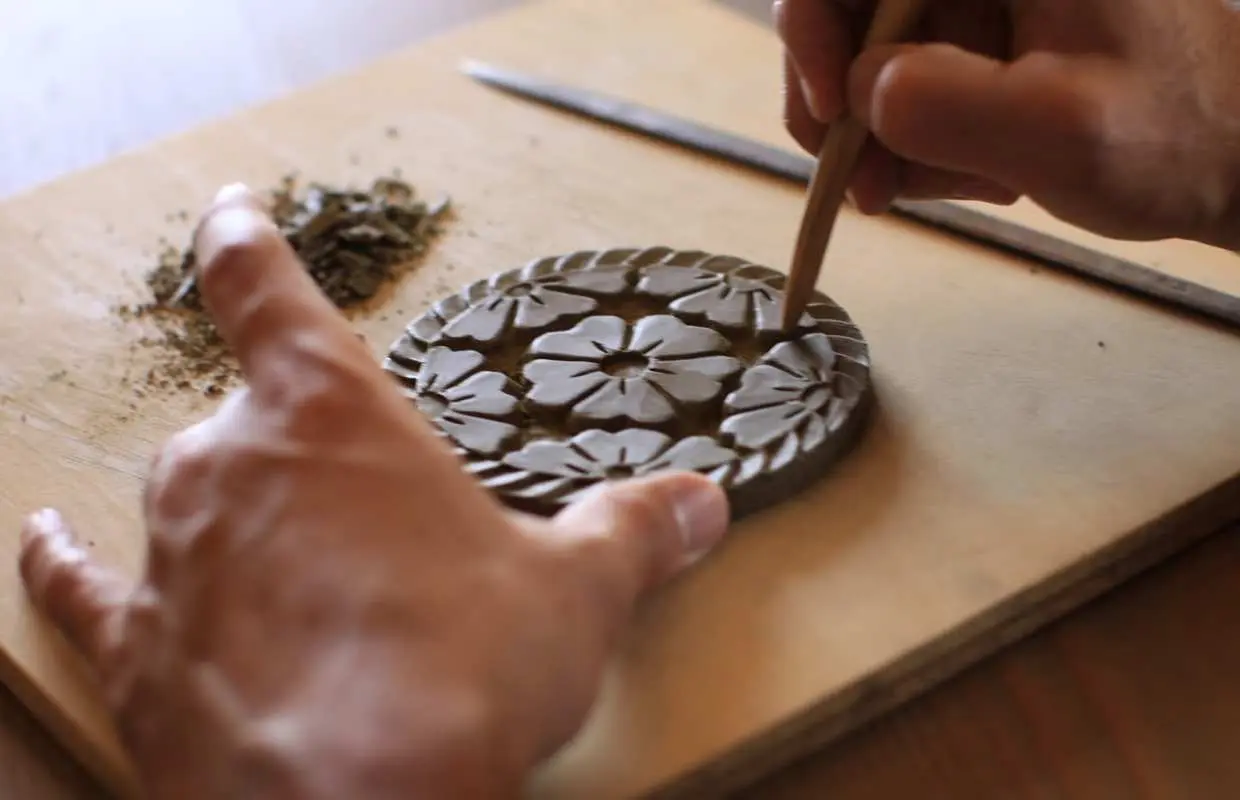
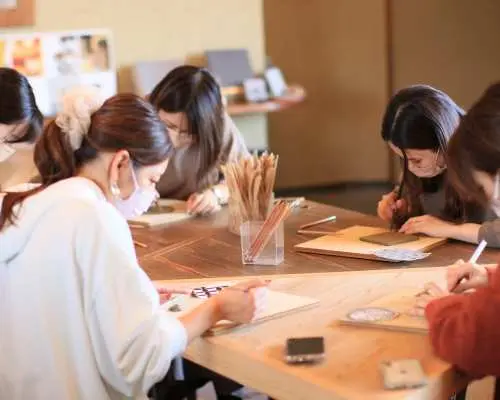


One tile maker's "insatiable challenge" - A tile maker who continues to challenge himself to create the "beauty" of Japanese architecture by inviting the traditional industry of "Awaji tiles" with 400 years of history into the future. Experience making a tile coaster (Minami Awaji, Hyogo)
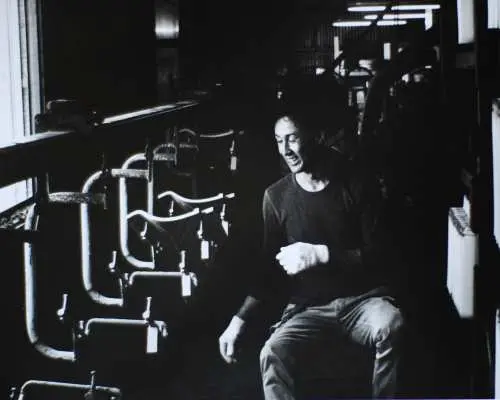
- Daisuke Michigami (president of Daiei Ceramics), who has inherited the family business, is continuing his "endless challenge" to unravel the wisdom, skills, and teachings of his predecessors that are embedded in each and every Awaji tile, a traditional industry with 400 years of history, and to pass them on to the future. What is the reason he continues to take on challenges? We will reveal the secret.
Product Info
Important Info
Includes/Excludes
- Kawara Lecture Attendance Fee
- Experience fee
- Material cost
- Fee for using tools such as spatulas
- Firing fee
- Shipping fee (1 package) 1000 yen
Reminders
In the event of bad weather (storms or typhoons), the tour may be cancelled for the safety of our guests. If the tour is cancelled, we will contact you the day before.
If the weather is bad (severe storms or typhoons) on the day of your reservation, you may cancel the tour at your own discretion. In that case, there will be no cancellation fee.
How to Redeem Your Voucher
How to Use Your Voucher
- Please present the e-voucher on-site
Meeting Point
Location Name: Gallery Doza
Address: 2124-2 Tsui, Minamiawaji City, Hyogo PrefectureCancellation Policy
- Cancellations 8 day(s) (inclusive) before the selected date are allowed. Unused orders can be canceled for free
- For cancellations made 2 to 7 days prior to selected date, a cancellation fee of 20% will apply
- For cancellations made 1 to 1 days prior to selected date, a cancellation fee of 50% will apply
- Cancellation is not allowed between 0–0 days from the selected date. Orders cannot be canceled or modified, and refunds will not be granted.
- Due to time zone differences, the confirmed cancellation date is based on the supplier’s local time. Please allow 2–5 business days to process your cancellation request, after which the cancellation fee will be charged according to the product’s cancellation policy. Once the cancellation is confirmed, you will receive your refund within 14 working days.
FAQ
Traditional Awaji tiles, known as 'Awaji Kawara,' are celebrated for their unique characteristics. They are typically made from iron-rich local clay, giving them a distinctive deep reddish-brown color when fired. These tiles are recognized for their excellent durability, high water resistance, and ability to withstand harsh weather conditions. Their smooth, refined surface and often intricate designs, crafted through centuries-old techniques, contribute to their aesthetic appeal in traditional Japanese architecture.
Awaji Island is renowned for several attractions beyond its traditional tile-making heritage. It's famous for the spectacular Naruto Whirlpools, which can be viewed from boats or the Onaruto Bridge. The island also boasts beautiful scenic landscapes, delicious local produce, particularly Awaji onions and fresh seafood, and various flower parks. Visitors often enjoy the island's relaxed atmosphere, coastal drives, and culinary experiences featuring its unique agricultural and marine products.
The general term for traditional Japanese roof tiles is 'kawara' (瓦). Awaji tiles, or 'Awaji Kawara,' are a specific and highly regarded type of kawara, originating from Awaji Island. They are distinguished by their high quality, unique clay composition, and the traditional craftsmanship passed down through generations. While 'kawara' refers to all Japanese roof tiles, 'Awaji Kawara' signifies a particular regional style known for its durability and beauty, making it a prominent name within the broader category.
Awaji tiles stand out due to their specific clay composition, which is rich in iron and sourced directly from Awaji Island. This local clay gives the tiles their characteristic color and superior strength. Unlike some other roofing materials, Awaji tiles are fired at high temperatures using traditional methods, enhancing their density, water impermeability, and resistance to environmental factors. Their long history of craftsmanship also ensures a high standard of aesthetic and functional quality, making them a preferred choice for traditional Japanese architecture.
Awaji Island is primarily accessible by bus. Visitors can take express buses from major cities like Osaka (e.g., from Osaka Station or Shin-Osaka Station) and Kobe (e.g., from Sannomiya Bus Terminal). These buses cross the Akashi Kaikyo Bridge, offering scenic views. Another option is driving, utilizing the bridges connecting the island to Honshu and Shikoku. Ferries are less common for general passenger travel compared to the extensive bus network.
No, there are no direct flight options or airports located directly on Awaji Island. Travelers wishing to reach Awaji Island by air would typically fly into a nearby major airport such as Kansai International Airport (KIX) or Kobe Airport. From these airports, visitors would then need to connect to Awaji Island via a combination of public transportation, such as airport limousine buses and local express buses, or by rental car.
Awaji tiles boast a rich history spanning over 400 years, with their origins tracing back to the early 17th century. The tradition began with local potters adapting techniques to utilize the island's abundant, high-quality clay for roofing materials. Over centuries, master artisans refined the tile-making process, contributing to their reputation for exceptional durability and beauty. The legacy of Awaji tiles is intertwined with Japanese architectural history, reflecting enduring craftsmanship and the continuous challenge of tile makers to preserve this traditional art form while innovating for the future.
The Awaji tile coaster making experience typically involves a hands-on workshop where participants can learn about the material and craft their own unique coaster. You'll usually start by selecting a piece of Awaji clay. Instructors guide you through shaping the clay, often using traditional tools and techniques, and then help you add personal designs or patterns. After creation, the coaster undergoes a firing process, which is usually completed by the artisans after your session. This experience provides insight into the 400-year history of Awaji tiles through a creative, tangible activity.
Get Help


