
![[Grand Sumo Tour] Secure hard-to-get tickets! March Osaka Tournament at Edion Arena Osaka (Sumo merchandise included)](https://image.kkday.com/v2/image/get/c_fill%2Ch_800%2Cq_55%2Ct_webp%2Cw_1240/s1.kkday.com/product_267068/20250117024409_Z6k8O/jpg)
![[Grand Sumo Tour] Secure hard-to-get tickets! March Osaka Tournament at Edion Arena Osaka (Sumo merchandise included)](https://image.kkday.com/v2/image/get/c_fill%2Ch_400%2Cq_55%2Ct_webp%2Cw_500/s1.kkday.com/product_267068/20250109094040_mvCsU/jpg)
![[Grand Sumo Tour] Secure hard-to-get tickets! March Osaka Tournament at Edion Arena Osaka (Sumo merchandise included)](https://image.kkday.com/v2/image/get/c_fill%2Ch_400%2Cq_55%2Ct_webp%2Cw_500/s1.kkday.com/product_scm_874/20260108020920_NcQ4g/jpg)
![[Grand Sumo Tour] Secure hard-to-get tickets! March Osaka Tournament at Edion Arena Osaka (Sumo merchandise included)](https://image.kkday.com/v2/image/get/c_fill%2Ch_400%2Cq_55%2Ct_webp%2Cw_500/s1.kkday.com/product_267068/20250109094115_goNx3/jpg)
![[Grand Sumo Tour] Secure hard-to-get tickets! March Osaka Tournament at Edion Arena Osaka (Sumo merchandise included)](https://image.kkday.com/v2/image/get/c_fill%2Ch_400%2Cq_55%2Ct_webp%2Cw_500/s1.kkday.com/product_scm_874/20260108020939_dX46k/jpg)
[Grand Sumo Tour] Secure hard-to-get tickets! March Osaka Tournament at Edion Arena Osaka (Sumo merchandise included)
- These are tickets to watch the Grand Sumo Tournament in Osaka in March at Edion Arena Osaka!
- A highly popular souvenir! All participants will receive a surprise sumo-themed gift!
- Inside the building, you can purchase bento boxes, drinks, and souvenirs.
- There is a cafeteria on the first basement floor.
- Once you enter the venue, re-entry is permitted only once per day. Please return by 5 PM.
- Please be sure to take your ticket with you when you leave your seat.
Product Info
The content of this product is provided by machine translation and may not reflect the actual information, please take this into consideration before booking.
- Tour to see the great national sport of sumo wrestling
Sumo is Japan's national sport, and its wrestlers are not just fat people. Beneath the fat are superbly trained muscles. And despite their large build, they have incredible flexibility, with legs as strong as tree trunks. Their physical abilities are truly acrobatic, and wrestlers are the ultimate athletes, with bodies built for fighting. At the moment of a serious match, the sound of the wrestlers colliding with each other reverberates throughout the arena. Come and see the clash for yourself!
[Watching Points]
- More than 1,500 years of sumo history
Sumo, Japan's national sport, dates back to the age of mythology and is said to have started as a contest of strength. It continued as an imperial court event for around 300 years, taking place annually as a festival ritual to foretell the year's harvest, and then during the Warring States period, sumo became a form of training for samurai. In the Edo period, sumo evolved into a professional performance sport known as Kanjin-zumō, laying the foundation for modern professional sumo (ōzumō). Today, sumo has taken on a formal form as a structured sport, and is loved by many people. At the venue, you can experience sumo's long history and deep-rooted cultural traditions up close.
Q&A
Q: Can I eat or drink while watching sumo?
A: Yes, you can eat and drink at your seat. However, bringing in outside food, bottled or canned drinks is not allowed. Inside the venue, soft drinks like tea and juice, as well as alcoholic beverages like beer and chuhai, will be available for purchase.
Q: What souvenirs or foods should I buy when I go to watch sumo wrestling?
A: The “cheering towels” printed with sumo wrestlers' names are a popular souvenir.
Q: What is the etiquette when watching sumo wrestling?
A: Since sumo matches can end in just a few seconds, please avoid moving around during the bouts to prevent blocking the view of other spectators. Photography is allowed in seating areas, but please avoid using a strong flash.
Q: Are there any dress codes when watching sumo wrestling?
A: There are no specific dress code requirements, and you can wear whatever you like. However, please avoid large hats or accessories that could obstruct the view of other spectators.
Sumo wrestling matches


Entering the sumo ring


Outside the venue, there are "nobori flags." Nobori are brightly colored flags bearing the names of sumo wrestlers, their stables, sponsors, and so on. They add to the festive atmosphere of the venue and also serve as "good luck charms" to pray for the success of the sumo wrestlers.


A surprise gift! We're giving away a secret sumo-themed item that's a surprise until you open it!


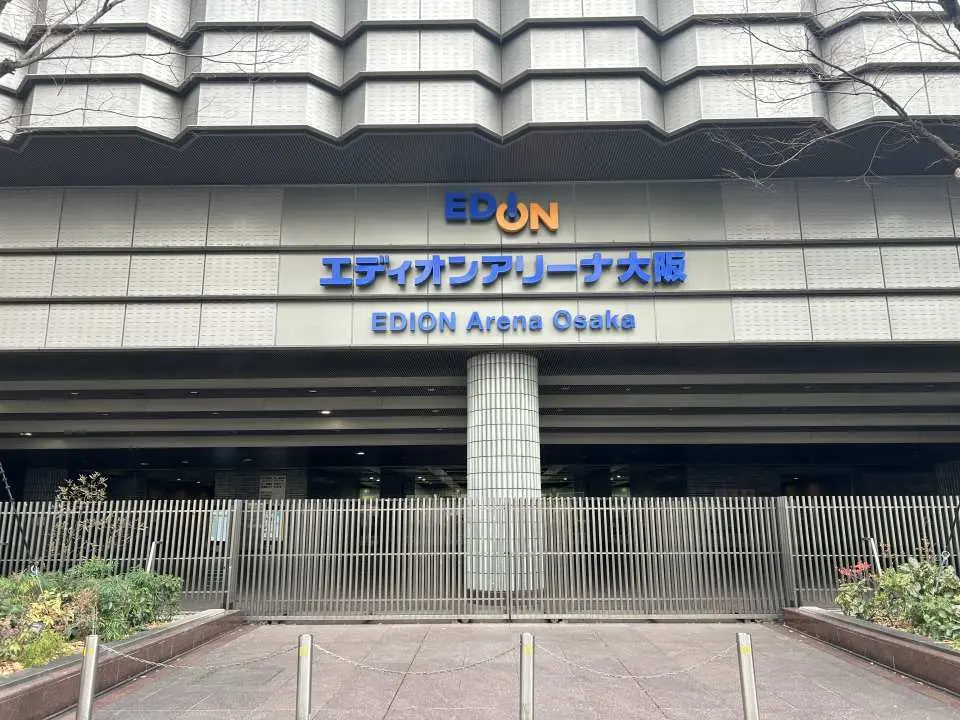
Edion Arena Osaka


Edion Arena Osaka

Museum map


Yokozuna Toyoshoryu hails from Ulaanbaatar, Mongolia. He won his second championship at the January 2025 Grand Sumo Tournament and was promoted to the 74th Yokozuna. He is a Mongolian sumo wrestler whose uncle is former Yokozuna Asashoryu. He had to withdraw from the March 2025 tournament, the tournament in which he was promoted, due to injury, and also withdrew from the July tournament midway through. It has been a tough start as a Yokozuna, but expectations are high that he will lead the sumo world as the East and West Yokozuna together with Oonosato.


Yokozuna "Ōnosato" hails from Ishikawa Prefecture. He continues to inspire many people affected by the earthquake and is currently the most powerful sumo wrestler, having set numerous speed records. With his hair styled in a messy, unstyled manner, he has climbed the ranks, and in the May 2024 tournament, he achieved a new record by winning the top division championship in just seven tournaments since his debut. Subsequently, in the May 2025 tournament, he achieved his fourth championship, becoming the fastest Japanese-born sumo wrestler to be promoted to Yokozuna since his stablemaster, Nishonoseki Oyakata (former Yokozuna Kisenosato), making him a truly unique wrestler.


Purchase Notice
- If you wish to be seated next to your group members, please make your reservation under the same booking record. We will do our best to arrange adjacent seats, but it may not always be possible.
- Children aged 3 and under may enter but must sit on a guardian’s lap. If a separate seat is required, please purchase an additional ticket
Reminders
A minimum of 1 traveler(s) are required for the tour to depart. If the number of participants does not reach the minimum requirement, the tour will be canceled. An email regarding tour cancellation will be sent 7 day(s) before the departure date
Please arrive at the designated location 5 minute(s) before the scheduled departure time, as the tour will depart on time
Large luggage such as suitcases cannot be placed on the seats. Please make arrangements to check them in elsewhere beforehand.
If you are late for the meeting time, your reservation will be cancelled. Please allow ample time to arrive.
If you wish to re-enter, please return by 5 PM.
Please refrain from moving around during the ring-entering ceremonies of the top division wrestlers and the Yokozuna wrestlers.
Get Help


