



Package Options


Product Info
Purchase Notice
Duration: Lasts 1 hour 30 minutes
Reminders
Please refer to your voucher for final information regarding meeting points, pick-up locations, and pick-up time
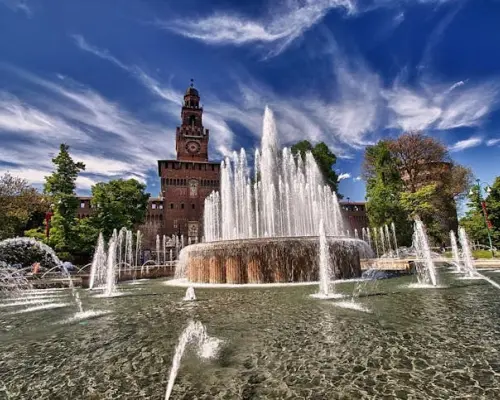
Meeting point description: Please meet your guide under the "Filarete" clock Tower. Look for the"Italy Hidden Experiences"signboard. Please be at the meeting point at least 15 minutes before the departure of the tour.(Piazza Castello, Milan, Metropolitan City of Milan, Italy)
FAQ
1. Do visitors need tickets to enter Sforza Castle in Milan?
Yes, while access to the castle's courtyards is generally free, separate tickets are required to enter the Sforza Castle Museums and its various collections, which house significant historical and artistic treasures. For a seamless experience and to ensure your entry to a guided tour, you can book in advance through KKday, which offers convenient booking options and a curated tour experience that enhances your visit to the castle's interior.
2. Is a guided tour of Sforza Castle worthwhile for first-time visitors?
Absolutely. A guided tour of Sforza Castle significantly enhances the experience, especially for first-time visitors. Expert guides provide context to the castle's rich history, from its origins as a Visconti fortress to a Sforza ducal residence and later a barracks. They illuminate the significance of its architecture, various courtyards, and the extensive art collections housed within its museums, bringing the stories of Renaissance Milan to life.
3. What is the recommended duration for visiting Sforza Castle with a guided tour?
A guided tour of Sforza Castle typically lasts about 1.5 hours, providing a focused exploration of its main highlights and historical narratives. This duration allows ample time to appreciate the castle's architecture, understand its strategic importance, and view key exhibits within the museums under expert guidance without feeling rushed. If you wish to delve deeper into specific collections or enjoy the surrounding Sempione Park, you might allocate additional time after the tour.
4. What key attractions and art collections can be explored inside Sforza Castle?
Inside Sforza Castle, visitors can explore various museums and art collections. Key attractions include Michelangelo's unfinished "Rondanini Pietà," housed in the Museum of Ancient Art. Other notable collections feature the Pinacoteca (art gallery) with works by Mantegna and Bellini, the Museum of Decorative Arts, and the Egyptian Museum. The castle also holds significant historical archives and intricate frescoes, showcasing centuries of Milanese culture.
5. What is the best way to reach Sforza Castle using public transportation in Milan?
Sforza Castle is conveniently located and easily accessible by Milan's public transportation. For metro access, take the M1 (red line) to Cairoli Castello station, which is directly in front of the castle. Alternatively, the M2 (green line) to Lanza Brera Piccolo Teatro station is a short walk away. Several tram lines (1, 2, 4, 12, 14) also stop nearby, as do bus lines 50, 57, 58, and 61, providing comprehensive public transport options.
6. What unique historical insights can visitors gain from a guided tour of Sforza Castle?
A guided tour offers profound historical insights into Sforza Castle's evolution from a medieval fortress to a Renaissance ducal palace. You'll learn about the powerful Visconti and Sforza families, their political machinations, and patronage of artists like Leonardo da Vinci and Bramante. Guides explain the strategic military features, the lavish court life, and the castle's transformation over centuries, providing a comprehensive understanding of Milan's past.
7. Which famous works of art or historical exhibits are highlights of Sforza Castle?
Sforza Castle is renowned for its impressive artistic and historical treasures. A primary highlight is Michelangelo's final, unfinished sculpture, the "Rondanini Pietà," offering a powerful and intimate glimpse into the master's late work. Visitors can also admire fragments of frescoes by Leonardo da Vinci in the Sala delle Asse. The castle's Pinacoteca also boasts masterpieces from various Italian Renaissance artists, making it a significant cultural hub.
8. What is the historical significance of Sforza Castle and its architectural style?
Sforza Castle holds immense historical significance as a symbol of Milanese power and resilience. Originally built in the 14th century by the Visconti family, it was later expanded and transformed by Francesco Sforza into one of Europe's grandest Renaissance courts. Architecturally, it blends formidable medieval fortifications with elegant Renaissance palace elements, featuring impressive courtyards, robust towers, and refined interiors, showcasing centuries of evolving design and defensive strategies.


