


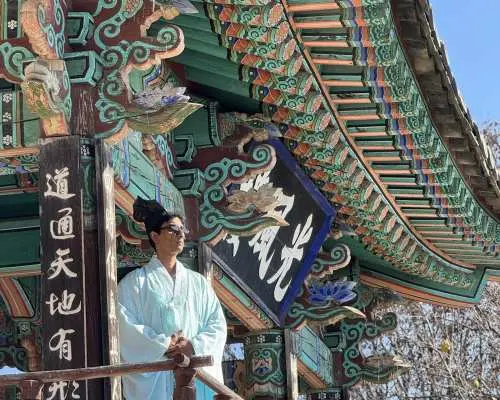
Gyeongbuk | Daegu Suburban Day Tour | Joseon Scholar Robe Experience × Calligraphy Experience × Samgang Jumak Village 【Departing from Daegu】
- Local Guidance: Professionally developed by Fly2Gether Daegu Local Travel Agency, taking you deep into the hidden cultural gems of Gyeongbuk while avoiding the crowds.
- Korean Scholar Robe Experience: Dress up in Yangban scholar robes for a stroll through ancient villages and experience the daily life of ancient literati.
- Exclusive Handcrafts: Carve your own ancient ID tag 'Hopae' and practice calligraphy to create your very own unique K-culture souvenir.
- Immerse in Local Life: Visit the last remaining traditional 'Samgang Jumak Village' in Korea and relive the rest stops of ancient scholars before their exams.
Product Info
Looking for a different side of Korea and the daily life of Joseon scholars? This itinerary will take you to Uiseong County in Gyeongbuk, near Daegu. Join our local travel companions to step into Gyeongbuk and start an in-depth journey filled with scholarly atmosphere.
As a Daegu-based travel agency, we have planned exclusive hands-on experiences and walking tours to help you experience the scholarly life of the Joseon Yangban nobility.
【Put on Scholar Robes and Stroll Through a Village Where Time Stands Still】
Unlike the complex and ornate court Hanbok, we have prepared Joseon scholar robes for you. Change into this attire and take a leisurely walk along the paths of an ancient village. Every snapshot will be a beautiful, atmospheric photo, as if you have returned to the relaxed pace of centuries ago, feeling the aesthetic of the literati life passed down through generations.
【Handcrafting: Calligraphy Art and Ancient ID Tag 'Hopae'】
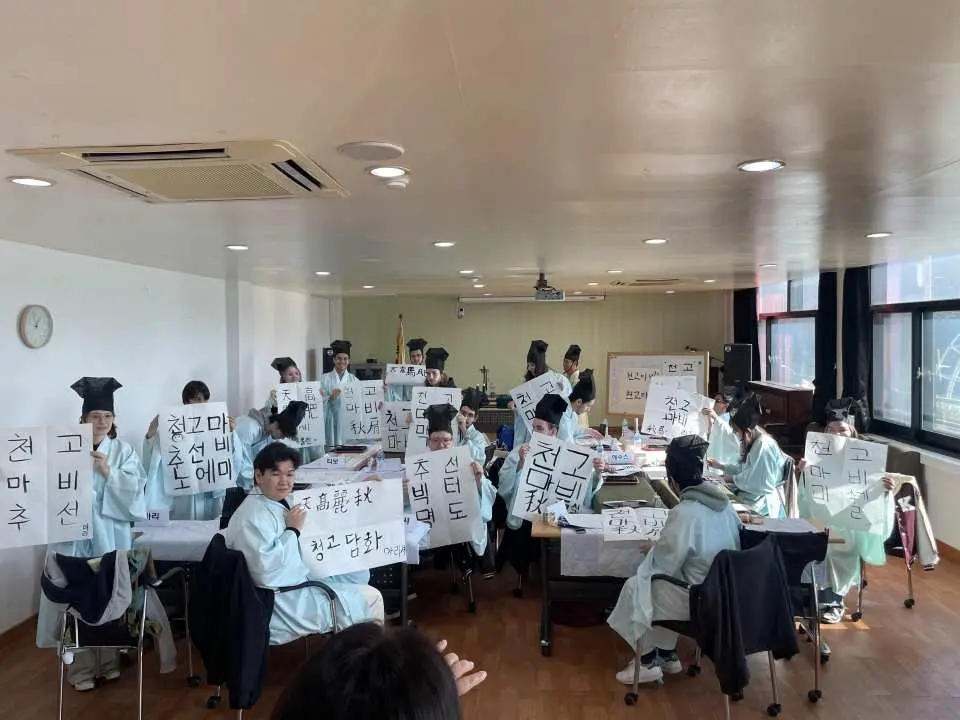
We have arranged a professional calligraphy experience to cleanse your mind amidst the scent of ink. Even more special, you can handcraft your own 'Hopae'—the identification tag carried by scholars during the Joseon Dynasty. This exclusive ancient ID and your calligraphy work can be taken home as a truly unique souvenir.
【The Only One in History: The Examination Sentiment of Samgang Jumak Village】
Head to Samgang Jumak Village to experience the scenery seen by Joseon scholars on their way to Hanyang. This was the 'last rest stop' for Gyeongbuk scholars heading to the capital for the imperial examinations, and it is the only traditional tavern (Jumak) in Korea that has been completely preserved. Under the rustic thatched roofs, accompanied by our guides familiar with local stories, history becomes more than just a textbook—it becomes a vivid piece of life.
【Small Group Departure, Accompanied by Friendly Local Companions】
Accompanied throughout by our local Chinese and English-speaking guides, we bridge all transportation and language gaps. We emphasize 'slow travel.' No noisy shopping stops, just plenty of time for you to immerse yourself in the rustic beauty. Whether you want to savor the art of calligraphy or taste authentic traditional snacks at the Jumak village, we offer maximum flexibility to show you a different side of Gyeongbuk's daily life.
【Vegan-friendly itinerary, no need to worry about meals, we will prepare vegan options for you】
⚠️ A Warm Reminder for Travelers
Regarding Insurance: To ensure your peace of mind during your trip to Korea, please note that this itinerary does not include 'travel insurance.' We recommend that you purchase your own insurance before departure.
Activity Safety: Outdoor cultural experiences are subject to unpredictable terrain or weather conditions. Please follow the staff's instructions during activities and assess your own physical condition.

Experience the daily life of a Korean Confucian scholar

Step into the village school and listen to the village chief tell the story of the village.

Learn how to wear Confucian scholar's robes with the village chief.

Step into the village and experience rural Korea.

Pick up a calligraphy brush and let's learn to write Korean characters together.
Join us to experience a different side of Korea!
Important Info
Reminders
A minimum of 8 traveler(s) are required for the tour to depart. If the number of participants does not reach the minimum requirement, the tour will be canceled. An email regarding tour cancellation will be sent 7 day(s) before the departure date
In case of delays caused by traffic, weather, or other force majeure factors resulting in the cancellation of some itinerary attractions, please contact customer service. We will arrange a partial refund for you
Please arrive at the designated location 10 minute(s) before the scheduled departure time, as the tour will depart on time
The activity route may be adjusted in case of rain.
Please provide your correct contact information (LINE / Kakao Talk) when booking. If you fail to provide the correct contact information and are unable to contact us before departure, we regret that we will not be able to offer a refund.
The tour is pre-selected to be conducted in Chinese or English. Please indicate your preferred language on the payment page. (If the tour is fully booked or the minimum number of participants is not reached, arrangements will be made according to availability. We apologize for any inconvenience.)
If you are booking separately from your travel companions, please provide the total number of members booking separately and the name of each member in the remarks.
This activity is only for children aged 10 and above.
This tour does not include insurance; please purchase insurance yourself.
FAQ
1. What is the historical background of the Joseon Scholar Uniform experienced during the tour?
The Joseon Scholar Uniform, or Seonbi-bok, dates back to the Joseon Dynasty (1392-1897). It was worn by "seonbi," or literati scholars, who were highly respected for their pursuit of knowledge, integrity, and ethical conduct. Their attire reflected their status and commitment to Confucian ideals, symbolizing simplicity, dignity, and intellectual pursuits. The uniform typically consisted of various robes and accessories, signifying their role in society and their dedication to learning.
2. How is the Joseon Scholar Uniform typically worn, and what are its main components?
The Joseon Scholar Uniform generally includes an outer robe (Dopo or Cheollik), an undergarment, trousers (Baji), and a top (Jeogori). Scholars would also wear a headpiece, such as a Gwan (hat) or a Manggeon (hairnet for a topknot). Footwear usually consisted of traditional cloth shoes (Kkotsin). The overall style emphasized modesty and elegance, with flowing lines and often muted colors, reflecting the scholarly virtues of humility and discipline.
3. What do the colors of Joseon Scholar Uniforms signify in Korean culture?
In Joseon society, colors held significant meaning and often indicated social status or rank. Scholar uniforms typically featured colors like black, white, blue, or grey, symbolizing purity, dignity, and academic pursuits. For officials, different colors of robes, such as red or blue, were strictly regulated to denote specific government ranks. For instance, higher-ranking officials might wear red, while lower ranks wore blue or green, representing a structured hierarchy.
4. What is the 'red robe' often associated with Joseon officials, and who wore it?
The 'red robe' (Jeokpo) was a prominent attire for high-ranking government officials during the Joseon Dynasty. It symbolized authority and prestige within the royal court. Only officials holding specific, elevated positions were permitted to wear red robes, often adorned with intricate embroidered badges (Hyungbae) depicting animals like cranes or tigers, further indicating their precise rank and status.
5. On what occasions were Joseon Scholar Uniforms traditionally worn in ancient Korea?
Joseon Scholar Uniforms were traditionally worn daily by scholars in their academic and social lives, particularly when attending lectures, studying, or engaging in intellectual discussions. Officials wore their specific uniforms during court duties, formal ceremonies, and important government functions. While commoners wore different attire, the scholar uniform marked a distinct social class and was integral to formal public appearances for the literati and bureaucracy.
6. What unique activities, besides wearing the Joseon Scholar Uniform, can be experienced at Samgang Jumak Village?
At Samgang Jumak Village, visitors can immerse themselves in the atmosphere of an ancient resting place for scholars. Beyond wearing the Joseon Scholar Uniform, you can explore traditional structures and experience what life was like for literati preparing for their journeys to the capital. This visit helps you relive the historical context of scholars' lives, offering a unique glimpse into Korea's past and cultural heritage as South Korea's last traditional village of its kind.
7. What is a 'hopae', and how is the 'hopae' carving experience part of the Joseon Scholar Uniform tour?
A 'hopae' was an identification tag used during the Joseon Dynasty, similar to a modern ID card, issued to men over the age of 16. It typically indicated one's name, birth year, and residence. As part of this tour, you will have a unique hands-on experience to personally carve your own 'hopae' and engage in calligraphy art. This allows you to create a personalized K-culture souvenir while understanding a piece of ancient Korean administrative history.
8. How does the Joseon Scholar Uniform experience immerse visitors in the daily life of ancient Korean literati?
The Joseon Scholar Uniform experience allows visitors to step back in time by dressing in the traditional attire of "seonbi," or ancient scholars. This hands-on activity, combined with strolling through historical villages and participating in activities like calligraphy and 'hopae' carving, provides a tangible connection to the daily routines and cultural practices of Joseon literati. It helps in understanding their values, education, and social roles in a deeply engaging way, as you embody their historical presence.


