



Kyoto Miyama Thatched Village Winter Lanterns Tour from Osaka
- Wonderful opportunity to visit the Miyama Wintern Lantern Festival, a limited-time event.
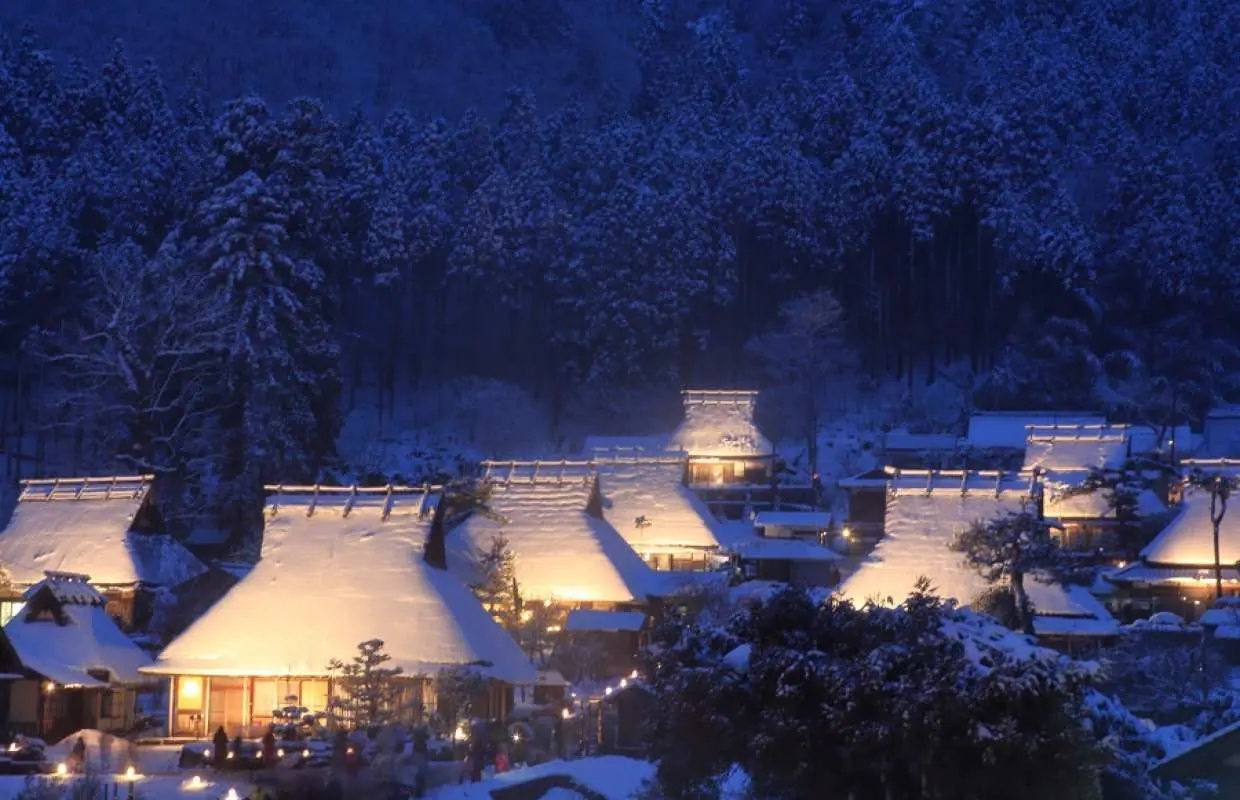
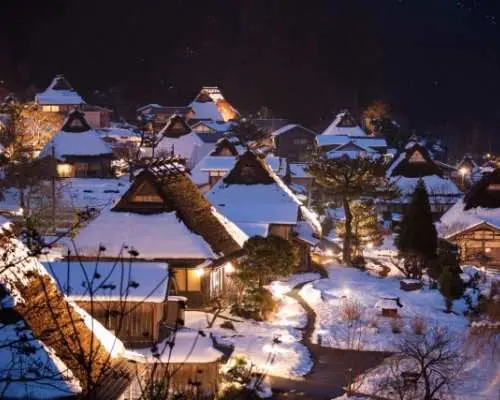
- Enjoy the lanterns illuminating the traditional thatched-roof village.
- Visit 3 scenic spots in the Kyoto countryside: Amanohashidate, Ine, and Miyama Kayabuki no Sato.
- Day trip from Osaka.
- Travel with an experienced guide who has strong knowledge of Kyoto.
Product Info
Purchase Notice
This is not a private tour, you will enjoy the tour with other guests together.
If the minimum number of participants 20 is not met by 14 days before the scheduled date, the tour on that date might be cancelled.
Please note that wheelchair is not accessible.
This tour involves a lot of walking. If you have trouble walking, we advise you not to book this tour.
Reminders
Customer Guidelines:
Please ensure you arrive promptly at the designated meeting place.
Please be aware that weekends, holidays, and event days may experience high levels of congestion.
The schedule may be subject to sudden changes or shorter visit durations due to reasons such as traffic congestion.
Refunds will not be provided if you fail to arrive at the meeting location on time (no show).
Wearing your seatbelt is mandatory while the bus is in motion due to legal regulations.
In the event of a natural disaster, such as a typhoon, the tour will be canceled, and a full refund will be issued.
Please personally take responsibility for your valuables.
Note: These guidelines are provided to ensure a safe and enjoyable experience. Thank you for your cooperation.
Cancellation Policy
- Cancellations 11 day(s) (inclusive) before the selected date are allowed. Unused orders can be canceled for free
- For cancellations made 8 to 10 days prior to selected date, a cancellation fee of 20% will apply
- For cancellations made 2 to 7 days prior to selected date, a cancellation fee of 30% will apply
- For cancellations made 1 to 1 days prior to selected date, a cancellation fee of 40% will apply
- Cancellation is not allowed between 0–0 days from the selected date. Orders cannot be canceled or modified, and refunds will not be granted.
- Due to time zone differences, the confirmed cancellation date is based on the supplier’s local time. Please allow 2–5 business days to process your cancellation request, after which the cancellation fee will be charged according to the product’s cancellation policy. Once the cancellation is confirmed, you will receive your refund within 14 working days.
FAQ
Yes, Miyama Kayabuki no Sato is located in the mountainous area of Nantan City, Kyoto Prefecture. Winter temperatures are low, and there's a chance of snow from December to February each year. Especially in January and February, the snow accumulation is usually richer, decorating the entire village in a world of white, which is beautifully contrasted with the unique thatched-roof houses.
The most convenient and hassle-free way to travel from Osaka city to Miyama Kayabuki no Sato is by joining a day tour. These tours typically offer comfortable private transportation, saving you the trouble of planning complex transfers between trains and buses. If you choose to travel by public transport, you'll first need to take a JR train from Osaka to Kyoto Station, then transfer to the JR Sanin Line to Sonobe Station, and finally take a Nantan City Bus to reach Miyama Kayabuki no Sato. This route is rather time-consuming and inconvenient.
Besides Miyama Kayabuki no Sato in Kyoto, there are two other settlements in Japan equally renowned for their traditional thatched-roof houses, often listed alongside Miyama as the 'Three Great Thatched-Roof Villages of Japan.' These are the UNESCO World Heritage site 'Shirakawa-go Gassho-zukuri Village' in Gifu Prefecture, and 'Ouchijuku' in Fukushima Prefecture, which preserves the Edo period appearance. Each village has its unique characteristics, showcasing the architectural beauty of traditional Japanese rural life.
The winter lantern lighting event at Miyama Kayabuki no Sato, known as the 'Miyama Winter Illumination Festival,' is a special seasonal event. It is usually held on specific winter nights each year, illuminating the traditional thatched-roof houses to create a magical nighttime scenery. The exact dates depend on the official announcement for that year, so it's recommended to check the latest event schedule before planning your trip.
Yes, a winter lantern tour to Miyama Kayabuki no Sato is typically a rich full-day itinerary that includes multiple highlights. Besides the core destination of Miyama Kayabuki no Sato, you'll have the opportunity to visit 'Amanohashidate,' hailed as one of Japan's Three Great Views, and the 'Ine' fishing village, known for its unique 'funaya' (boathouse residences). This journey allows you to experience the diverse natural scenery and traditional culture of northern Kyoto all at once.
The traditional thatched-roof houses in Miyama Kayabuki no Sato are known for their distinctive 'Irimoya-zukuri' (hip-and-gable roof) or 'Yosemune-zukuri' (hip roof) architectural styles. These roofs are made of thick layers of thatch, piled high with steep slopes. They not only effectively withstand winter snow and rain but also showcase the wisdom and aesthetics of ancient Japanese farmhouse architecture. The ensemble of buildings in the village blends perfectly with the natural landscape, creating a unique appearance.
When visiting Miyama Kayabuki no Sato in winter, it's essential to prepare adequate cold-weather clothing and gear. This should include thermal base layers, insulated outerwear such as wool or down jackets, waterproof and slip-resistant snow boots or hiking shoes, and accessories like hats, gloves, and scarves. As temperatures in and around the village are low and snow is likely, proper insulation is crucial for comfortably experiencing the winter scenery.
The nighttime lantern lighting event at Miyama Kayabuki no Sato illuminates the traditional thatched-roof houses with warm, soft lights, adding a sense of warmth and mystery to the ancient village. Against a backdrop of snow, these lights create a dreamlike winter night scene, forming a striking contrast with the simple beauty of the daytime. This allows visitors to immerse themselves in a unique Japanese winter night atmosphere.
Get Help


