


【KABA Experience】Tokyo Mt. Fuji Kawaguchiko/Lake Yamanaka Hippo Bus Experience/Two Lakes Cycling/Hot Spring Shared Ride Day Trip: Oishi Park + Hikawa clock shop+ Oshino Hakkai + |English/Chinese Driver/Guide | Departure from Tokyo
- 【Small Group of 9】Few people, less hassle, Chinese-speaking driver, no need to worry about language barriers.
- 【360° View of Mount Fuji】Featured Attractions: Lake Kawaguchi + Popular Lawson Convenience Store + Hikawa Hikawa clock shop Town + Oshino Hakkai + Lake Yamanaka
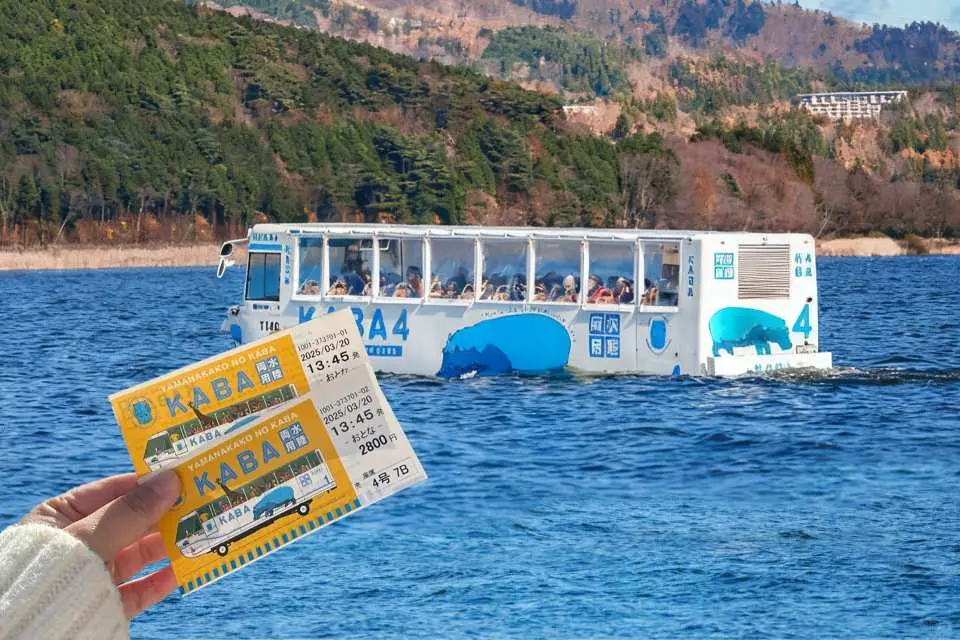
- 【KABA Experience】Includes a boat ride for a fun-filled experience.
Package Options
Product Info
What You Can Expect
1 Day
- Please meet at the JR Tokyo Station Marunouchi North Exit meeting point at 7:40 AM Japan time. Please arrive at the meeting point 10 minutes in advance to wait for your pick-up.
- Lawson Kawaguchiko Station Front or Kawaguchiko Office Building Front – A Perfect Spot for Travel Photography The Lawson Kawaguchiko Station Front store is nestled amidst the picturesque scenery of Mount Fuji and Lake Kawaguchi. Its blue and white exterior stands out beautifully against the natural backdrop. Every angle here is a poetic masterpiece, making it a place you'll want to linger. Whether capturing the glimmer of sunlight in the mountains or freezing a warm moment in your travels, the Lawson store in front of Kawaguchiko Station is a romantic haven that travelers shouldn't miss.
- Oishi Park, Kawaguchiko Located on the shores of Lake Kawaguchi, Oishi Park unfolds like a vibrant painting at the foot of Mount Fuji. It's an exceptional vantage point for viewing Mount Fuji, a place where flowers, mountains, lake, and sky blend perfectly. Oishi Park offers a never-ending visual feast throughout the four seasons. In spring, cherry blossoms bloom like clouds, creating a picturesque scene against the backdrop of Mount Fuji's snow-capped peaks; in summer, lavender blooms, its purple sea of flowers weaving together with the blue sky and white clouds, creating an incredibly romantic atmosphere; in autumn, cosmos flowers bloom, their pink blossoms swaying in the autumn breeze, adding a touch of gentle color to Mount Fuji; in winter, snow blankets the earth, transforming Mount Fuji and Lake Kawaguchi into a silver wonderland, like a fairytale world.
- Nikkawa Clock Shop - Unlock a hidden spot for capturing authentic Japanese street scenes, with Mount Fuji at the end. At the foot of Mount Fuji, not only are there familiar songs, but also a diverse collection of beautiful Japanese scenery, Nikkawa Clock Shop being one of them. The low wooden eaves lining the streets of Nikkawa Clock Shop exude a rustic craftsmanship and the marks of time; at the end of the street lies Mount Fuji, creating a harmonious blend of humanity and nature. Whether in the morning mist or the afterglow of the sunset, this is a perfect location to capture the perfect combination of Mount Fuji and the street.
- Savor the sweet spring waters of Oshino Hakkai, the "Jiuzhaigou" of Mount Fuji. Oshino Hakkai is a beautiful place bestowed by nature. Meltwater from Mount Fuji flows through the earth's strata, filtering to form eight clear springs. The springs are crystal clear, reflecting the grandeur of the mountains and the tranquility of the sky. Each spring holds a long history and rich culture, carrying a mysterious origin. It is not only a gift of nature but also a sanctuary for the soul, an ideal place for people seeking peace and tranquility.
- Lake Yamanaka, the largest of the Fuji Five Lakes, is renowned for its clear waters and the magnificent reflection of Mount Fuji. From the lakeshore, Mount Fuji stretches out with long, winding ridges, creating a breathtaking view. Every year from February to April, despite the cold, swans (known as "Shiratori" in Japan) flock here to breed. Because tourists often feed them, the swans are very friendly, earning Lake Yamanaka the nickname "Lake of the Shiratori." The "KABA Hippo Bus" is a very rare amphibious bus, a beloved attraction at Lake Yamanaka. It can take you for a drive through the forest or for a cruise on the lake, offering a unique "mountain and sea" experience. Enjoy the warm sunshine, gentle breezes, lush forests, and splashing water on the Hippo Bus.
- The day's itinerary ends at 15:00, and the return journey begins.


Important Info
Reminders
In case of delays caused by traffic, weather, or other force majeure factors resulting in the cancellation of some itinerary attractions, please contact customer service. We will arrange a partial refund for you
In the event of inclement weather such as typhoons or snowstorms, a decision on whether to cancel the tour will be made 1 day(s) before departure (local time 20:00). Notifications will then be sent via email
Travelers with the following conditions or other health issues that could be worsened by excessive stimulation should not participate in this activity: High blood pressure, Heart disease, Acrophobia, Asthma, Epilepsy, Pregnant women
Please arrive at the designated location 10 minute(s) before the scheduled departure time, as the tour will depart on time
How to Redeem Your Voucher
How to Use Your Voucher
- Please present your order number
Meeting Point
Location Name: JR Tokyo Station Marunouchi North Exit
Address: Tokyo Station Marunouchi North Exit
FAQ
1. How long is the typical stay at each scenic spot on tours that include Lake Kawaguchiko's Oishi Park and Oshino Hakkai?
At Oishi Park in Lake Kawaguchiko, you'll typically have about 40-60 minutes, which is enough time to enjoy the flower fields along the lake, the beautiful views of Mt. Fuji, and take photos. For Oshino Hakkai, we allocate approximately 60-90 minutes, allowing you to leisurely explore the spring ponds, traditional thatched-roof houses, and experience the local atmosphere. The overall tour duration considers travel time between locations to ensure a comprehensive experience at each stop.
2. What are the recommended experiences or photo spots at Lake Kawaguchiko's Oishi Park, Hikawa Clock Shop, and Oshino Hakkai?
Oishi Park in Lake Kawaguchiko is famous for its seasonal flowers and stunning photo opportunities with Mt. Fuji. We recommend strolling along the lakeside path to soak in the picturesque scenery. The Hikawa Clock Shop offers a unique vantage point for the 'Tengel-like town' view, allowing you to capture classic photos combining the streetscape with Mt. Fuji. Oshino Hakkai is characterized by its crystal-clear spring ponds and traditional Japanese village architecture, making it an excellent spot for capturing reflections of Mt. Fuji and the idyllic countryside.
3. What are the best months to visit the Lake Kawaguchiko area and view Mt. Fuji for optimal weather and scenery?
The best season to view Mt. Fuji is generally in autumn and winter, particularly from October to February. During this period, the skies are clearer with high visibility, making it easier to see the complete summit of Mt. Fuji. Spring (March-May) offers cherry blossoms, while summer (July-August) has lush greenery and lakeside activities, though the mountain's snow cap may be less prominent. Typhoon and cloudy weather are more common from summer to early autumn, so it's advisable to avoid these months if possible.
4. Besides Oishi Park in Lake Kawaguchiko, what other unique activities are recommended in the Lake Yamanaka area?
In addition to the lakeside scenery, the most popular unique experience in the Lake Yamanaka area is riding the KABA amphibious bus. This dual-purpose vehicle allows you to tour Lake Yamanaka both on land and in the water, offering a distinct perspective of Mt. Fuji. It's a unique and highly enjoyable activity. The lakeside also features cycling paths and numerous cafes, perfect for a leisurely afternoon.
5. What are the unique features of the Lake Yamanaka KABA bus experience, and how does it differ from other modes of transportation?
The most distinctive feature of the Lake Yamanaka KABA bus is its amphibious design, enabling it to drive directly from land into the lake. This provides a unique touring perspective, allowing passengers to experience the lake's beauty and the grandeur of Mt. Fuji in a short amount of time. Compared to traditional boat tours or buses, it combines the fun of two modes of transportation, adding interactivity and novelty to the journey, making it suitable for all ages.
6. What are some recommended photo angles or tips for photographing Mt. Fuji from the Hikawa Clock Shop?
At the Hikawa Clock Shop, the most classic photo angle is from the center of the street, incorporating Mt. Fuji along with the houses and utility poles on either side to create a contrast between the Japanese streetscape and the majestic mountain. It's advisable to visit on a clear day with good visibility. Morning light is usually better, helping to avoid backlighting. Please prioritize traffic safety and respect the local residents' privacy when taking photos.
7. How does choosing a small group tour with a Chinese-speaking guide enhance the travel experience in the Mt. Fuji and Lake Kawaguchiko region?
Opting for a small group tour with a Chinese-speaking guide significantly enhances travel convenience and comfort. The guide can overcome language barriers and provide detailed explanations of local culture and attractions, allowing for a deeper understanding of the Mt. Fuji and Lake Kawaguchiko area. Small group tours also offer more flexible itineraries and less waiting time, enabling you to focus on enjoying your trip without worrying about transportation arrangements.
8. What are the must-see natural landscapes and cultural features of Oshino Hakkai as a tourist attraction?
Oshino Hakkai is renowned for its eight crystal-clear spring ponds, fed by the melted snow of Mt. Fuji, yielding pure water. Highlights include 'Oshoga-ike,' with its mysterious ambiance, and 'Kagami-ike,' which perfectly reflects Mt. Fuji. Culturally, the area preserves many traditional thatched-roof houses, showcasing the simple aesthetic of Japanese rural villages and allowing visitors to experience a rich pastoral landscape and traditional Japanese life.


