
![[Group of 1] Kansai Hidden Gems Day Trip | Miyama-cho Gassho-zukuri Village, Katsuo-ji Temple, Arashiyama Bamboo Forest, Tenryu-ji Temple | Private Route, Quality Travel](https://image.kkday.com/v2/image/get/c_fill%2Ch_800%2Cq_55%2Ct_webp%2Cw_1240/s1.kkday.com/product_scm_7390/20260408061417_cb6w8/jpg)
![[Group of 1] Kansai Hidden Gems Day Trip | Miyama-cho Gassho-zukuri Village, Katsuo-ji Temple, Arashiyama Bamboo Forest, Tenryu-ji Temple | Private Route, Quality Travel](https://image.kkday.com/v2/image/get/c_fill%2Ch_400%2Cq_55%2Ct_webp%2Cw_500/s1.kkday.com/product_scm_7390/20260408061433_4sFmA/jpg)
![[Group of 1] Kansai Hidden Gems Day Trip | Miyama-cho Gassho-zukuri Village, Katsuo-ji Temple, Arashiyama Bamboo Forest, Tenryu-ji Temple | Private Route, Quality Travel](https://image.kkday.com/v2/image/get/c_fill%2Ch_400%2Cq_55%2Ct_webp%2Cw_500/s1.kkday.com/product_scm_7390/20260408061441_id1SD/jpg)
![[Group of 1] Kansai Hidden Gems Day Trip | Miyama-cho Gassho-zukuri Village, Katsuo-ji Temple, Arashiyama Bamboo Forest, Tenryu-ji Temple | Private Route, Quality Travel](https://image.kkday.com/v2/image/get/c_fill%2Ch_400%2Cq_55%2Ct_webp%2Cw_500/s1.kkday.com/product_scm_7390/20260408061603_kMzvQ/jpg)
![[Group of 1] Kansai Hidden Gems Day Trip | Miyama-cho Gassho-zukuri Village, Katsuo-ji Temple, Arashiyama Bamboo Forest, Tenryu-ji Temple | Private Route, Quality Travel](https://image.kkday.com/v2/image/get/c_fill%2Ch_400%2Cq_55%2Ct_webp%2Cw_500/s1.kkday.com/product_scm_7390/20260408061629_J3wxC/jpg)
[Group of 1] Kansai Hidden Gems Day Trip | Miyama-cho Gassho-zukuri Village, Katsuo-ji Temple, Arashiyama Bamboo Forest, Tenryu-ji Temple | Private Route, Quality Travel
- Hidden Gems Linked | Explore different layers of Kansai scenery in one day. In-depth exploration of the hidden gem in northern Kyoto - Miyama-cho Gassho-zukuri Village, paired with the sacred temple Katsuo-ji and the natural and culturally rich Arashiyama Bamboo Forest and Tenryu-ji Temple, one trip to experience the beauty of mountain villages, culture and Zen.
- Small Group Private Tours | Reject Crowds and Enjoy a More Relaxed Experience: We offer a curated selection of high-end small group travel options, controlling the number of participants and bidding farewell to the traditional bus rush. This allows for more freedom and immersion in every stop, providing a true "light luxury slow travel" experience.
- Selected Routes | Quality Experiences Avoiding Crowds: Specially designed routes with well-planned time and sequence to avoid peak hours and allow you to experience the tranquility and sophistication of Kansai in optimal lighting and atmosphere.
- Professional Driver-Guide | Not just showing the way, but also understanding travel. Local drivers and guides who are familiar with Kansai culture and routes provide explanations of history and local customs along the way, making travel more than just "seeing the sights," but "understanding Japan."
- Easy Departure | Stress-Free Meeting Point in Osaka: Convenient meeting point in downtown Osaka (near Namba/Shinsaibashi), no complicated transfers required, direct access to hidden gems, saving time and effort, perfect for short trips.
- Beautiful in every season | Worth traveling in all four seasons: cherry blossoms in spring, summer retreats, autumn foliage viewing, and winter snow viewing. No matter when you travel, this route will present different layers of beauty in the Kansai region.
Package Options
Product Info
The content of this product is provided by machine translation and may not reflect the actual information, please take this into consideration before booking.
Escape the crowds and step into a more authentic and vibrant Kansai. This itinerary combines hidden gems with classic attractions, showcasing the most representative natural and cultural sites in Kansai, offering a multifaceted experience from rural landscapes to the Zen-like atmosphere of Kyoto within a single day.
Departing from Osaka in the early morning, embark on a relaxing and comfortable journey. First stop: Miyama-cho Gassho-zukuri village, renowned as a "true Japanese landscape," where traditional thatched-roof houses are preserved. Each season offers a different view: verdant spring, pastoral summer, autumn foliage, and winter snowscapes—a tranquil Japanese rural painting. Here, you can freely stroll along country lanes and experience the peace and quiet away from the hustle and bustle of the city.
Afterwards, we visited Katsuo-ji Temple, a famous shrine for good fortune in the Kansai region. The temple grounds are filled with Daruma dolls symbolizing "good luck," creating a solemn and visually striking atmosphere, making it a popular spot for those seeking breakthroughs in their careers, studies, and life. Here, you can not only pray for blessings but also take photos of the unique cultural landscape.
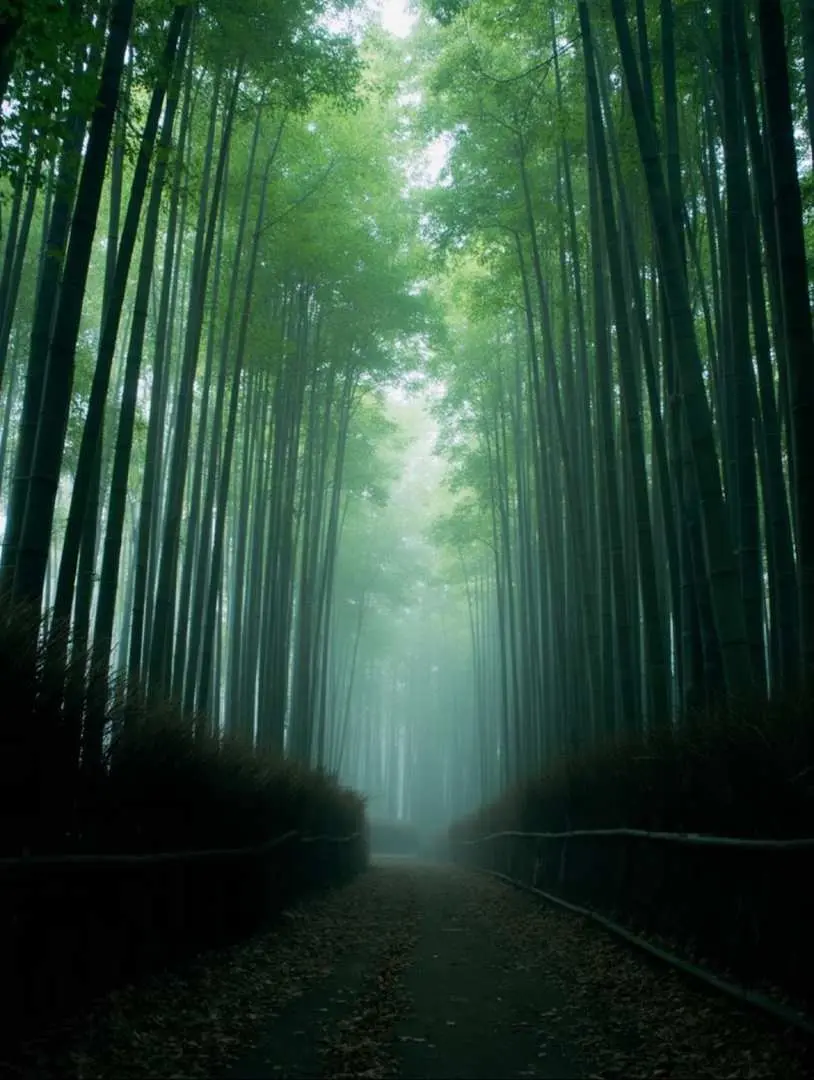
Next, we'll enter the Arashiyama area of Kyoto and stroll along the world-famous Arashiyama Bamboo Grove. The towering bamboo groves sway in the wind, sunlight filtering through the bamboo and casting shadows on the ground, creating a unique atmosphere of light and shadow – one of Kyoto's most iconic natural landscapes. Afterwards, we'll visit Tenryu-ji Temple, a UNESCO World Heritage Site, to admire its Japanese garden, renowned for its borrowed scenery technique, and experience the ultimate aesthetic of the fusion of Zen and nature.
This product utilizes a premium small group tour format, avoiding the crowds and rush of traditional large group tours. Comfortable vehicles and experienced driver-guides are provided throughout the trip, with the pace flexibly adjusted according to road conditions to ensure a more relaxed and smooth journey.
We place special emphasis on the quality and details of the travel experience: we don't rush or cut back on stays, ensuring that every guest truly "enters the attractions, rather than just passes by." We also support communication in Chinese, helping you to more easily understand the local culture and background.
Whether you're visiting Kansai for the first time or looking to explore deeper aspects of Japan's landscape, this route will provide you with an unforgettable experience that combines comfort and uniqueness.
Trip Highlights Summary
A blend of hidden gems and classic landmarks: Miyama + Arashiyama + World Heritage temples
Premium Small Group Tours: Avoid Crowds and Enhance the Overall Experience
Comfortable pace: No rush, deep relaxation
Professional service: Peace of mind, convenience, and a better experience.
Katsuo-ji Temple, located in Minoo City, Osaka, is an ancient temple famous for its prayers for victory and good fortune, and is one of the most popular places of worship in the Kansai region. Many people come here to offer their wishes for exams, career advancement, or important life stages. Upon entering the temple grounds, one is greeted by a solemn vermilion gate. Passing through the "Seijō-ji Bridge," symbolizing purification of mind and body, the mist creates a tranquil atmosphere, allowing one to gradually calm down. Further up the path, one is greeted by "Victory Daruma Dolls" scattered throughout the mountainside. Thousands upon thousands of red Daruma dolls are neatly arranged, their resolute expressions symbolizing perseverance and hope, and embodying the worshippers' expectations for achieving their goals. Continuing on, one arrives at the main hall, which enshrines the Eleven-Faced Thousand-Armed Kannon. Chanting takes place here year-round, and the quiet and solemn environment is perfect for a moment to find inner peace. The temple also enshrines "Mōzaiten," symbolizing wealth and art, as well as an elegantly designed pagoda, showcasing a rich cultural and architectural heritage. Katsuo-ji Temple is both a place of prayer and a scenic attraction. The Daruma doll displays, combined with the natural scenery of all four seasons, offer a sense of tranquility and power to visitors at any time. Guide to Praying with Daruma Dolls for Good Fortune Rows of Daruma dolls can be seen everywhere within the temple grounds; these are offerings made by worshippers to express their wishes. Visitors can also participate in this ritualistic prayer process.


Miyama Thatched-roof Village, Kyoto – Located in Nantan City, Kyoto Prefecture, the Miyama Thatched-roof Village, along with Shirakawa-go in Gifu Prefecture and Ouchi-juku in Fukushima Prefecture, is considered one of Japan's most representative thatched-roof village settlements. It retains its traditional rural charm and is an important place to experience Japan's old-style residential culture. The core area of the village, "Kitamura," has about 50 buildings, of which about 40 are thatched-roof houses. These are mostly the residences of local residents and were designated a National Important Preservation District for Groups of Traditional Buildings in 1993. The entire village is built against the mountainside, in a quiet and natural environment. Rows of thatched-roof houses complement the pastoral scenery, presenting a simple and leisurely atmosphere, making visitors feel as if they have stepped into a scene of rural life from the past.


Bamboo Grove Path The Sagano Bamboo Grove Path stretches approximately 500 meters from the Nonomiya Shrine area to near the Ōkōchi Sanso area. Strolling along it, the swaying bamboo shadows and interplay of light and shadow create a tranquil and serene environment. The sound of the breeze rustling through the bamboo leaves is considered one of Japan's most representative natural sounds, offering a sense of relaxation and serenity. Yuzen's Light Forest (Arashiyama Station) The "Yuzen's Light Forest," an art installation located within Arashiyama Station, consists of approximately 600 pillars of light decorated with Kyoto Yuzen patterns. Vibrant during the day and illuminated at night, it presents a different atmosphere, making it a popular spot for photos. The nearby "Ryū no Atago Pond" is also quite unique, allowing visitors to experience touching the water to make wishes and immerse themselves in traditional cultural atmosphere.


Tenryu-ji Temple, located in the Arashiyama area of Kyoto, is an important temple of the Rinzai sect and a UNESCO World Heritage Site. Founded in the 14th century by Ashikaga Takauji in memory of Emperor Go-Daigo, it retains a rich historical and cultural heritage. Sogenchi Garden The core attraction of Tenryu-ji Temple is the Sogenchi Garden, a typical strolling garden with a pond. Centered around a pond, the garden incorporates the surrounding mountain scenery, creating a "borrowed view" effect that blends nature and man-made landscapes seamlessly. With the changing seasons, the garden presents different colors and atmospheres, perfect for quiet strolls and contemplation. Four Seasons Views Tenryu-ji Temple offers unique scenery in each season: Spring: Cherry blossoms bloom, creating a beautiful scene in the garden. Summer: Lush greenery and a tranquil environment. Autumn: Layers of red leaves create a rich tapestry of colors. Winter: A serene and solemn atmosphere. No matter when you visit, you can experience different natural changes and a Zen-like atmosphere. History and Culture Tenryu-ji Temple holds an important place in the history of Japanese Buddhism and Kyoto culture. Despite numerous fires and reconstructions, it has survived to this day. The temple's architecture and garden layout embody traditional Zen aesthetics, creating an overall atmosphere of solemnity and tranquility.


What You Can Expect
1 Day
- 08:00Board the bus at 8:00 AM from Exit 2 of Nipponbashi (departing from Osaka).
- 09:30Katsuo-ji Temple, nestled in the mountains of Minoo, Osaka, is known as the "Temple of Good Fortune." The temple houses countless Daruma dolls, symbolizing the fulfillment of wishes and the overcoming of difficulties. Visitors often dot the eyes of the Daruma dolls to make a wish, signifying the achievement of their goals. The temple boasts beautiful scenery in all four seasons, especially renowned for its lush greenery in spring and vibrant autumn foliage. It's not only a sacred place for praying for good fortune but also a tranquil retreat from the city's hustle and bustle, offering a sense of peace and Zen. At Katsuo-ji, drawing eyes on Daruma dolls is a highly ritualistic tradition. When making a wish, one eye is first drawn on the Daruma doll, symbolizing setting a goal and determination; after the wish is fulfilled, the other eye is drawn, signifying the completion of the wish. The Daruma doll's roly-poly shape represents perseverance and resilience, the ability to rise again even in the face of setbacks. Many visitors offer their completed Daruma dolls as a memento or take them home as a lasting symbol of their beliefs and motivation. At Katsuo-ji, taking photos with postcards is a popular activity among visitors. The temple offers unique Bodhidharma-themed postcards and commemorative stamps, where visitors can write blessings or travel reflections on-site. Mailing the postcards using the temple's mailbox is not only a unique travel souvenir but also symbolizes sending wishes and good fortune far away. The red Bodhidharma elements complement the ancient temple, imbuing each postcard with a sense of ritual and cultural significance.
- 13:00Miyama, a village in Kyoto known for its well-preserved thatched-roof houses, is famous for its clusters of traditional Gassho-style dwellings. Dozens of these houses still stand, showcasing the authentic rural landscape of Japan. The village offers different scenery in each season: verdant greenery in spring, cool respite in summer, vibrant autumn foliage, and snow-covered landscapes in winter, creating a truly idyllic setting. Visitors can stroll through the village, sample local cuisine and dairy products, and experience the slow pace of life and the warmth of the people – an ideal place to escape the hustle and bustle of the city and immerse themselves in traditional Japanese culture.
- 15:30Arashiyama Bamboo Grove: A vast expanse of towering bamboo stretches along the walking path, sunlight filtering through the leaves and casting dappled shadows. The rustling of leaves in the breeze creates a tranquil and mysterious atmosphere. Strolling through it feels like entering another world, making it a popular spot for tourists to take photos and experience Japanese Zen. Connecting Tenryu-ji Temple and Nonomiya Shrine, it's beautiful in all seasons, but the experience is best in the early morning or evening when there are fewer people.
- 16:00Tenryu-ji Temple, located in Arashiyama, Kyoto, is a renowned Rinzai Buddhist temple founded in the 14th century to commemorate Emperor Go-Daigo. The temple is famous for its Sogenchi Garden, which incorporates the natural landscape of Arashiyama, showcasing typical Japanese Zen aesthetics. The scenery changes with the seasons, with cherry blossoms in spring and autumn leaves in autumn being particularly enchanting. Tenryu-ji is a UNESCO World Heritage Site and a representative historical and cultural landmark of Kyoto, as well as an important place to experience Japanese Zen culture and garden art.
- 18:00Tour ends at Exit 2 of Nipponbashi, Osaka




Purchase Notice
Precautions:
(i) Once the order is confirmed, the date cannot be changed arbitrarily. Any losses incurred will be borne by the order holder.
(ii) When making a reservation, please be sure to provide complete information (name + number of people + phone number + WeChat ID + pick-up location) to avoid errors that may affect your trip.
(III) During the trip, please keep your passport and valuables with you at all times and keep them safe. You will be responsible for any loss, theft or damage.
(iv) Elderly people, patients with cardiovascular diseases such as hypertension and heart disease, and pregnant women are advised to be accompanied by relatives.
(v) This tour does not accept bookings from customers under the age of 18. If you wish to book, please have your guardian book the tour together.
(vi) This is a fixed-route carpooling tour. Customers participating in this tour are required to adhere to the time limits for each attraction and follow the instructions of the driver/guide.
For services requiring flexible itinerary adjustments, please refer to our private charter car tour service.
(vi) No refunds will be given for any failure to participate or cancellation of the trip due to personal issues, lateness, or other reasons. Please take note.
(vii) If a participant leaves the group during the trip, the transaction will be deemed invalid and no refund will be given. Furthermore, the participant will be solely responsible for any personal injury or property damage resulting from this.
(viii) Arrival times for each itinerary may vary depending on traffic conditions, weather, holidays, and crowds on the day. If the itinerary is delayed or cancelled due to the aforementioned or other force majeure factors, please understand that no refund can be requested on this basis.
(ix) Please wear comfortable and suitable travel clothing and shoes for this trip.
(x) Please be sure to abide by local Japanese laws and regulations, and do not bring items that are prohibited by Japanese law, so as to avoid violating the law and affecting your own rights.
(xi) During free time, you should pay attention to your personal safety and property safety. If you do not heed the advice and an accident or loss occurs, you will be responsible for the consequences.
Reminders
A minimum of 1 traveler(s) are required for the tour to depart. If the number of participants does not reach the minimum requirement, the tour will be canceled. An email regarding tour cancellation will be sent 1 day(s) before the departure date
In case of delays caused by traffic, weather, or other force majeure factors resulting in the cancellation of some itinerary attractions, please contact customer service. We will arrange a partial refund for you
In the event of inclement weather such as typhoons or snowstorms, a decision on whether to cancel the tour will be made 1 day(s) before departure (local time 18:00). Notifications will then be sent via email
Please arrive at the designated location 10 minute(s) before the scheduled departure time, as the tour will depart on time
Once an order is confirmed, the date cannot be changed arbitrarily. Any losses incurred will be borne by the order holder.
When placing your order, please be sure to provide complete information (name + number of people + phone number + WeChat/LINE ID + pick-up location) to avoid errors that may affect your trip.
This is a fixed itinerary and cannot be changed. However, the driver may make temporary changes to the itinerary depending on traffic conditions on the day of departure. We apologize for any inconvenience.
Arrival times for each itinerary may vary depending on traffic conditions, weather, holidays, and crowds. We apologize for any delays or cancellations caused by the aforementioned factors or other unforeseen circumstances, and no refunds will be provided on such grounds.
During the trip, please keep your passport and valuables with you at all times and keep them safe. You will be responsible for any loss, theft, or damage.
Elderly individuals, those with hypertension, heart disease or other cardiovascular diseases, and pregnant women are advised to have family members accompany them.
This tour does not accept bookings from customers under the age of 18 who are traveling alone. If you wish to book this tour, please have a guardian book it with you.
No refunds will be given for any absences or cancellations due to personal issues, lateness, or other reasons. Please take note.
If you leave the group midway through the trip, the transaction will be considered invalid, and no refund will be given. Furthermore, you will be solely responsible for any personal injury or property damage resulting from this.
Please wear comfortable, travel-appropriate clothing and shoes for this trip.
Please be sure to comply with local Japanese laws and regulations, and do not bring any items prohibited by Japanese law, so as to avoid violating the law and affecting your own rights.
During free time, you should pay attention to your personal safety and property security. If you do not heed the advice and an accident or loss occurs, you will be responsible for the consequences.
Eating and drinking are generally prohibited inside the vehicle. In special circumstances, you may request permission from the driver to negotiate.
How to Use
How to Use Your Voucher
- Please present the e-voucher on-site


