
![[Departing from Seoul] 4-Night, 5-Day Private Tour of Seoul, Busan, and Gyeongju](https://image.kkday.com/v2/image/get/c_fill%2Ch_800%2Cq_55%2Ct_webp%2Cw_1240/s1.kkday.com/product_scm_2601/20251002041840_gKeU3/jpg)

![[Departing from Seoul] 4-Night, 5-Day Private Tour of Seoul, Busan, and Gyeongju](https://image.kkday.com/v2/image/get/c_fill%2Ch_400%2Cq_55%2Ct_webp%2Cw_500/s1.kkday.com/product_scm_2601/20251002041904_9mCIr/jpg)
![[Departing from Seoul] 4-Night, 5-Day Private Tour of Seoul, Busan, and Gyeongju](https://image.kkday.com/v2/image/get/c_fill%2Ch_400%2Cq_55%2Ct_webp%2Cw_500/s1.kkday.com/product_scm_2601/20251002041914_jnVyz/jpg)

[Departing from Seoul] 4-Night, 5-Day Private Tour of Seoul, Busan, and Gyeongju
- A licensed guide will come to your accommodation or KTX Seoul Station at 12:00 PM to begin the tour with you.
- The first day of the Seoul trip starts at 12 o'clock because there is a sunset cruise on the Han River on the first day.
- Since this is a private tour, only you and your party will participate in the tour.
- This tour begins at your accommodation in Seoul or at KTX Seoul Station and ends at Seoul Station.
Package Options


Product Info
If you want to create unforgettable memories, sign up for this tour. Korea Irene Trip will create a romantic destination for you. This is a 4-night, 5-day trip to Seoul, Busan, and Gyeongju, departing from Seoul. This trip begins at your Seoul accommodation and ends at Seoul Station. This is an exclusive, private tour.
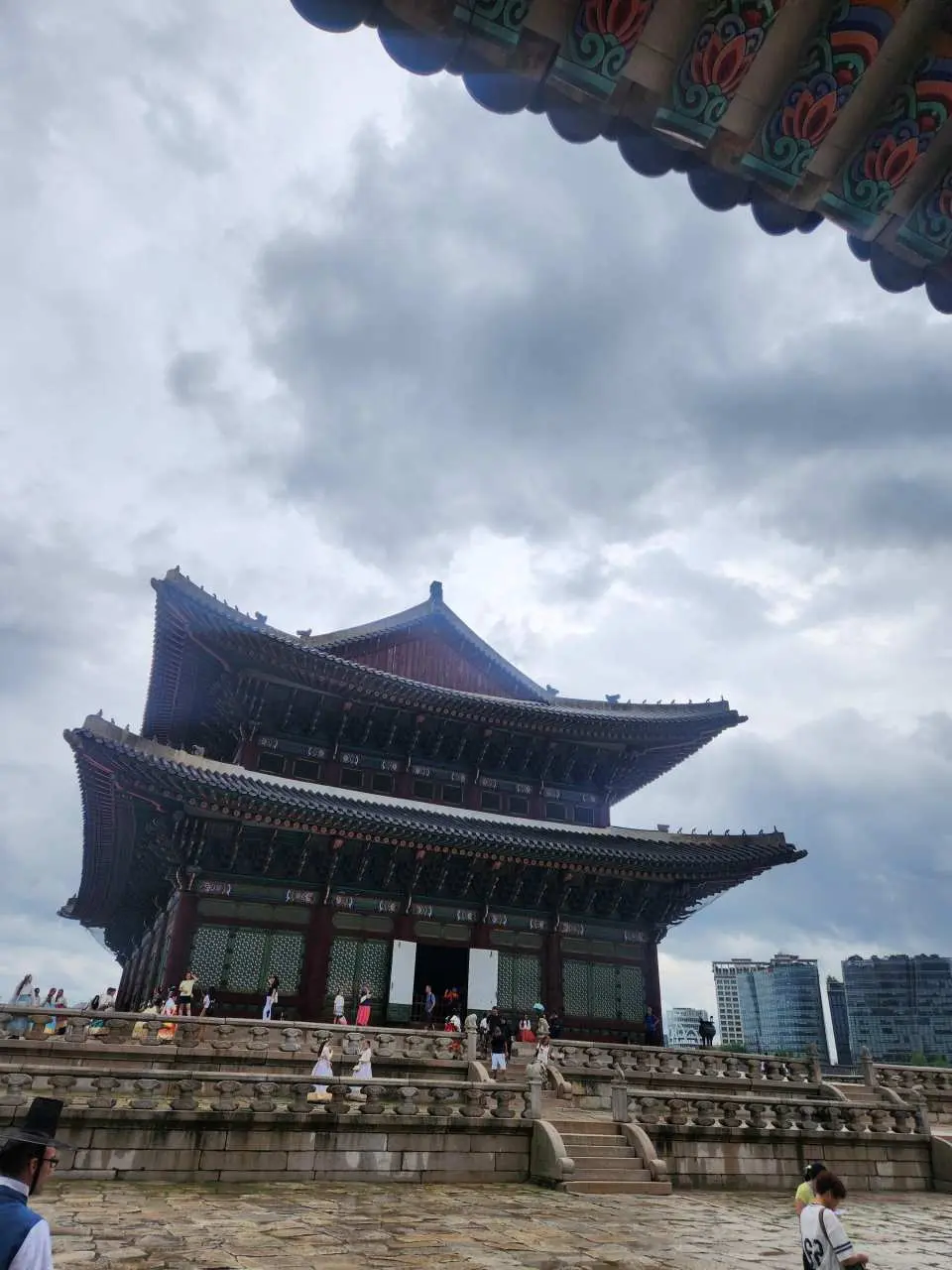
Gyeongbokgung Palace (Replaced by Changdeokgung Palace every Tuesday.) Gyeongbokgung Palace was the main palace of the Joseon Dynasty. It was built by Yi Seong-gye. It was destroyed during the Japanese invasions of Korea and then rebuilt.

Bukak Skyway Here, you can enjoy panoramic views of Seoul.

Have tea time at a traditional cafe in Insadong.

Bukchon Hanok Village: This area is home to many traditional Korean houses. This village has a century of history and is located north of Seoul. Kings, queens, and nobles once formed this village.

Hangang Sunset Cruise: Take a sunset cruise on the Hangang River. From the cruise, you can enjoy the sunset, night views, the Banpo Rainbow Fountain Show, and fireworks.

Your Seoul guide will escort you to the Seoul KTX train station. The guide will then escort you to your train seat. Once the train departs, the guide will leave. The high-speed train will then head to Busan Station. Your Busan tour guide will wait for you at the Busan KTX station and begin the tour. Your first destination is Gukje Market.

Jagalchi Fish Market is the largest fish market in Korea. You can see live seafood here. It's a very fresh fish market.

Gamcheon Culture Village Gamcheon Culture Village is an artist's village. Along the streets, you'll find museums, murals, and artwork. The colorful houses are also a landmark. In fact, during the Korean War, Gamcheon Culture Village served as a refuge for North Korean residents.

Taejongdae Park features numerous cliffs and rocks, and over 200 species of trees. The highest point of Taejongdae is 250 meters. Taejongdae is also home to the Danubi Train, which travels to the lighthouse and ocean view observatory.

Busan is divided into eight regions. You can see five of them from Hwangnyeonsan Mountain. Looking down from the mountain, you can see the sunset. You don't have to climb a mountain; the car will take you to the top.
Purchase Notice
Please provide the exact address of your accommodation where the guide will pick you up on the first day. Please also provide your contact information or messenger address accurately. A representative will contact you. Thank you.
Reminders
A minimum of 2 traveler(s) are required for the tour to depart. If the number of participants does not reach the minimum requirement, the tour will be canceled. An email regarding tour cancellation will be sent 1 day(s) before the departure date
Please arrive at the designated location 10 minute(s) before the scheduled departure time, as the tour will depart on time
FAQ
1. When planning a five-day trip to Seoul, Busan, and Gyeongju, how should I budget for my expenses in South Korea?
When planning your five-day trip to South Korea, your budget should account for food, shopping, additional experiences, and personal spending. For meals, an estimate of 30,000 to 50,000 KRW per day is recommended. Shopping and souvenir expenses will vary based on your personal preferences. Additionally, consider any paid activities outside the itinerary that you might want to experience. For private custom tours, transportation and accommodation costs are usually included, so your primary expenses will be on food and personal consumption. It's advisable to set aside a flexible budget based on your usual spending habits.
2. What are the recommended popular attractions and activities for a private custom tour of Seoul, Busan, and Gyeongju?
In Seoul, you can visit Gyeongbokgung Palace, N Seoul Tower, and Myeongdong. Busan offers distinctive attractions like Haeundae Beach, Gamcheon Culture Village, and Jagalchi Market. Gyeongju, as an ancient capital of Korea, has must-visit historical sites such as Bulguksa Temple, Seokguram Grotto, and Daereungwon Tomb Complex. This private custom tour can be tailored to your interests to ensure you deeply experience the essence of each city.
3. What unique experiences are offered on the Han River sunset cruise on the first day of a five-day Seoul itinerary?
The Han River sunset cruise on the first day of your five-day Seoul trip allows you to admire the city's skyline from a unique perspective in the evening. During the cruise, you can enjoy the romantic atmosphere of the sunset reflecting on the water and get a distant view of iconic landmarks like N Seoul Tower and 63 Building. This is a leisurely experience combining natural beauty with urban charm, perfect for starting your South Korean adventure.
4. When is the best season to travel to South Korea for a five-day private tour of Seoul, Busan, and Gyeongju?
For a five-day trip to Seoul, Busan, and Gyeongju, spring (April-May) and autumn (September-November) are the best seasons. Spring offers pleasant weather ideal for admiring cherry blossoms and various flowers, while autumn provides beautiful foliage and cool, comfortable temperatures. Summer (June-August) can be hot and rainy, and winter (December-March) is cold with potential snowfall, suitable for those who enjoy snowy landscapes or skiing. Choosing a season based on your preferences will lead to a different travel experience.
5. What are the differences between using Wowpass and T-money as local payment methods when traveling in South Korea?
Wowpass and T-money are both commonly used payment methods in South Korea, but they function slightly differently. T-money is primarily used for public transportation (subway, bus) and can also be used for small purchases at some convenience stores. Wowpass integrates prepaid card and foreign currency exchange functions; you can directly exchange foreign currency into KRW and store it on the card, which can then be used at merchants that accept card payments, offering greater convenience. You can choose one or use both simultaneously depending on your spending habits.
6. Is Naver Map the only navigation tool for traveling in Seoul, Busan, and Gyeongju?
When traveling in South Korean cities like Seoul, Busan, and Gyeongju, Naver Map is the most accurate and comprehensive navigation tool available locally, especially for planning public transportation routes. While you can also use Kakao Map, Naver Map's localized information and real-time updates are typically more detailed. It's recommended to download at least one of these apps to ensure smooth navigation and route planning during your trip.
7. What are the recommended transportation methods for moving between cities like Seoul, Busan, and Gyeongju?
For this private custom tour, travel between cities like Seoul, Busan, and Gyeongju will be handled by your dedicated guide and vehicle, providing convenient and comfortable point-to-point transfer services. If you are traveling independently or need to arrange some parts of your itinerary yourself, you can utilize the high-speed rail (KTX) or long-distance buses between major South Korean cities, which are fast and run frequently. Within cities, subways and buses are the most convenient options, and with the help of navigation apps, you can easily reach various attractions.
8. How are subway fares calculated in South Korea?
Subway fares in South Korea are typically calculated based on a base fare plus an additional charge that increases with distance traveled. The longer your journey, the slightly higher the fare will be. Using transportation cards like T-money or Wowpass for payment is more convenient than purchasing single-ride tickets and often offers transfer discounts. You need to tap your card when boarding and alighting to ensure the system accurately calculates and deducts the correct amount.


