


Taipei|Candle series course DIY experience|Made after work
- The good time after get off work is in your hands. Come to get off work and experience the fun and touch brought by DIY courses
- The content of the course is rich and diverse, allowing you to choose the handmade course that best meets your needs and make a unique and perfect work
- The instructor is professional and careful, conveying the warmth between people and bringing you a sense of accomplishment after completing the handicraft
- For more DIY experience after work , please click here
Package Options
Cultural Experiences
| Location | Indoor |
| Experience type | DIY Workshop |
| DIY type | Candle making |
Product Info
What You Can Expect
1 Day
- Candle Series DIY Experience Course
- Candle Series DIY Experience Course
- Pumpkin Wrought Iron Dried Flower Candle
- Pumpkin Wrought Iron Dried Flower Candle
- Multi-layer perspective oil painting candle
- Tin can dried flower scented candle
- Obsidian Pine Cone Scented Candle
- Obsidian Pine Cone Scented Candle
- confession candle driftwood candle holder
- micro landscape lake candle
- Christmas wreath scented wax flakes
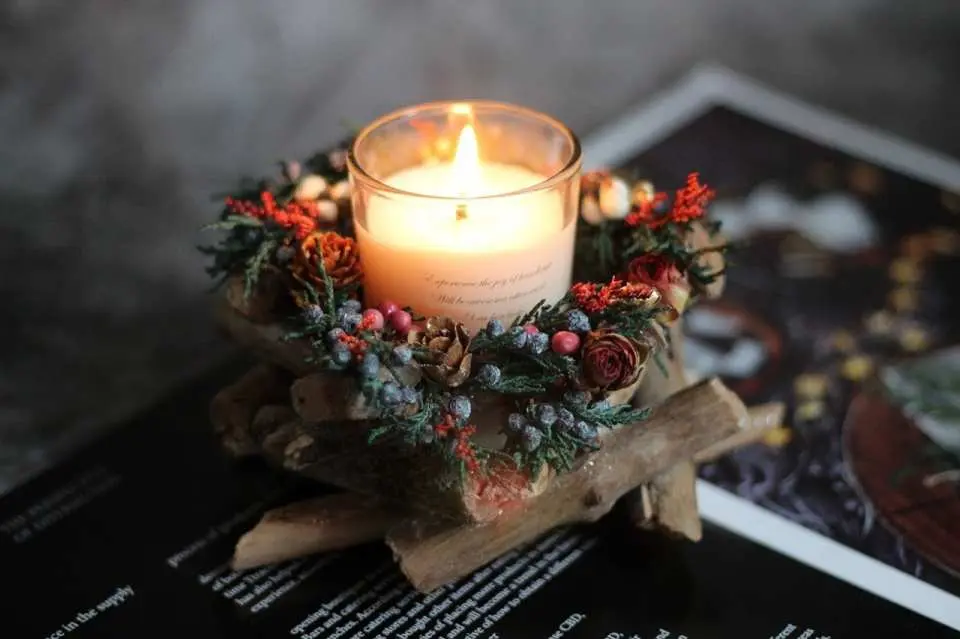
- Christmas dry flower glass candle holder




Purchase Notice
- Children over the age of 6 can participate in this experience, and children under the age of 10 need to be accompanied by their parents to experience and collaborate on a work
- If you are going to experience with your parents and children, please inform us in the notes when booking, so as to facilitate the follow-up arrangements
- Only the purchaser can participate in the course experience, and non-purchasers are not allowed to accompany the entry and participate together; this is not the case for parents and children to participate together
- When ordering, please be sure to leave your contact information (Line, whatsapp, wechat can choose one), please be sure to enable the function of allowing the use of ID to add friends and confirm that you can receive messages from non-friends, so that the operator can take the initiative to contact
Includes/Excludes
Reminders
A minimum of 6 traveler(s) are required for the tour to depart. If the number of participants does not reach the minimum requirement, the tour will be canceled. An email regarding tour cancellation will be sent 2 day(s) before the departure date
Please enter the event on time. In order to make the experience activities go smoothly, please be careful not to be late.
For the class on the day, since the hand-made teacher materials and the location of the venue have been prepared, refunds and postponements will not be accepted on the day of class, and those who do not show up will be deemed as waiver.
In order to protect the rights and interests of other students in class, those who are 20 minutes late than the scheduled time on the day will be deemed as abstention.
If the experience course of the day has ended and the person does not arrive without prior notice, no rescheduling or refund will be given, please forgive me.
On the day of the actual experience, it will vary according to the individual production process and speed. It is recommended not to arrange a too tight itinerary after the itinerary experience.
Participants should abide by the rules of the event venue and cooperate with the instructions of the on-site lecturers.
The experience activities will be taken by the organizer according to the needs, and will be uploaded to the off-duty handicraft community after the activity. In the future, the organizer may use photos and images containing your portrait for activity records or other recruitment channel promotion purposes. If you do not want to be photographed, you can inform the staff at the event site, and the organizer will pay attention and make special arrangements.
Since no food or beverages are allowed in the handicraft classroom, this course includes self-service black tea or green tea.
How to Redeem Your Voucher
How to Use Your Voucher
- Please present the e-voucher on-site
Validity Period
- The voucher must be used on the selected date and within operating hours; Invalid after expiration
Experience Location
Location Name: Make Ximen Store after get off work
Address: 1st Floor, No. 121, Section 2, Hankou Street, Wanhua District, Taipei CityCancellation Policy
- For cancellations made at least 1 day(s) prior to selected date, a cancellation fee of 20% will apply
- Cancellation is not allowed between 0–0 days from the selected date. Orders cannot be canceled or modified, and refunds will not be granted.
- Due to time zone differences, the confirmed cancellation date is based on the supplier’s local time. Please allow 2–5 business days to process your cancellation request, after which the cancellation fee will be charged according to the product’s cancellation policy. Once the cancellation is confirmed, you will receive your refund within 14 working days.
FAQ
If the wick of a scented candle burns incompletely or goes out, it's usually due to the wick being too long or improperly trimmed. It's recommended to trim the wick to about 0.5 cm before each lighting to ensure a stable flame and even burning. If the wick is too short and causes the candle to extinguish, you can gently scrape away some wax around the wick to expose enough length, and then relight it. Maintaining the proper wick length is key to ensuring the candle burns well.
Soap is generally not recommended as an alternative ingredient for making scented candles. Candle making primarily uses vegetable waxes (like soy wax or beeswax) or paraffin wax, which have good burning characteristics and scent diffusion properties. Soap has different components and ignition points; using it in candle making might lead to incomplete combustion, black smoke, or an inability to light, thereby affecting safety and the scent experience. It's advisable to choose materials specifically designed for candle making to ensure quality.
Essential oils are a very important source of fragrance when making scented candles. When choosing, it's recommended to select natural essential oils or dedicated fragrance oils with high purity and good heat resistance, and to avoid synthetic fragrances. Essential oils are usually added when the melted wax has cooled to about 50-60°C and stirred well. This prevents high temperatures from causing the oil to evaporate and ensures the fragrance fully integrates into the wax liquid, enhancing the final scent diffusion effect.
The 'After Work Creations' candle DIY class typically provides high-quality basic materials such as natural vegetable waxes (like soy wax, beeswax), paired with fragrance essential oils or blended fragrances specifically designed for candles, as well as cotton wicks or wooden wicks. Additionally, the class will have containers, wick holders, thermometers, stirring rods, and other crafting tools ready to ensure students have a complete experience and can create their own unique pieces.
Absolutely! The 'After Work Creations' candle DIY classes are designed specifically for beginners. Even those with no prior crafting experience can, with the careful guidance of professional instructors, learn step-by-step the basic knowledge and techniques of candle making. The course content covers material introductions, wax melting, fragrance blending, pouring, and decorating, allowing you to start from scratch and complete your very own unique scented candle, gaining a sense of accomplishment and enjoying the fun and romance of handmade crafts.
It is recommended to avoid blowing out a scented candle directly with your mouth. Blowing it out directly can produce black smoke and a burnt smell, affecting indoor air quality and potentially causing an odor from the unburned wick. The best method is to use a professional snuffer or wick trimmer to gently cover the flame, allowing it to extinguish naturally. This not only reduces smoke but also keeps the wick clean, extends the candle's lifespan, and ensures a good experience with every use.
When lighting a scented candle in an air-conditioned room or a well-ventilated indoor space, be careful not to place the candle in a draft, as rapid air movement can cause the flame to be unstable, burn unevenly, and even produce black smoke. At the same time, ensure the indoor space is adequately ventilated and avoid lighting it in a completely sealed environment for extended periods to maintain fresh air. Always be mindful of any flammable materials nearby when lighting and ensure it is used within your line of sight for safety.
Attending a candle DIY course typically covers the complete making process, including: selecting wax and containers, melting the wax, measuring and adding fragrance oils, preheating the container, securing the wick, pouring the wax, waiting for it to set, trimming the wick, and decorating. Practical tips include temperature control to prevent uneven candle surfaces, stirring fragrance oils to ensure even scent distribution, and avoiding air bubbles when pouring into the mold. Professional guidance will help you master these crucial steps to create beautiful pieces.
Get Help


