


Seoul : Gyeongbokgung & Bukchon & Naksan & Gwangjang Market Day Tour
- Walk through the grand grounds of Gyeongbokgung Palace and learn about Korea’s royal history.
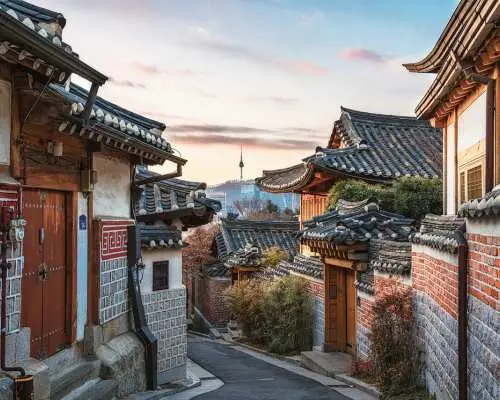
- Explore the traditional charm of Bukchon Hanok Village with its narrow lanes and preserved houses.
- Take in stunning panoramic views of Seoul from the peaceful Naksan Park.
- Sample a variety of local street food at the bustling Gwangjang Market.
- The night view tour involves significant uphill walking, so please assess your physical fitness before joining.
Package Options


Sightseeing Tours
| Tour Type | Shared tour |
| Minimum participant requirement | 4 travelers |
| Family-friendly | Free for children under 2 (no seat) |
| Sightseeing type | Traditional markets, City walking tour, Historic site tour, Food tour・Izakaya Hopping |
| Transport | Walking |
Product Info
Follow in the footsteps of Rumi & Jinu—explore K-Pop Demon Hunters filming spots like Naksan Park, Gyeongbokgung, and Bukchon Hanok Village, along with hidden gems such as Gwangjang Market and Eungbongsan night view.
The night view tour involves significant uphill walking, so please assess your physical fitness before joining.

Gyeongbokgung Palace, the grandest of Korea’s royal palaces, offers a timeless glimpse into the nation’s history.


Bukchon Hanok Village, featured in K-pop Demon Hunters, blends Korea’s traditional charm with a cinematic touch.


Gwangjang Market is one of Korea’s oldest traditional markets.

Cheonggyecheon Stream is a serene urban oasis running through the heart of Seoul.

In K-pop Demon Hunters, Naksan Park appears as the backdrop for the scene where ‘Golden’ is performed.


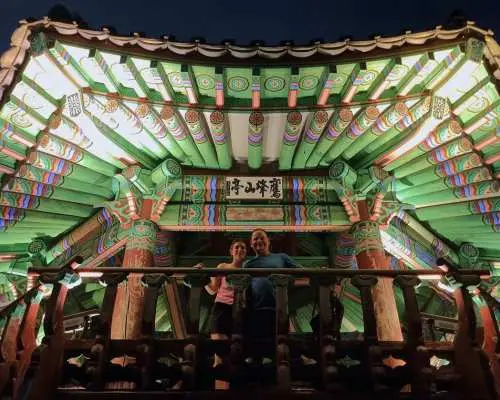
Eungbongsan’s Octagonal Pavilion offers stunning night views of Seoul, where the city lights sparkle beneath you.

Purchase Notice
📱 Please make sure to provide a valid contact number or messaging app ID (e.g., KakaoTalk, Viber, WhatsApp, WeChat) when making your reservation.
✉️ If your messaging settings prevent new contacts from reaching you, please check your email inbox and spam folder at least one day before the tour.
👶 Infants under 2 years old may join the tour accompanied by a guardian, but seats and admission tickets are not included.
👥 The minimum and maximum participant numbers may vary by tour option. Please refer to each option’s details for more information.
Reminders
A minimum of 4 traveler(s) are required for the tour to depart. If the number of participants does not reach the minimum requirement, the tour will be canceled. An email regarding tour cancellation will be sent 1 day(s) before the departure date
Please arrive at the designated location 10 minute(s) before the scheduled departure time, as the tour will depart on time
⚠️ All our tours do not include personal travel insurance. Outdoor activities present specific risks and hazards. Guests must assess their own health or abilities. before participating. The Company is not responsible for any physical damage or injury caused by accidents or unforeseen factors.
FAQ
1. What unique cultural experiences can visitors enjoy at Gyeongbokgung Palace?
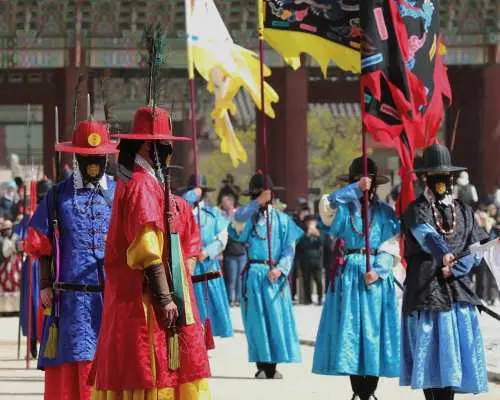
Visitors can immerse themselves in Korean royal history by exploring the grand grounds and various halls. A popular experience is renting a hanbok (traditional Korean dress) to wear while touring the palace, which often grants free admission. You can also witness the impressive Royal Guard Changing Ceremony, offering a glimpse into historical traditions and ceremonial practices.
2. What are the main attractions and best photo spots within Gyeongbokgung Palace?
Key attractions include Geunjeongjeon Hall, the main throne hall; Gyeonghoeru Pavilion, a picturesque royal banquet hall on a pond; and Hyangwonjeong Pavilion, set on a small island. The Gate of Gwanghwamun at the entrance and the traditional architecture throughout the palace grounds offer excellent photo opportunities, especially with hanbok-clad visitors.
3. What are the admission policies for entering Gyeongbokgung Palace?
Gyeongbokgung Palace generally requires an admission fee for most visitors. However, a notable policy allows free entry for those wearing a hanbok (traditional Korean dress). Specific free admission days or age-related exemptions may also apply. It is advisable to check the official operating hours and any holiday closures before planning your visit.
4. What is the schedule for the Royal Guard Changing Ceremony at Gyeongbokgung Palace?
The Royal Guard Changing Ceremony at Gyeongbokgung Palace typically takes place twice a day, in the late morning and early afternoon, lasting about 20 minutes each. Please note that the palace is usually closed on Tuesdays, so no ceremony occurs then. It is recommended to arrive early to secure a good viewing spot near Gwanghwamun Gate for the best experience.
5. What is the historical significance and scale of Gyeongbokgung Palace?
Gyeongbokgung Palace holds immense historical significance as the largest and primary royal palace of the Joseon Dynasty, established in 1395. It served as the center of government and the residence for kings and their households. Its vast grounds and meticulously restored buildings showcase Korea's rich dynastic history and architectural grandeur.
6. What makes Bukchon Hanok Village a unique place to visit?
Bukchon Hanok Village is unique for its well-preserved traditional Korean houses (hanok) that have been inhabited for centuries, creating a living museum experience. Its narrow, winding lanes and traditional architecture offer a glimpse into ancient Seoul. Many hanoks now function as cultural centers, guesthouses, or traditional tea houses, preserving the area's historical charm.
7. What kind of panoramic views can be enjoyed from Naksan Park?
Naksan Park provides stunning panoramic views of the vast Seoul cityscape. From its elevated position, visitors can admire a sprawling blend of modern skyscrapers and historical elements, including significant portions of the old Seoul City Wall. It's an especially popular spot for appreciating the city's beauty during sunset and after dark when the city lights illuminate the skyline.
8. What local street food specialties are a must-try at Gwangjang Market?
Gwangjang Market is a vibrant hub for authentic Korean street food. Must-try specialties include bindaetteok (mung bean pancakes), mayak gimbap (mini seaweed rice rolls often served with a unique dipping sauce), and various tteokbokki (spicy rice cakes). The market also offers a wide array of other traditional snacks, noodle dishes, and fresh produce, providing a true taste of local life.


