

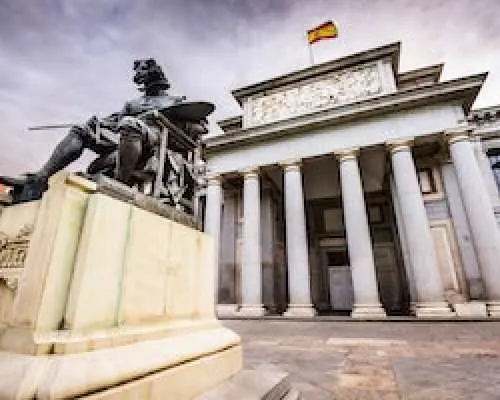

Prado Museum Skip-the-Line Ticket/ Guided Tour | Madrid
- Get swept away into the spectacular history of Spanish and Flemish art at Spain's premier art museum
- See masterpieces by Velázquez, Goya, Rubens, Titian, Rembrandt, El Greco, Bruegel, Van Dyck, Bosch, and more
- Enjoy access to the stunning permanent collection and the regularly rotating temporary exhibitions
Attraction Tickets
| Ticket type | E-ticket (direct entry) |
| Exhibit type | Art exhibits |
| Attraction type | Classical art |
| Tour types | None |
Product Info
Purchase Notice
- Enter via the Jerónimos entrance, located on the left side of the box office. This entrance is also indicated by a sign outside the museum
- Show your Prado Museum ticket on your smartphone to the staff at the entrance
- Keep your Prado ticket ready during your visit
- Temporary exhibitions may be subject to capacity constrictions. We recommend to visit the temporary exhibitions before the general collection to make sure you get a spot
- Last admission 30 minutes before closing
Reminders
The scheduled time may vary within a one-hour range, depending on availability.
How to Redeem Your Voucher
How to Use Your Voucher
- Please present the e-voucher on-site
Validity Period
- The voucher must be used on the selected date and within operating hours; Invalid after expiration
Experience Location
Location Name: Prado Museum
Address: C. de Ruiz de Alarcón, 23, 28014 Madrid, SpainMonday 10:00–20:00 (Last Entry Time: 19:30)
Tuesday 10:00–20:00 (Last Entry Time: 19:30)
Wednesday 10:00–20:00 (Last Entry Time: 19:30)
Thursday 10:00–20:00 (Last Entry Time: 19:30)
Friday 10:00–20:00 (Last Entry Time: 19:30)
Saturday 10:00–20:00 (Last Entry Time: 19:30)
Sunday 10:00–19:00 (Last Entry Time: 18:30)
- Please note that the museum opens from 10:00 am to 2:00 pm on holidays
- Please check the timetable on the official website before visiting
FAQ
The Prado Museum is renowned for its collection of Spanish and Flemish art. Key highlights include Velázquez's iconic "Las Meninas," Goya's powerful "The Third of May 1808," and El Greco's distinctive "The Nobleman with his Hand on his Chest." Visitors can also admire masterpieces such as Hieronymus Bosch's intricate "The Garden of Earthly Delights," and significant works by Rubens, Titian, and Fra Angelico, offering a profound journey through art history.
The Prado Museum is a cornerstone of European art, housing one of the world's finest collections of classical art, with a particular emphasis on Spanish painting from the 12th to the early 20th centuries. Its significance lies in its unparalleled depth in representing the Spanish Golden Age and its influence on Western art, showcasing works originally commissioned by Spanish royalty and nobility. It offers a profound historical and artistic experience, drawing millions of visitors annually.
For a comprehensive visit to the Prado Museum, allowing you to fully appreciate its extensive collection, plan to allocate at least 3 to 4 hours. If your time is limited and you wish to focus only on the major masterpieces, about 2 hours might suffice. However, to delve deeper into specific periods, artists, or to enjoy temporary exhibitions, a longer duration is recommended. Arriving early can help maximize your viewing time and avoid peak crowds.
The Prado Museum offers various guided tour experiences designed to enhance visitors' understanding of its vast collection. These often include expert-led tours focusing on specific themes, artistic periods, or prominent artists such as Velázquez and Goya. Guided tours provide insightful commentary, highlight key artworks, and frequently include skip-the-line access, enriching the visit with historical and artistic context while saving time at entry.
Typical guided tours at the Prado Museum usually last between 1.5 to 2 hours. This duration is generally sufficient for a focused exploration of the museum's highlights, covering essential masterpieces and providing in-depth commentary from an expert guide. Some specialized or extended tours might run slightly longer, offering a more comprehensive look at particular collections or temporary exhibitions, depending on the tour's specific focus.
You can purchase tickets for the Prado Museum through various channels, including the museum's official website or reputable online travel platforms. Booking through KKday allows for convenient advance purchase, often including skip-the-line access, which helps save time by avoiding queues and ensures entry on your preferred date. Tickets generally provide access to the permanent collection and may include temporary exhibitions, depending on the chosen option. It is advisable to confirm specific inclusions and entry conditions at the time of booking.
The Prado Museum is conveniently located in central Madrid and is easily accessible by public transportation. For the metro, the nearest stops are Banco de España (Line 2) and Atocha (Line 1), which is also a major train station. Several bus lines also serve the area, including routes 9, 10, 14, 19, 27, 34, 37, and 45. Walking from either metro station is straightforward, with Atocha being a slightly longer but scenic walk through the city.
The Prado Museum does not enforce a strict dress code; smart casual attire is generally appropriate and respectful for visiting a cultural institution. Comfortable shoes are highly recommended due to the extensive walking involved. Visitors are typically asked to refrain from touching artworks, speaking loudly, or bringing large bags inside, which may need to be stored in lockers provided. Photography without flash is usually permitted in designated areas for personal use.
Get Help


