
![[30% OFF | Spring 2026] Gwangyang Maehwa Festival in Jeollanam-do & Jeonju Hanok Village / Gurye Sansuyu Festival: 1-Day Tour (Departure from Seoul/Busan)](https://image.kkday.com/v2/image/get/c_fill%2Ch_800%2Cq_55%2Ct_webp%2Cw_1240/s1.kkday.com/product_139117/20250205062827_7D89b/jpg)
![[30% OFF | Spring 2026] Gwangyang Maehwa Festival in Jeollanam-do & Jeonju Hanok Village / Gurye Sansuyu Festival: 1-Day Tour (Departure from Seoul/Busan)](https://image.kkday.com/v2/image/get/c_fill%2Ch_400%2Cq_55%2Ct_webp%2Cw_500/s1.kkday.com/product_139117/20250205063053_HcCzC/jpg)
![[30% OFF | Spring 2026] Gwangyang Maehwa Festival in Jeollanam-do & Jeonju Hanok Village / Gurye Sansuyu Festival: 1-Day Tour (Departure from Seoul/Busan)](https://image.kkday.com/v2/image/get/c_fill%2Ch_400%2Cq_55%2Ct_webp%2Cw_500/s1.kkday.com/product_139117/20250205063058_1o9Ou/jpg)
![[30% OFF | Spring 2026] Gwangyang Maehwa Festival in Jeollanam-do & Jeonju Hanok Village / Gurye Sansuyu Festival: 1-Day Tour (Departure from Seoul/Busan)](https://image.kkday.com/v2/image/get/c_fill%2Ch_400%2Cq_55%2Ct_webp%2Cw_500/s1.kkday.com/product_139117/20250205063054_1tYRr/jpg)
![[30% OFF | Spring 2026] Gwangyang Maehwa Festival in Jeollanam-do & Jeonju Hanok Village / Gurye Sansuyu Festival: 1-Day Tour (Departure from Seoul/Busan)](https://image.kkday.com/v2/image/get/c_fill%2Ch_400%2Cq_55%2Ct_webp%2Cw_500/s1.kkday.com/product_139117/20250205063057_k2jbf/jpg)
[30% OFF | Spring 2026] Gwangyang Maehwa Festival in Jeollanam-do & Jeonju Hanok Village / Gurye Sansuyu Festival: 1-Day Tour (Departure from Seoul/Busan)
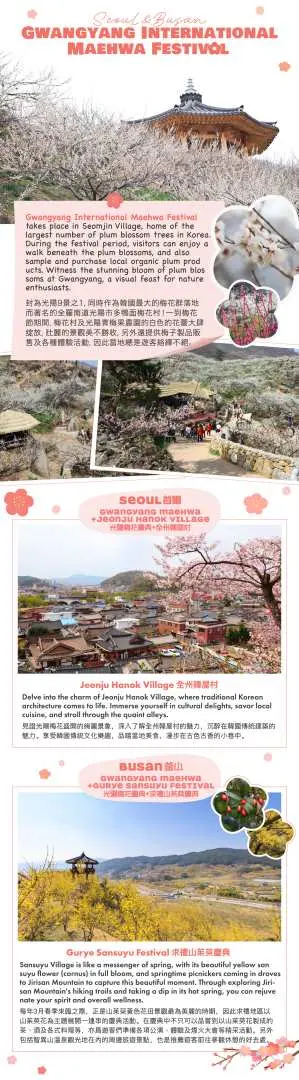
Witness the beauty of spring at Gwangyang Maehwa Festival in Seomjin Village, where over 100,000 plum blossoms bloom across picturesque hills.
- Travel from Seoul in a private car with Chinese and English-speaking staff for easy communication
- Visit Gwangyang Maehwa Village, one of the "Nine Views of Gwangyang," and the largest plum blossom festival in Korea
- Experience the Gurye Sansuyu Festival and admire vibrant dogwood flowers in full bloom
Product Info
The content of this product is provided by machine translation and may not reflect the actual information, please take this into consideration before booking.







Purchase Notice
- Please be sure to leave your contact information when ordering (Line, WhatsApp, WeChat, Kakao—choose one)
- Children under the age of 3, who do not occupy a seat, can participate for free. Please take note and provide passport proof on-site
- If baby strollers or wheelchairs need to be brought, please provide the information in the 'Notes' section when booking
Reminders
This itinerary does not include lunch; it is recommended to bring a simple meal or dine at a nearby restaurant
The day's itinerary may be adjusted based on traffic and weather conditions
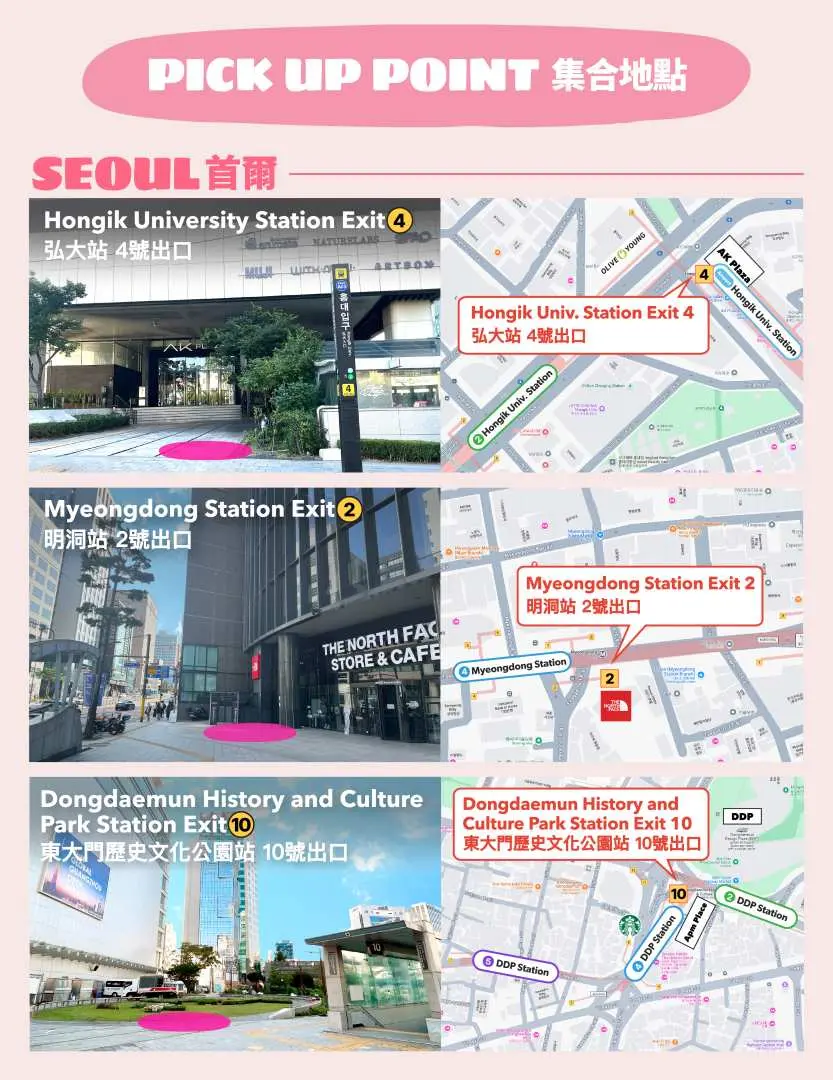
Please ensure you arrive at the meeting point 5–10 minutes before departure. Participants who arrive after departure will be considered to have automatically canceled the trip, and the fee will not be refunded
On the day before departure, between 3:00 pm–5:00 pm, you will receive a reminder email. This email will include a chat room link where you can communicate directly with our staff. If you do not receive it, please check your email's spam or junk folder
The cherry blossom season may vary depending on climate and weather conditions
Please inform us in advance if you plan to bring a stroller or wheelchair
Infants can join the tour free of charge, but no seat will be provided
⚠️ All tours provided by this company do not include personal travel insurance. Outdoor activities involve specific risks and hazards. Please assess your health and ability before participating, as the company will not be held responsible for any physical harm or injuries resulting from accidents or unforeseen circumstances
Cancellation Policy
- Cancellations 2 day(s) (inclusive) before the selected date are allowed. Unused orders can be canceled for free
- Cancellation is not allowed between 0–1 days from the selected date. Orders cannot be canceled or modified, and refunds will not be granted.
- Due to time zone differences, the confirmed cancellation date is based on the supplier’s local time. Please allow 2–5 business days to process your cancellation request, after which the cancellation fee will be charged according to the product’s cancellation policy. Once the cancellation is confirmed, you will receive your refund within 14 working days.
FAQ
The Gwangyang Maehwa Festival is Korea's largest plum blossom festival, held annually in Seomjin Village. It showcases over 100,000 plum blossoms blooming across picturesque hills, offering visitors a stunning natural spectacle and a vibrant celebration of spring. It is considered one of the "Nine Views of Gwangyang."
Maehwa, or plum blossoms, hold deep cultural significance in Korea, symbolizing resilience, purity, and the arrival of spring. They are often admired for their delicate beauty and ability to bloom in late winter or early spring, representing hope and endurance through hardship. Maehwa are frequently featured in traditional art and literature.
Sansuyu refers to vibrant yellow dogwood flowers. The Gurye Sansuyu Festival celebrates these beautiful blooms, transforming the landscape into a sea of bright yellow. Visitors can admire the dogwood flowers in full bloom, enjoy various cultural performances, and experience the festive atmosphere, marking the essence of spring.
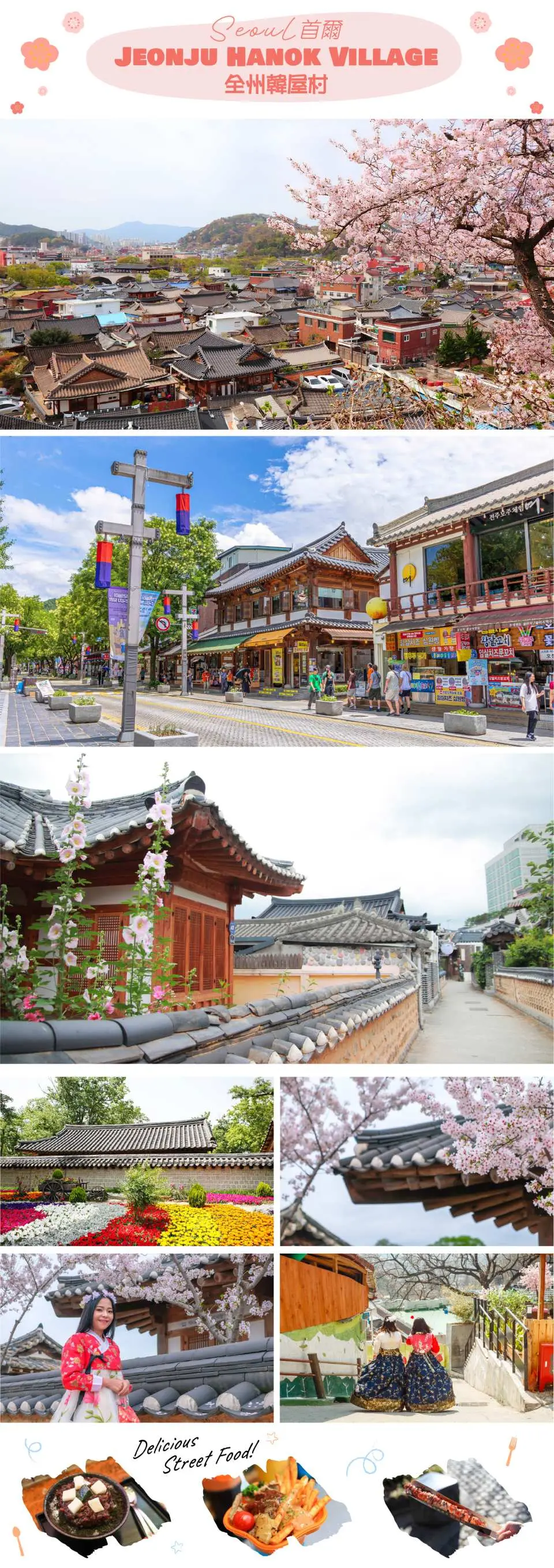
Jeonju Hanok Village is renowned for its beautifully preserved traditional Korean houses (hanok) and rich cultural heritage. It is a living museum where visitors can experience Korean traditions, taste authentic Jeonju bibimbap, wear hanbok, and explore craft workshops, tea houses, and historical sites, offering a glimpse into Korea's past.
Jeonju Hanok Village offers a unique blend of traditional architecture, cultural activities, and local cuisine. Visitors can stroll through narrow alleys lined with hanok houses, participate in traditional crafts, enjoy local delicacies like Jeonju bibimbap and street food, and visit landmarks such as Gyeonggijeon Shrine and Jeondong Catholic Church. It provides a rich immersive cultural experience.
The tour provides convenient transportation from Seoul. Travelers are transported in a private car, ensuring a comfortable journey to the Gwangyang Maehwa Village. The service includes Chinese and English-speaking staff, making communication easy and enhancing the overall travel experience.
For visits to Jeonju Hanok Village as part of the tour, transportation from Seoul is provided via a private car. This ensures a hassle-free and comfortable journey. The tour also includes the assistance of Chinese and English-speaking staff, facilitating smooth communication throughout the trip to the village.
The Gwangyang Maehwa Festival and Gurye Sansuyu Festival are iconic spring events in Korea. While specific dates vary annually, these festivals typically take place in early spring, usually in March, when the plum blossoms and dogwood flowers are in their fullest bloom, heralding the arrival of the new season.
Get Help


