


Discover Bai Dinh/ Trang An/ Hang Mua - Vietnam Hidden Charm (Multiple Languages Tour Guide) | From Hanoi
- Boat ride to explore outstanding natural sceneries of limestone karst landscapes
- Pay a visit to the glimmering massive pagoda complex of magnificent architecture ever built
- Roundtrip transfer from Hanoi Old Quarter
Package Options


Sightseeing Tours
| Tour Type | Private tour, Shared tour |
| Transportation method | Hotel transfer |
| Tour types | Guided tour |
| Sightseeing type | Natural sights, Temples & shrines, Historic site tour |
| Transport | Sightseeing cruise |
Product Info
Trang An is an eco-tourism area located in the Trang An World Heritage Complex in Ninh Binh province. This place has been ranked as a particularly important national relic by the Vietnamese government and recognized by UNESCO as a dual world heritage since 2014.
— Important Info —
- Pick-up point: Hanoi Old Quarter, Hanoi City (For guests staying outside the Old Quarter, please gather at Hanoi Opera House)
- Pick-up time: 7:00 - 7:30
- Tour duration: ~ 12 hours
- Returning time: 19:30
— Buffet Lunch Menu —


7:00 - 7:30 Car and tour guide pick you up at hotels in the Old Quarter and Hanoi Opera House then depart to Ninh Binh.


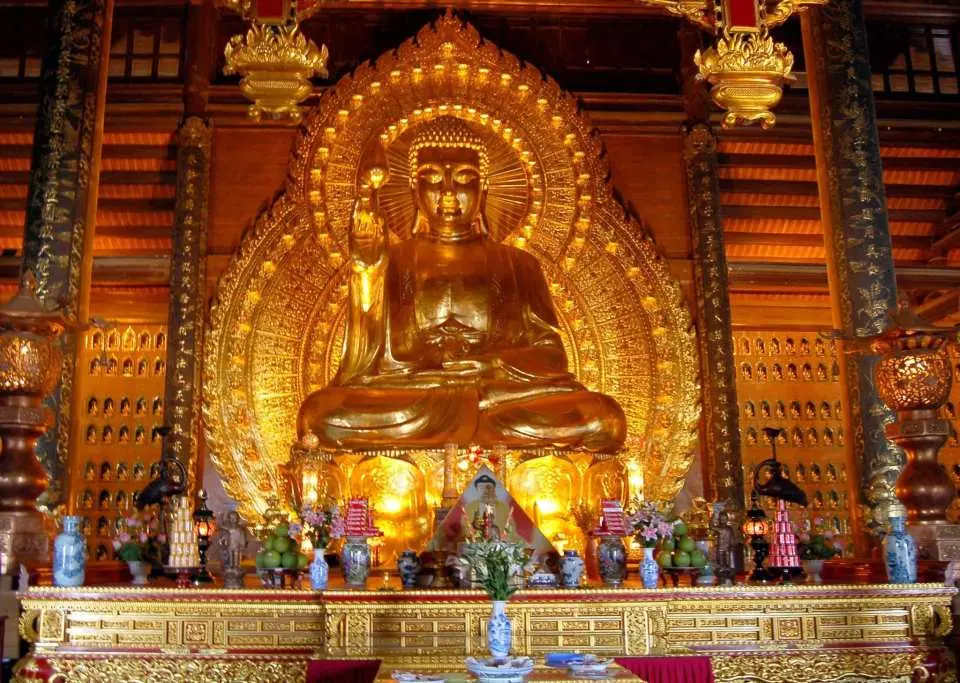
10:30: Arriving at Bai Dinh, the tour guide takes you to visit Bai Dinh Pagoda - a famous temple with many records.


Top view in Bai Dinh pagoda


Interior design of Bai Dinh Pagoda

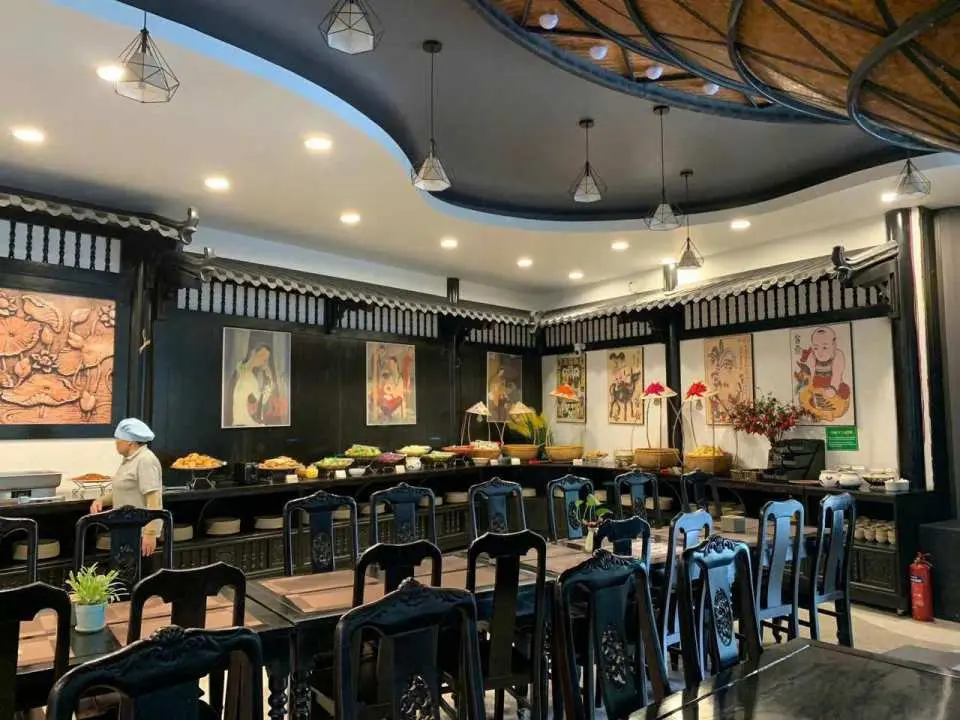
12:30 Go to the restaurant to rest fora nice buffet lunch.

13:30 The car takes you to Trang An wharf to board a boat to visit Trang An eco-tourism area - where limestone strips, valleys, and rivers intertwine to create a fanciful and mysterious space. You sit on the boat to relax and visit 4 natural caves among the most beautiful caves here including Lam Cave, Vang Cave, Thanh Slide Cave, and Hang Dai. You also stop to visit spiritual sites such as Suoi Tien Temple and Vu Lam Hanh Cung. This route will be very suitable for young people who like to take check-in pictures, have the full experience of the journey by boat to visit the cave.


15:30 Getting to Mua Cave, you wil be walking through the winding paths covered with green trees and beautiful mountain architecture. Then the journey to conquer the top of Hang Mua mountain with 500 stone steps. Achieving the top of Mua Mountain, you'll be rewarded with the sight of all the sky and earth of the vast Hoa Lu land with a peaceful but splendid look like a watercolor painting that makes many people unable to hold back their feelings


17:00 Get on the bus back to Hanoi.


19:30 Return to Hanoi. End of the tour.


FAQ
The name 'Bai Dinh' is said to originate from 'Bai' meaning worship, and 'Dinh' referring to the Dinh mountain peak where the ancient pagoda is located. It is deeply significant as a spiritual and cultural center in Vietnam, symbolizing national peace and prosperity. The pagoda complex holds a revered place for Buddhist pilgrims and showcases traditional Vietnamese architecture.
To thoroughly explore Bai Dinh Pagoda, including its numerous temples, statues, and unique architectural features, it is recommended to allocate approximately 3 to 4 hours. This allows ample time to visit both the ancient and new sections, admire the grand structures, and soak in the spiritual atmosphere.
Bai Dinh Pagoda is renowned for its immense scale, spanning thousands of hectares. It features Vietnam's largest bronze Buddha statue, the longest Arhat corridor with 500 stone statues, and a grand bell tower. Its massive scale and intricate design make it one of Southeast Asia's largest Buddhist complexes, showcasing magnificent architecture and craftsmanship.
The original, ancient Bai Dinh Pagoda dates back to the 11th century, established by Zen Master Nguyen Minh Khong. It is historically significant as the place where King Dinh Tien Hoang held ceremonies to pray for peace. The modern, much larger Bai Dinh Pagoda was extensively expanded and rebuilt starting in 2003, blending ancient traditions with contemporary scale.
Bai Dinh Pagoda exhibits a blend of traditional Vietnamese Buddhist architecture with modern construction. Key features include the Tam Quan Gate, Phap Chu Temple (Buddha Dharma Master's Temple), Bell Tower, and a vast Arhat Corridor adorned with numerous stone statues. The complex also boasts impressive gilded bronze statues, pagodas, and lush courtyards, reflecting intricate craftsmanship.
The Trang An boat ride offers a serene journey through a UNESCO World Heritage site, navigating through emerald waters, towering limestone karsts, and ancient grottoes. Visitors will explore various caves, temples nestled in the mountains, and enjoy breathtaking natural scenery. The quiet, hand-rowed boats provide an intimate connection with the tranquil environment.
Hang Mua (Mua Caves) is famous for its panoramic views from the summit of Ngoa Long Mountain. Visitors can climb nearly 500 steps to reach the peak, where they are rewarded with a stunning 360-degree vista of the Tam Coc valley, Trang An, and the Ngo Dong River. The site also features a majestic dragon statue on the mountain ridge and several caves at its base.
Yes, Trang An Grottoes typically offers multiple boat routes, each varying in length and the specific caves and temples visited. Common routes might include stops at cultural sites like spiritual pagodas and ancient temples, as well as natural attractions such as Dark Cave, Bright Cave, and Sang Cave, allowing visitors to choose based on their interests and available time.
Get Help


