


[Taipei Zhongshan] Turkish Mosaic Lamp DIY | Recommended for Girls' Dates | Includes Afternoon Tea and Desserts
- The colorful mosaic lamps shine brilliantly in the dark night and are full of unique and charming style. They are the most representative and characteristic traditional handicrafts of Turkey.
- Regardless of the target audience, this friendly handicraft can be easily picked up by anyone with no experience, allowing you to go home with a full sense of accomplishment.
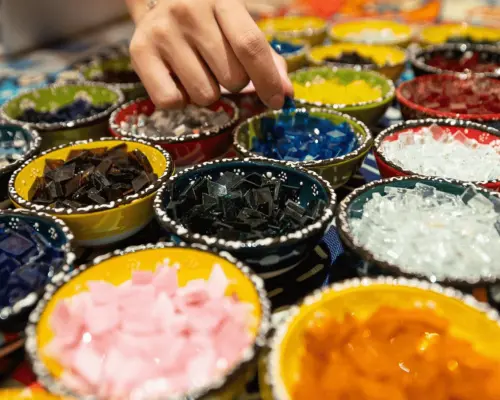
- There are as many as 48 kinds of colorful mosaic materials, which can be combined and pieced together at will.
- Heal adults' souls, eliminate irritability and stress in life, and recharge before starting~
- Train children's hand-eye coordination, develop concentration and stimulate creativity!
Package Options
Product Info
What You Can Expect
1 Day
- studio
- Simple geometric figures, unlimited imagination
- Turkish teachers teach cordially in Chinese and lead everyone to experience Turkey’s nearly 5,000-year-old traditional crafts
- It’s a handicraft that everyone, young and old, can easily get started with no experience!
- [In addition to experiencing healing handcrafts, Turkish afternoon tea snacks are included]
- [Welcome to book a class for groups]
- [There are also a variety of styles to choose from on site]






Purchase Notice
Age limit: Not recommended for children under 6 years old. Children aged 6 to 10 must be accompanied by their parents.
Families: If one adult and one child are working together on a lantern, an additional venue fee of NT$300 will be charged on-site (including afternoon tea). Please indicate "1 adult, 1 child" in the "Remarks" column.
Adult restrictions: Two adults are not allowed to work together on a piece of work.
Conditions for opening a class: Guaranteed Departure for Solo Traveler.
【Delivery of Works】
The collage can be completed on the same day, but you will need to wait for 2 weeks for processing.
Processing Instructions: Processing refers to covering the "glass cover" of the work with plaster to firmly bond the glass pieces and ensure durability and integrity.
『Collection method』: No individual notification will be given after the work is completed. Please come back to pick up the work after two weeks.
Pickup time: Open for pickup from 1:00pm to 6:30pm every Friday to Sunday.
Delivery Service: If you are unable to pick up your work in person, you can discuss delivery with the instructor on site. As the work is fragile, the studio will not be held responsible for any damage during delivery.
[Characteristics of the work]
The handmade mosaic lamps/candlesticks are entirely handmade, and both the collage and plastering will leave natural handmade marks.
100% perfect symmetry or flawlessness is not possible, and each piece is unique. If you have high expectations for perfection, please consider carefully before submitting your application.
【Course Record】
There may be behind-the-scenes footage from the event that will be shared on our fan page. Please inform us in advance if you do not wish to be photographed or made public.
【Weather and force majeure】
In the event of unforeseen factors such as typhoons and earthquakes, the organizer reserves the right to postpone, reschedule or adjust the experience content.
Includes/Excludes
- afternoon tea
- material fee
- Venue usage fee
- Experience fee
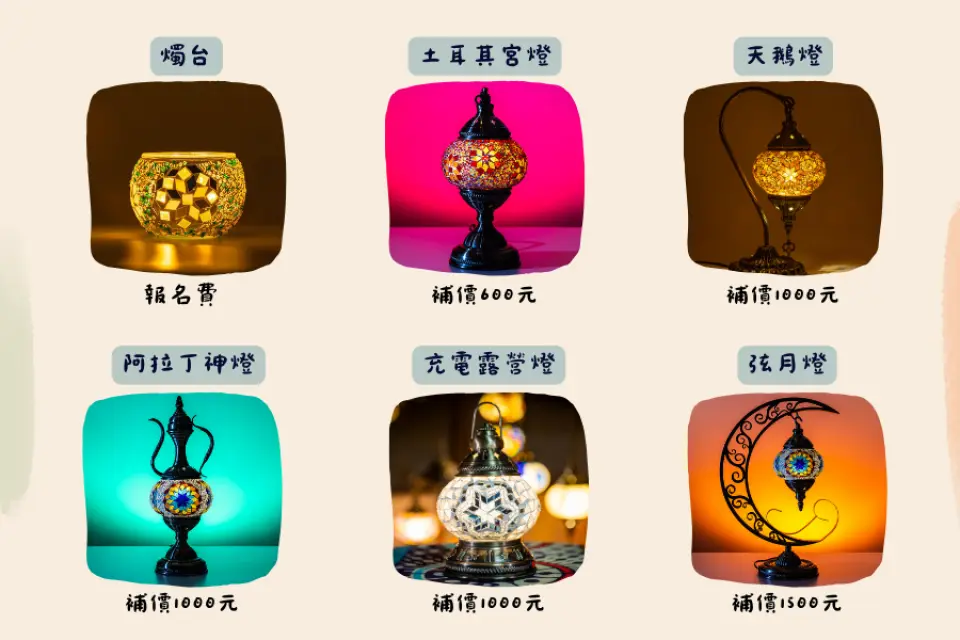
- Add-on items (to be paid on-site)
- Personal expenses
- Insurance
How to Redeem Your Voucher
How to Use Your Voucher
- Please present the e-voucher on-site
Meeting Point
Location Name: Artist Mosaic Craft Studio
Address: 9F-1, No. 25, Section 1, Nanjing East Road, Zhongshan District, Taipei CityCancellation Policy
- Cancellations 7 day(s) (inclusive) before the selected date are allowed. Unused orders can be canceled for free
- For cancellations made 4 to 6 days prior to selected date, a cancellation fee of 50% will apply
- Cancellation is not allowed between 0–3 days from the selected date. Orders cannot be canceled or modified, and refunds will not be granted.
- Due to time zone differences, the confirmed cancellation date is based on the supplier’s local time. Please allow 2–5 business days to process your cancellation request, after which the cancellation fee will be charged according to the product’s cancellation policy. Once the cancellation is confirmed, you will receive your refund within 14 working days.
FAQ
Turkish mosaic lamps have a rich history rooted in the Ottoman Empire, evolving from traditional glass-making and mosaic artistry. Originally used to adorn mosques, palaces, and public baths, these lamps transformed over centuries into decorative household items. They embody intricate craftsmanship and cultural narratives, reflecting a long-standing heritage in Turkish art.
Mosaic art dates back to ancient Mesopotamia, with early examples using pebbles. It flourished in ancient Greece and Rome, transitioning to cut tesserae for detailed scenes. The Byzantine Empire elevated mosaics to an iconic art form, covering church interiors with intricate religious imagery. Islamic art introduced geometric and calligraphic patterns, influencing diverse regional styles globally, including Turkish mosaic lamps.
Mosaic art is characterized by the meticulous arrangement of small pieces (tesserae) of glass, stone, or ceramic to form images or patterns. Key characteristics include its vibrant visual impact, durability, and reflective qualities. It emphasizes color, texture, and light, creating dynamic surfaces that change with viewing angles. The art form often involves intricate details and symbolic designs.
Turkish mosaic lamps are deeply embedded in Turkish culture, symbolizing hospitality, warmth, and artistic heritage. They are more than just lighting fixtures; they represent centuries of craftsmanship passed down through generations. Each lamp's vibrant patterns and colors often reflect historical motifs, telling stories and bringing a unique exotic ambiance to homes and spaces, connecting them to a rich past.
Mosaic art encompasses various styles and techniques. Opus tessellatum uses uniform tesserae for patterns, while opus vermiculatum creates detailed pictures with smaller pieces following outlines. Opus sectile involves larger, precisely cut pieces to form designs. Modern techniques include micro-mosaics and incorporating unconventional materials, showcasing the art form's versatility across ancient, Byzantine, and contemporary expressions.
In a Turkish mosaic lamp workshop, participants will learn the traditional step-by-step process of crafting these beautiful lamps. This includes understanding historical techniques, selecting from a wide array of colorful mosaic materials, and meticulously assembling them onto a glass globe. The goal is to unleash creativity and construct a unique, authentic Turkish mosaic lamp to take home, even without prior experience.
Creating Turkish mosaic lamps offers a deeply engaging and therapeutic experience. The meticulous process of selecting and placing each mosaic piece fosters concentration and mindfulness, helping to alleviate stress and calm the mind. It allows for creative expression, provides a sense of accomplishment, and offers a unique opportunity for adults to recharge and for children to develop hand-eye coordination and creativity in an artistic, exotic setting.
Participants in a Turkish mosaic lamp workshop enjoy significant creative freedom. They can choose from an extensive selection of up to 48 different kinds of colorful mosaic materials, including various shapes, sizes, and hues. This allows for personalized design and unique combinations, enabling each individual to freely express their artistic vision and create a lamp that truly reflects their personal style and aesthetic preferences.
Get Help


