


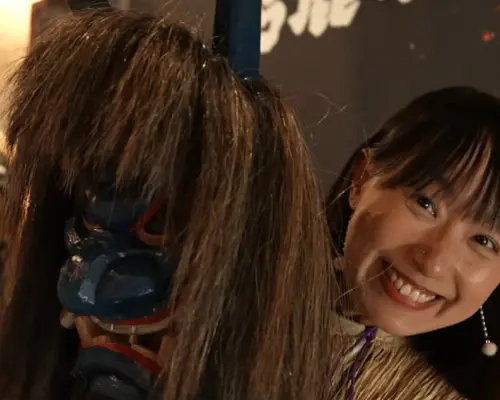
See, learn, and wear "Oga's Namahage" - Namahage Museum admission ticket reservation with souvenir (Oga, Akita)
- At the Namahage Museum, you can learn more about "Oga's Namahage" through a theater and various exhibits, including more than 150 Namahage masks from all over Oga city.
- One of the popular spots at the Namahage Museum is to try on a Namahage mask and costume and take commemorative photos, and the gift shop also sells original Namahage Museum merchandise.
- *Masks and costumes are available for free rental.
- Includes an original Namahagekan souvenir.
- For an additional fee, you can experience the Namahage festival held on New Year's Eve in the Mayama area in an old house at the adjacent Oga Mayama Folklore Museum.
Product Info
Important Info
Includes/Excludes
Reminders
If you would like to see the demonstration at Ogashinzan Denshokan in addition, please pay the additional fee on-site. Adults: 440 yen, Elementary, Junior High, and High School Students: 330 yen. The Denshokan has set opening hours. Please check the Namahagekan website for opening hours.
Please note that the Folklore Museum may be fully booked on the day depending on how busy it is. Please decide in advance what time you would like to enter and make a reservation by phone or email.
Redemption Location
Namahagekan Front Desk
Address Info: Mizugushizawa area, Kitaura Mayama, Oga City, Akita PrefectureMonday 08:30 - 17:00
Tuesday 08:30 - 17:00
Wednesday 08:30 - 17:00
Thursday 08:30 - 17:00
Friday 08:30 - 17:00
Saturday 08:30 - 17:00
Sunday 08:30 - 17:00
How to Redeem Your Voucher
How to Use Your Voucher
- Please present the e-voucher on-site
Cancellation Policy
- Cancellations 1 day(s) (inclusive) before the selected date are allowed. Unused orders can be canceled for free
- Cancellation is not allowed between 0–0 days from the selected date. Orders cannot be canceled or modified, and refunds will not be granted.
- Due to time zone differences, the confirmed cancellation date is based on the supplier’s local time. Please allow 2–5 business days to process your cancellation request, after which the cancellation fee will be charged according to the product’s cancellation policy. Once the cancellation is confirmed, you will receive your refund within 14 working days.
FAQ
To reach the Oga Namahage Museum by public transport, visitors typically take a train to Oga Station. From Oga Station, local buses or taxis are available for the onward journey to the museum. It's advisable to check the bus schedule in advance, as services might be less frequent depending on the season or day of the week. Planning your route from Oga Station will ensure a smooth arrival.
The Namahage Museum details the cultural significance of Namahage as a traditional folk deity in the Oga region of Akita. Namahage spirits are believed to visit homes on New Year's Eve, admonishing laziness and bringing good fortune and health for the coming year. The museum's exhibitions and theater show their role in maintaining community values and traditions through generations.
While Namahage's appearance can be striking with their masks and costumes, the Namahage Museum focuses on presenting their cultural context and significance rather than purely on scare tactics. The exhibits explain their role in tradition and folklore, offering an educational perspective. Visitors, especially those with children, can approach it as a unique cultural learning experience.
Namahage traditionally carry large wooden knives or blunt machetes, symbolizing their role in "peeling off" or cutting away the laziness and bad luck from villagers. They also often carry wooden buckets or pails used for collecting offerings from homes they visit, such as mochi and sake, as thanks for their blessings and admonishments.
The Namahage Museum explains that the ritual's origins are steeped in local folklore, often linked to mountain deities or even ancient foreign visitors. Its primary purpose is to visit homes on New Year's Eve to discipline lazy children, encourage diligence, and pray for abundant harvests and good health for the family in the coming year, reinforcing community values.
At the Oga Namahage Museum, a popular interactive experience is the Namahage transformation corner. Here, visitors can freely try on various Namahage masks and costumes for a memorable photo opportunity. Additionally, the museum features a theater and extensive exhibits, including over 150 unique masks from different Oga districts, offering a deep dive into the tradition.
Yes, visitors to the Namahage Museum have the unique opportunity to experience a reenactment of the traditional New Year's Eve Namahage event at the adjacent Oga Shinzan Denshokan (also known as Oga Mayama Folklore Museum). This immersive experience, which requires an additional fee, allows you to witness the ritual in an old Japanese house, bringing the tradition to life.
Each admission ticket to the Namahage Museum includes an original Namahagekan souvenir. This special item allows visitors to take home a memento of their cultural experience. The museum's gift shop also offers a wider selection of unique Namahage-themed merchandise for purchase, including various crafts and local specialties.
Get Help


