




2024 Traveling with Picture Books Series - Port Tribe Chapter
- Visit the beautiful seaside terraces of Shitiping, the ecologically rich intertidal zone and the Pacific Undersea Garden
- Experience Amis natural materials crafts and local meals, sit around the fire and listen to picture book stories.
- Snorkel with the Sea Prince and learn about the Tridacna clam, a sea rose that the tribe has actively conserved in recent years.
- Unique private chef cuisine will give your vision and taste a feast of mountains and seas
Product Info
The content of this product is provided by machine translation and may not reflect the actual information, please take this into consideration before booking.
"Wow! There are so many black poops on the leaves!" That black thing is a mud bug! It eats rice leaves, turning them white.
In the past, when there was an insect infestation, the elderly would use bamboo to make a bamboo comb to brush away the mud bugs. When it was too serious, they would ask the father class of the tribe's youth to announce a deworming ceremony. Three classes of women were selected through divination. After making an appointment, they held banana leaves in their hands and walked in the fields, singing insect-repelling songs. After that, they walked to the seaport together and put the banana leaves in their hands into In the flowing water, I prayed at the same time, "ta ta ta tiraw i wali no wali, go! Go! Go! Go to the east of the east!", meaning to go far away and not come back.
The two-day and one-night itinerary will take everyone to visit the beautiful seaside terraces of Shitiping, the ecologically rich intertidal zone and the Pacific Undersea Garden. Together, they will experience the Amis natural materials crafts and local meals, sit around the fire and listen to stories from picture books.
The "Travel with Picture Books Series" is an extension of the long-term art action jointly created by local teams in Fengbin Township. It records the cultural memories and skills of the elderly through surveys and interviews, and becomes a text for local development. The picture book is produced by The artist took the elderly together to complete it, and now it is designed into an experience, inviting everyone to get to know this beautiful land together.
[Shitiping] Shitiping is a large coastal terrace with very developed sea erosion terrain. Sea erosion platforms, raised coral reefs, sea erosion trenches, sea erosion cliffs, etc. are everywhere. In particular, the pothole landscape is the best in Taiwan. The rich natural ecological resources in the intertidal zone are waiting for those with keen observation to explore the mysteries.
![[Shitiping] Shitiping is a large coastal terrace with very developed sea erosion terrain. Sea erosion platforms, raised coral reefs, sea erosion trenches, sea erosion cliffs, etc. are everywhere. In particular, the pothole landscape is the best in Taiwan. The rich natural ecological resources in the intertidal zone are waiting for those with keen observation to explore the mysteries.](https://image.kkday.com/v2/image/get/c_fit%2Cq_55%2Ct_webp%2Cw_960/s1.kkday.com/product_185896/20240807023918_4iSKu/jpg)

[Sea Terraces] Farmers maintain friendly farming practices and the creatures around the seaside terraces can live here together! There is a family farm next to it that is taken care of by hard-working elderly people. The workhouse built in the vegetable garden is a place for work and rest, as well as a space for collecting seeds. The umbrella grass planted on the edge of the field, from traditional sunshade mats to innovative crafts , follow the "Sea Farmer King" who goes to the mountains and seas to learn about the rich life culture brought by biological diversity.
![[Sea Terraces] Farmers maintain friendly farming practices and the creatures around the seaside terraces can live here together! There is a family farm next to it that is taken care of by hard-working elderly people. The workhouse built in the vegetable garden is a place for work and rest, as well as a space for collecting seeds. The umbrella grass planted on the edge of the field, from traditional sunshade mats to innovative crafts , follow the "Sea Farmer King" who goes to the mountains and seas to learn about the rich life culture brought by biological diversity.](https://image.kkday.com/v2/image/get/c_fit%2Cq_55%2Ct_webp%2Cw_960/s1.kkday.com/product_185896/20240807023610_uyMj2/jpg)

[Intertidal Zone] Walk into the special seascape topography of the east coast and learn about various seaweeds, fish, shrimps, shellfish and other marine life in the intertidal zone. It is also an important wild place for tribes to collect food. The tribesmen who have lived here for generations, The interaction with the sea gradually developed into the rhythm of tribal singing and dancing.
![[Intertidal Zone] Walk into the special seascape topography of the east coast and learn about various seaweeds, fish, shrimps, shellfish and other marine life in the intertidal zone. It is also an important wild place for tribes to collect food. The tribesmen who have lived here for generations, The interaction with the sea gradually developed into the rhythm of tribal singing and dancing.](https://image.kkday.com/v2/image/get/c_fit%2Cq_55%2Ct_webp%2Cw_960/s1.kkday.com/product_185896/20240807024543_ifVR4/jpg)

The picture book story of [Pakongko_Say around the fire "Go! Go! Go! Go to the east of the east!" From the past to the present, it is the tradition of the tribal people. After the busy work every day, family and friends gather around and use driftwood to raise the fire. Share the interesting things in life by the fire, and express your emotions to each other through the glow of the fire.


[Visiting the rose in the sea - Tridacna clam] Friendly farming is related to the ecological protection between the mountains and the sea. In addition to a group of "sea farmer kings" dedicated to organic farming, there are also a group of "sea princes" who protect the natural resources of the ocean. Follow the sea princes to snorkel. Get to know the Tridacna clam, a sea rose that the tribe has actively conserved in recent years, and get a glimpse of the rich coral reefs and tropical fish along the coast!
![[Visiting the rose in the sea - Tridacna clam] Friendly farming is related to the ecological protection between the mountains and the sea. In addition to a group of "sea farmer kings" dedicated to organic farming, there are also a group of "sea princes" who protect the natural resources of the ocean. Follow the sea princes to snorkel. Get to know the Tridacna clam, a sea rose that the tribe has actively conserved in recent years, and get a glimpse of the rich coral reefs and tropical fish along the coast!](https://image.kkday.com/v2/image/get/c_fit%2Cq_55%2Ct_webp%2Cw_960/s1.kkday.com/product_185896/20240807022337_h9aFx/jpg)

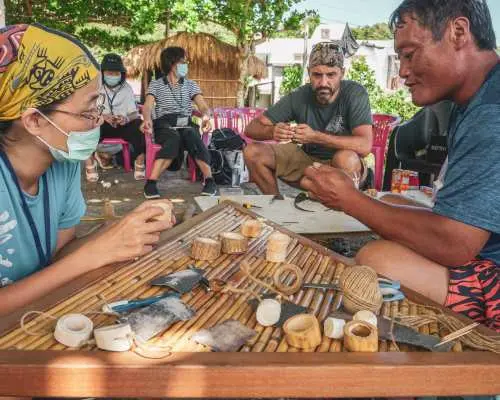
[DIY your own tableware] Make your own tableware! Using the traditional natural materials of the Ami people, such as bamboo, yellow vine, betel leaf, etc., we use the materials as the seasons change to weave together our own handicrafts. (Craft experience materials are mainly based on actual course content)
![[DIY your own tableware] Make your own tableware! Using the traditional natural materials of the Ami people, such as bamboo, yellow vine, betel leaf, etc., we use the materials as the seasons change to weave together our own handicrafts. (Craft experience materials are mainly based on actual course content)](https://image.kkday.com/v2/image/get/c_fit%2Cq_55%2Ct_webp%2Cw_960/s1.kkday.com/product_185896/20240807024607_IoKKf/jpg)

[Local Cuisine] Invite tribe members to cultivate their own sea rice, and use ingredients collected from family gardens and mountains and seas to eat fresh and local-style dishes. Let your vision and taste experience a feast of mountains and seas. The beauty of the land.
![[Local Cuisine] Invite tribe members to cultivate their own sea rice, and use ingredients collected from family gardens and mountains and seas to eat fresh and local-style dishes. Let your vision and taste experience a feast of mountains and seas. The beauty of the land.](https://image.kkday.com/v2/image/get/c_fit%2Cq_55%2Ct_webp%2Cw_960/s1.kkday.com/product_185896/20240807022345_KdGMf/jpg)

Important Info
Reminders
A minimum of 12 traveler(s) are required for the tour to depart. If the number of participants does not reach the minimum requirement, the tour will be canceled. An email regarding tour cancellation will be sent 7 day(s) before the departure date
In case of delays caused by traffic, weather, or other force majeure factors resulting in the cancellation of some itinerary attractions, please contact customer service. We will arrange a partial refund for you
The itinerary includes snorkeling experience, please maintain adequate sleep and health; please make sure you do not have any serious health conditions when participating in this activity (if you have respiratory or cardiovascular disease or are not sure whether you can go into the water, please consult a professional doctor first and inform the sales staff ).
The itinerary includes snorkeling experience, please maintain adequate sleep and health, and please do not enter the water if you are pregnant; if you have respiratory or cardiovascular disease or are not sure whether you can enter the water, please consult a professional doctor first and inform the sales staff, if If you feel unwell on site, please inform the instructor in advance. Those who are unable to participate in snorkeling will be arranged to play in the water in a safe area and will be accompanied by the team leader.
The trip fee includes activity equipment (snorkeling mask, non-slip shoes, life jacket). It is recommended to wear light, comfortable, breathable and quick-drying clothing. You can also wear a swimsuit and bring a change of clothes.
The itinerary includes travel safety insurance. It is recommended that you purchase travel inconvenience insurance yourself.
Cancellation Policy
- Cancellations 15 day(s) (inclusive) before the selected date are allowed. Unused orders can be canceled for free
- For cancellations made 8 to 14 days prior to selected date, a cancellation fee of 30% will apply
- For cancellations made 3 to 7 days prior to selected date, a cancellation fee of 50% will apply
- Cancellation is not allowed between 0–2 days from the selected date. Orders cannot be canceled or modified, and refunds will not be granted.
- Due to time zone differences, the confirmed cancellation date is based on the supplier’s local time. Please allow 2–5 business days to process your cancellation request, after which the cancellation fee will be charged according to the product’s cancellation policy. Once the cancellation is confirmed, you will receive your refund within 14 working days.
Get Help


