
Kamakura and Enoshima Day Trip, Japan | Kamakura Great Buddha, Enoden Railway Experience, Slam Dunk Level Crossing, Enoshima Stroll (Departing from Tokyo)
- Explore the Great Buddha of Kamakura and popular attractions on Enoshima Island
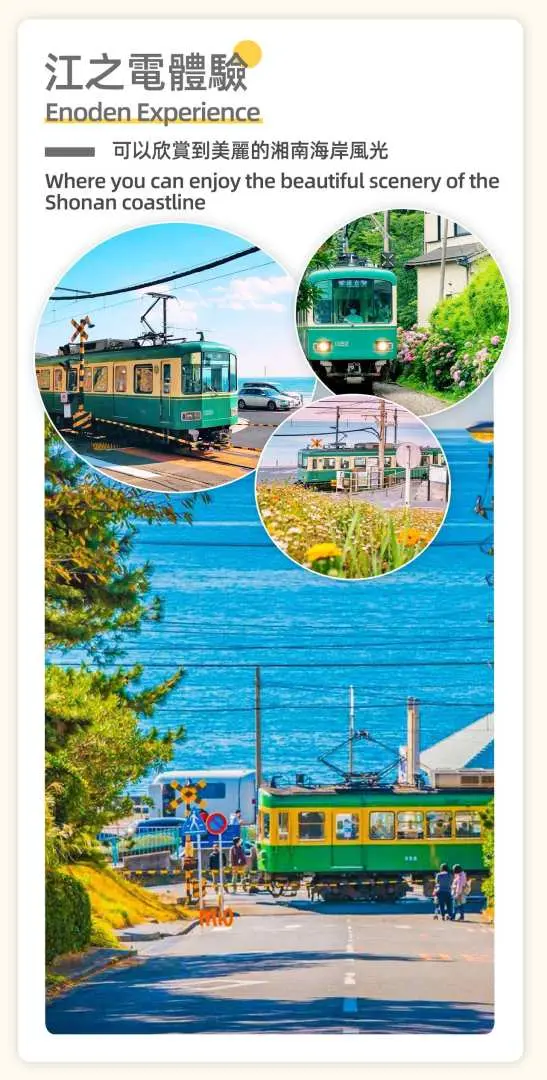
- Take the Enoden train along the Shonan coast and experience classic scenes from the anime.
- Stroll through Enoshima Benzaiten Shrine, gaze at the distant view of Mount Fuji, and savor local seafood delicacies.
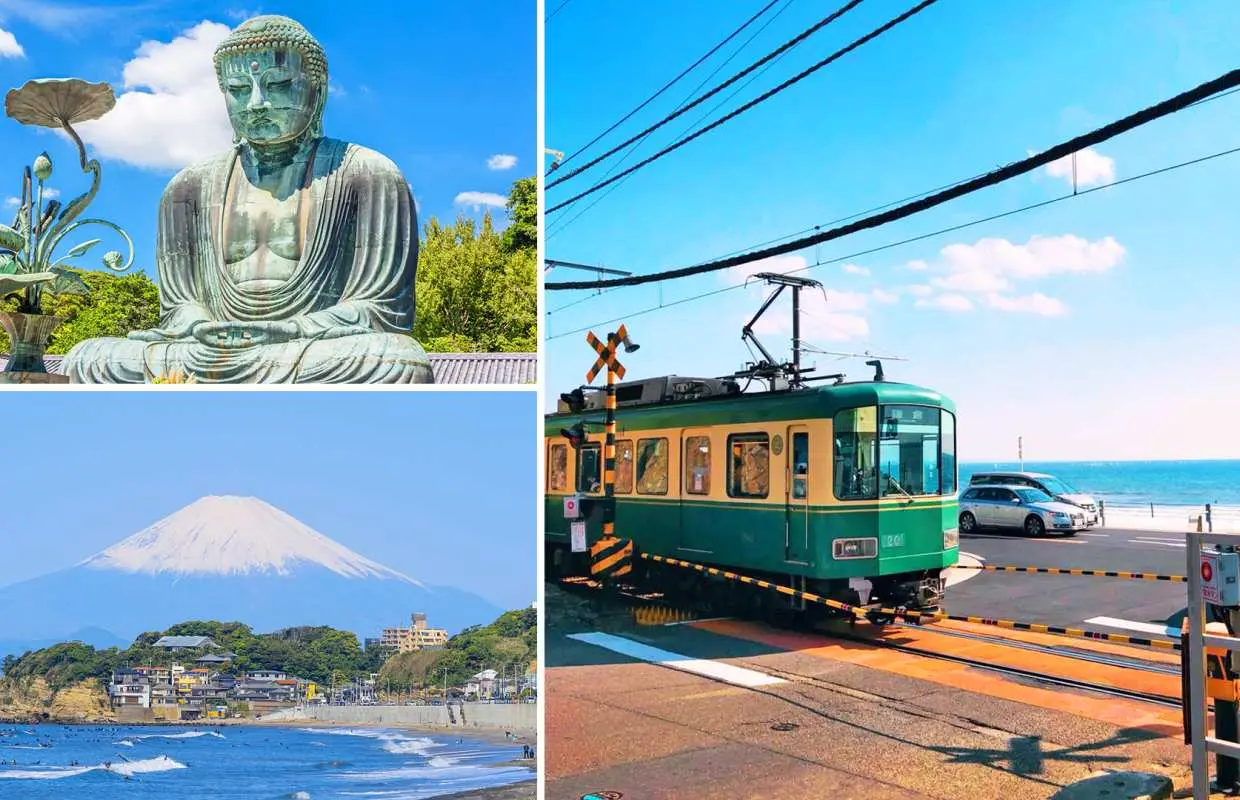
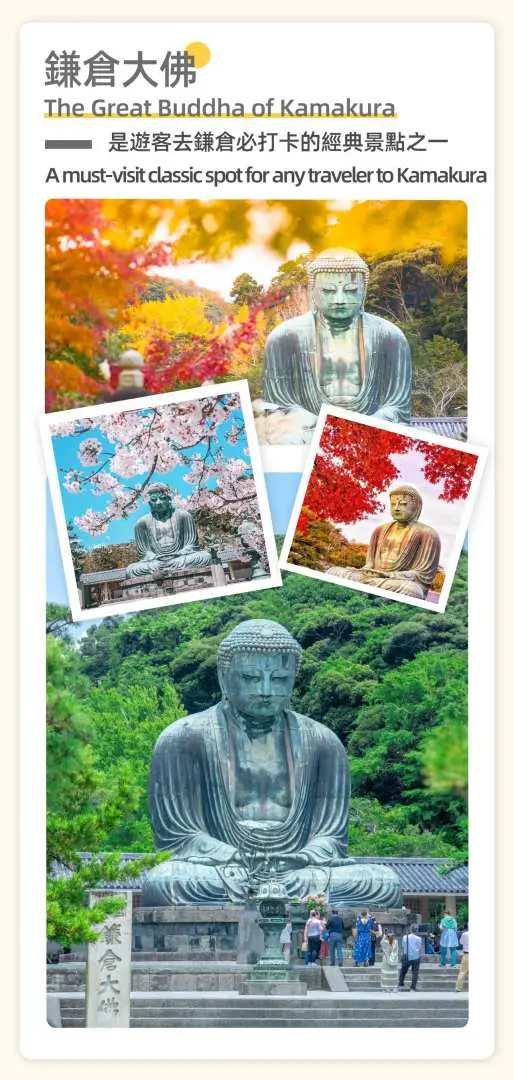
- Visit the Great Buddha of Kamakura and experience the historical awe of this 11.3-meter-tall national treasure bronze Buddha statue up close.
Package Options


Product Info
The content of this product is provided by machine translation and may not reflect the actual information, please take this into consideration before booking.
Embark on a journey through the ancient capital of Kamakura, where history and youth coexist in one trip!
【Kamakura Great Buddha】Get up close to the majestic national treasure Buddha statue and experience the culture of the Kamakura period.
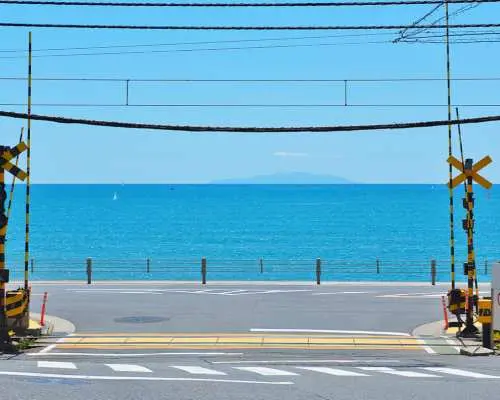
Take the Enoden train to Kamakura High School Front, reliving the classic street scenes from "Slam Dunk," with its jingling bells and youthful memories. ※Please follow the tour guide throughout the trip. Failure to meet the guide on time may affect the itinerary; no refunds will be given for cancellations due to unforeseen circumstances.
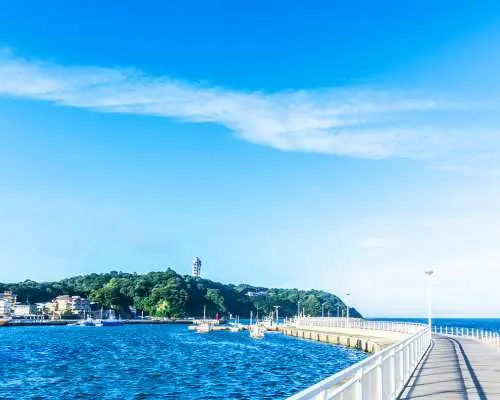
Stroll along Enoshima Island, admire the sea view and Bensaiten Shrine, explore romantic legends, take beautiful photos, and savor delicious food.
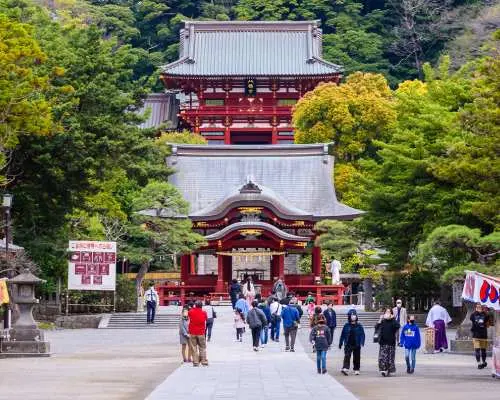
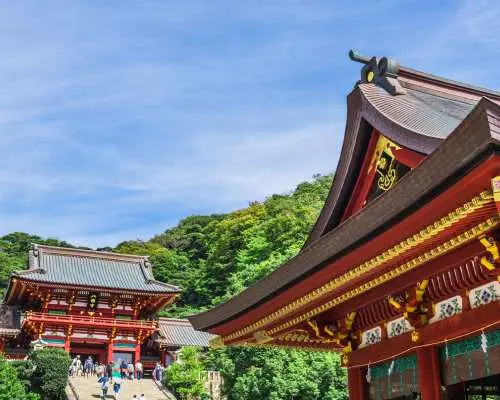
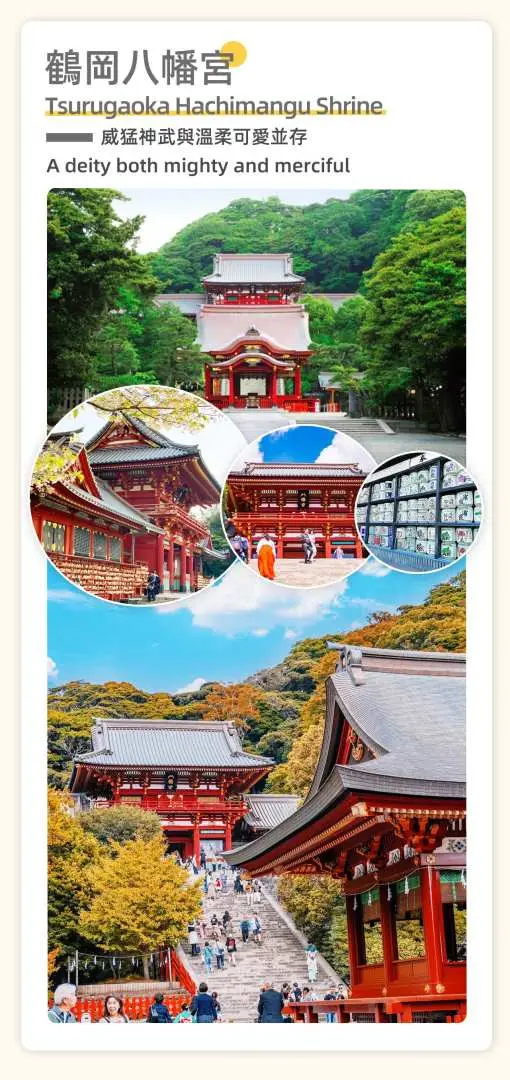
Visit the Tsurugaoka Hachimangu Shrine to experience the rich history and natural beauty of the samurai era.
Finally, stroll along Komachi-dori to experience the lively street scene, unique cuisine, and handicraft shops, and fully enjoy the charm of Kamakura.





Purchase Notice
- Each person can carry one piece of luggage free of charge, with no size limit (please indicate when making the reservation). If there is no note at the time of reservation or more than one piece per person is brought, an additional fee of JP¥2000 will be charged for each piece
- Free for children aged 0-2 who do not occupy a seat. Please inform us in advance; aged 3 and above are subject to adult pricing). The hotel offers pick-up and drop-off services, and children from 0 years old are considered chargeable.
- If the number of children under the age of 3 who do not occupy a seat is not informed in advance and results in insufficient space in the car, you may be refused to board the car/bus and the fee will not be refunded
- Driver service fee (fine small group of 1-13 people; bus group of 14-45 people, the actual amount will be adjusted according to the number of people on the day)
- Reference model: 5-8-seater car: Toyota Alphard; 9-14-seater car: Toyota HAICE or equivalent model; 18-22-seater car: minibus; 22-seater car or more: large bus. The above vehicles are for reference only and will be adjusted according to the actual number of people on the day of the tour
【Travel conditions】
- Place of departure and destination:Tokyo/Kamakura
- Duration of trip:Day tour
- Transportation:Chartered bus
- Bus company:Reisei Tourism Industry Co., Ltd.
- Meals:Morning 0 Lunch 0 Dinner 0
- The name of hotel if any:NA
- Minimum number of participants:1
- Tour manager:1
【Tour operator】
- Name:TuYi Group Japan Co., Ltd.
- Address: 722 Shuzenji, Izu City, Shizuoka Prefecture
- License Number: Shizuoka Prefectural Governor Registered Travel Agency, No. 2-633
- Travel Agency Association: Regular Member of the Japan Association of Travel Agents (JATA)
Reminders
A minimum of 1 traveler(s) are required for the tour to depart. If the number of participants does not reach the minimum requirement, the tour will be canceled. An email regarding tour cancellation will be sent 4 day(s) before the departure date
In the event of inclement weather such as typhoons or snowstorms, a decision on whether to cancel the tour will be made 1 day(s) before departure (local time 18:00). Notifications will then be sent via email
Please arrive at the designated location 15 minute(s) before the scheduled departure time, as the tour will depart on time
This is a group tour, where you will travel with other passengers. The tour will only stop at designated stations and will not provide temporary boarding or alighting services.
Please be sure to assemble at the designated time and place on time. Being late or not arriving will be considered as automatically forfeiting the trip and no refund will be given.
Depending on the number of participants in the group that day, the driver may also act as the tour guide, or the driver and tour guide may share the service. The configuration of small groups and buses will be flexibly adjusted.
The tour guide will primarily be in Chinese or English, and basic multilingual communication assistance will be provided as needed.
The actual itinerary may be adjusted due to weather, traffic or other force majeure factors (especially weekends and holidays), including the time spent at attractions, the order of attractions, or cancellation. The driver and guide will adjust the itinerary according to the actual situation. Please allow time and be prepared before placing an order. No refunds or additional compensation can be provided.
The time allotted at each attraction has been arranged. Please cooperate with the tour guide's time management. During peak season, the itinerary order may be adjusted due to traffic congestion.
If you leave the group midway, it will be considered as a waiver of subsequent services. No refund will be given for the unused portion, and you will be responsible for your own safety during the period.
This tour includes a tram ride and some walking, so please wear comfortable, suitable travel clothing and shoes.
The Enoden tram experience is a complimentary item; if you are unable to ride the Enoden due to force majeure, the fee will not be refunded.
During free time, you should pay attention to your personal safety and property security. If you do not heed the advice and an accident or loss occurs, you will be responsible for the consequences.
According to Japanese law, the maximum working hours for a driver are 10 hours. To ensure driver safety and driving stability, the itinerary may be adjusted based on actual circumstances, including reducing sightseeing time at attractions or canceling certain attractions. We apologize for any inconvenience. Refunds cannot be requested on this basis, and we sincerely hope for your understanding and support.
To maintain a clean vehicle interior, please do not eat strongly scented foods inside the vehicle. Cleaning fees will be charged according to local standards for any resulting stains.
Since the trains depart from Tokyo and Shinjuku, the boarding and alighting points must be the same and cannot be changed.
Summer is hot with strong ultraviolet radiation, so please prepare sun protection tools.
FAQ
The Great Buddha of Kamakura, or Daibutsu, at Kotoku-in Temple, is a monumental bronze statue of Amitābha Buddha. Cast in 1252, it originally resided in a wooden temple hall which was repeatedly destroyed by typhoons and a tsunami. Since 1498, it has stood in the open air. As Japan's second-tallest bronze Buddha statue, it is designated a National Treasure and a powerful symbol of Buddhist art and resilience, offering a profound sense of historical and spiritual significance to visitors.
The Great Buddha of Kamakura is situated at Kotoku-in Temple in the city of Kamakura, Kanagawa Prefecture. The most convenient way to reach it via local transport is by taking the Enoshima Electric Railway (Enoden Line). From Kamakura Station, take the Enoden Line two stops to Hase Station. The temple is then approximately a 7-minute walk from Hase Station, clearly signposted.
The Great Buddha of Kamakura is an impressive bronze statue, standing approximately 11.3 meters (37 feet) tall and weighing around 121 tons. Its key features include a serene and contemplative facial expression, elongated earlobes symbolizing wisdom, and a spiral curl pattern on its head. Uniquely, the statue is hollow, allowing visitors to enter and observe its interior structure, a rare feature among large Buddha statues in Japan.
The Great Buddha of Kamakura represents Amitābha Buddha (Amida Nyorai in Japanese), a celestial Buddha described in the scriptures of Mahāyāna Buddhism. Amitābha is revered for his infinite light and boundless life, symbolizing compassion, wisdom, and the ability to guide beings to salvation in the Pure Land. Its monumental presence inspires visitors to reflect on peace, enlightenment, and spiritual journey.
The Kamakura Enoden Train is popular for its nostalgic charm and incredibly scenic route. It hugs the coastline, offering breathtaking views of the Pacific Ocean, especially between Kamakura and Enoshima. The train passes through quaint neighborhoods and historical sites, stopping at charming, retro-style stations. Its proximity to the sea and the opportunity to spot famous landmarks like the Kamakura High School Crossing make it a unique and picturesque journey for exploring the region.
The Kamakura Enoden Train is characterized by its charming retro design and unique operation as a single-track light rail system. It runs between Kamakura and Fujisawa, offering a distinctive blend of urban and coastal scenery. Its route winds through narrow residential streets, alongside the sea, and past numerous historical sites and popular spots, creating an intimate connection with the local landscape that traditional trains cannot offer.
The Kamakura High School Crossing gained global recognition due to its prominent appearance in the opening sequence of the beloved 1990s Japanese animation series "Slam Dunk." This iconic level crossing, with its railway, sea views, and the nearby high school, is instantly recognizable to fans, making it a popular pilgrimage site for anime enthusiasts who wish to recreate famous scenes and capture nostalgic photos.
Visitors to the Kamakura area can enjoy a variety of local delicacies, especially along the Enoden Line and near Enoshima. A must-try is Shirasu-don, a fresh sardine rice bowl, often available in raw or boiled forms. Other seafood options are abundant, given the coastal location. Traditional Japanese sweets, such as dango and matcha, are also popular. The area offers charming cafes and restaurants, perfect for experiencing local flavors and relaxing after sightseeing.
Get Help


