
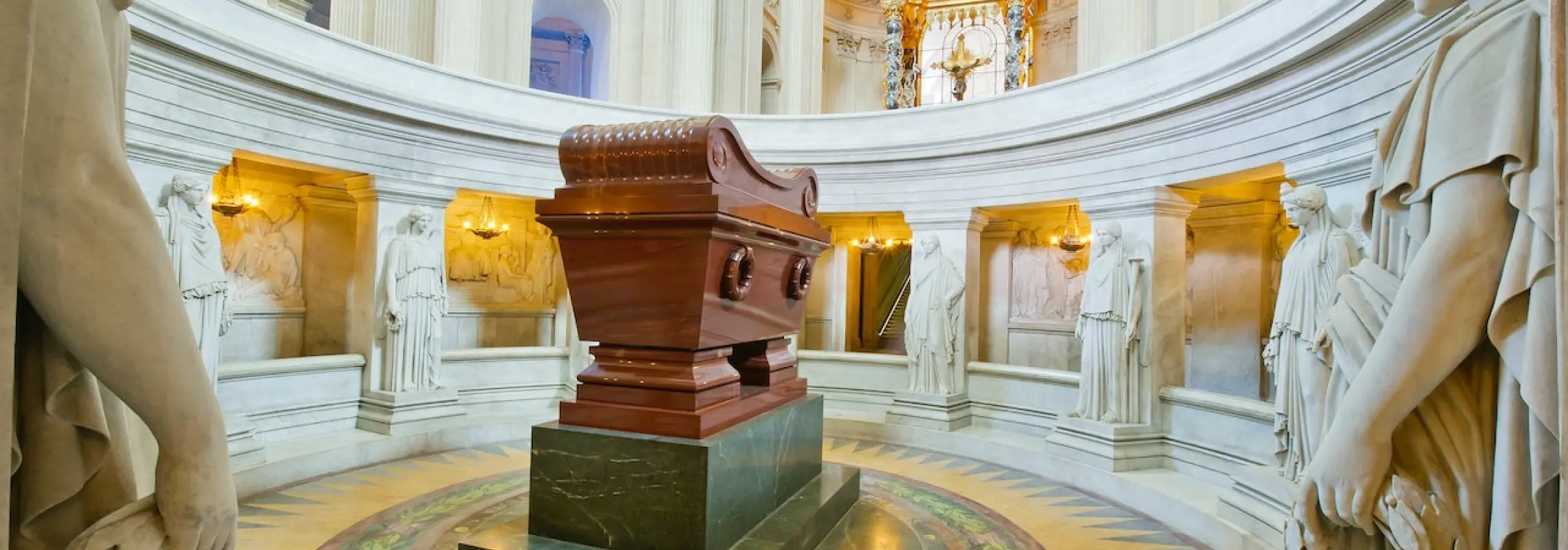
Musée de l'Armée - Les Invalides: Priority Entrance
- Visit Napoleon's tomb and see war memorabilia. Get priority entrance to one of the 5 most visited museums in France, (and one of the three biggest museums in the world!) with over 1.4 million visit. See Napoleon's tomb in the impressive Dôme des Invalides and learn what weapons were used in each of the many wars.
Package Options
Product Info
Paris's Army Museum (Musée de l'Armée) is one of the three largest arms museums in the world, and home to one of the biggest military history and art collections on the planet. None other than Napoleon Bonaparte has been resting here since 1861, in his tomb. Get priority entrance into this military-minded collection of arms, armor, and art.
- Important Info -
Child policy:
- Children under 18 years are free of charge. Valid ID is required.


Important Info
Includes/Excludes
- Admission
- Items not mentioned in product description
Reminders
Please refer to your voucher for final information regarding meeting points, pick-up locations, and pick-up time
How to Use
Skip the line and show your smartphone ticket at the ticket holders line.
Musée de l'Armee: 129,Rue de Grenelle, 75007, Paris
Experience Location
Location Name: Musée de l'Armee, 129,Rue de Grenelle
Address: Musée de l'Armee, 129,Rue de GrenelleCancellation Policy
- Once the order has been completed, it cannot be canceled, modified, or refunded
- Due to time zone differences, the confirmed cancellation date is based on the supplier’s local time. Please allow 2–5 business days to process your cancellation request, after which the cancellation fee will be charged according to the product’s cancellation policy. Once your refund request is confirmed, KKday will initiate the refund to your original payment method within 15 days. The actual refund timing depends on your card-issuing bank’s policy.
FAQ
1. How can visitors access Napoleon's Tomb and the Musée de l'Armée within Les Invalides?
Les Invalides offers multiple entry points. The primary public entrance for visiting the Musée de l'Armée and Napoleon's Tomb is located at 129 Rue de Grenelle. Another accessible entrance is via Place Vauban, which provides direct access to the Dôme Church, where Napoleon's Tomb is housed. Visitors with pre-booked priority entrance tickets should confirm their designated entry point to ensure a seamless visit experience.
2. What are the key historical features and significance of Napoleon's Tomb in the Dôme des Invalides?
Napoleon's Tomb, situated beneath the iconic golden dome of the Dôme des Invalides, is a monumental red quartzite sarcophagus resting on a green granite base. Its immense historical significance lies in being the final resting place of Emperor Napoleon Bonaparte, symbolizing French imperial grandeur. The tomb is surrounded by impressive sculptures depicting his major victories and is a powerful tribute to his enduring legacy, drawing millions of visitors worldwide.
3. What is the typical visitor experience like at the Musée de l'Armée, and what key content can one expect?
The Musée de l'Armée provides an extensive and immersive journey through French military history. Visitors can expect to explore vast collections of ancient armor, weaponry spanning from the Middle Ages through both World Wars, and personal artifacts of prominent historical figures, including Napoleon. The museum's exhibits are meticulously arranged chronologically, detailing key battles, strategic developments, and the evolution of military uniforms, offering a comprehensive overview of France's military heritage.
4. What is the admission process for visiting Napoleon's Tomb and the Musée de l'Armée?
Admission to both Napoleon's Tomb and the Musée de l'Armée requires a valid ticket. Visitors have the option to purchase tickets upon arrival at the entrance or, for greater convenience and to avoid potential queues, to pre-book their priority entrance tickets online. Booking through platforms like KKday provides the advantage of convenient digital ticket acquisition, which contributes to a smoother and more efficient entry process upon arrival, enhancing the overall visitor experience.
5. Which specific periods of military history are prominently featured in the Musée de l'Armée's collections?
The Musée de l'Armée prominently features military history from the medieval era through the 20th century. Key sections include comprehensive displays of ancient and medieval armors and weapons, extensive collections from the classical period covering figures like Louis XIV and Napoleon, and detailed exhibits dedicated to both World Wars. The museum systematically illustrates the evolution of warfare, military technology, and the uniforms of the French army across these distinct historical timelines.
6. What makes the Dôme des Invalides an impressive architectural structure for Napoleon's burial?
The Dôme des Invalides stands as an architectural marvel, recognized by its majestic golden dome that dominates the Parisian skyline. This classical French masterpiece, inspired by St. Peter's Basilica, features elaborate frescoes, intricate carvings, and a grand scale designed specifically to create a suitably awe-inspiring and respectful resting place for Emperor Napoleon. Its imposing structure and rich ornamentation make it a symbol of national pride and a powerful tribute to military history.
7. What are the recommended visiting times and typical duration needed to explore Les Invalides and its museums?
Les Invalides typically opens its doors in the morning and closes in the late afternoon or early evening, with operating hours varying seasonally. To thoroughly explore Napoleon's Tomb and the main collections of the Musée de l'Armée, it is generally recommended to allocate at least 2 to 3 hours. Arriving either shortly after opening or later in the afternoon can help visitors avoid the largest crowds, particularly during peak tourist seasons, allowing for a more relaxed visit.
8. What valuable insights does the Musée de l'Armée offer into France's military past and heritage?
The Musée de l'Armée offers profound insights into France's military past by presenting not only artifacts but also the intricate stories behind them. It delves into the evolution of military strategies, the personal sacrifices made during conflicts, and the significant societal impact of wars throughout centuries. Visitors gain a deeper understanding of military thought, the pivotal roles of key leaders, and how these historical events have fundamentally shaped France's national identity and its standing on the global stage.


