


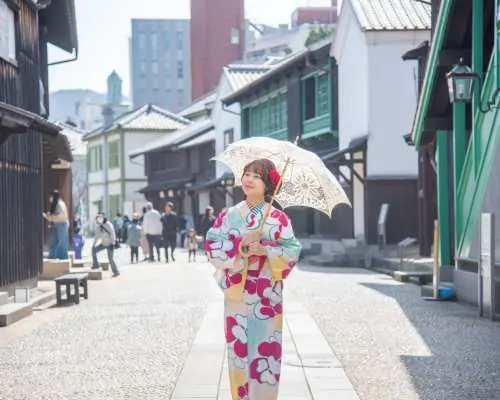


Nagasaki Dejima Admission Ticket (Includes a choice of kimono rental sets) (Nagasaki Prefecture, Nagasaki City)
- Located in the center of Nagasaki city, close to Shinchi Chinatown, it is convenient to combine with other sightseeing and dining options.
- Business hours are 8:00-21:00 (last entrance 20:40) Dejima at night is also attractive
- Since you purchase your tickets in advance, you can easily enter without having to wait in line at the counter!
- It can be enjoyed by everyone from small children to seniors, and is perfect for families, couples, and couples.
- Dejima has a wide range of indoor facilities, so you can stay comfortable even in rainy weather or during extreme cold and heat seasons.
Attraction Tickets
| Ticket type | E-ticket (direct entry) |
| Attraction type | History & culture |
Product Info
Purchase Notice
- Once you leave, you will not be able to re-enter. The facility is open all year round, but opening hours may change depending on the weather, etc.
- Due to maintenance of buildings, equipment, and exhibits, some areas may not be open to the public.
- Please check the information on the official website https://nagasakidejima.jp/ before making a reservation.
Includes/Excludes
- Entrance fee
- Kimono rental fee
- Food and drink charges at restaurants
- Shopping fees at the museum shop
Reminders
Smoking is prohibited anywhere on Dejima, both indoors and outdoors.
Please note that you cannot enter the museum while eating or drinking (e.g., you cannot view the museum while eating ice cream, etc.)
We do not accept cancellations after the time limit for customers to cancel by themselves has passed (please also check the cancellation policy).
Please present the admission ticket screen on your smartphone at the ticket counter.
Please note that we cannot accept printed paper applications.
Please be careful not to accidentally press the "Enter" button before checking in.
How to Redeem Your Voucher
How to Use Your Voucher
- Please click on the redemption link in the order confirmation email, enter the verification code (skip this step if you have already logged in), and follow the on-site staff's instructions to complete the Swipe to Redeem process
Voucher Redemption Period
- The voucher must be redeemed on the selected date and within operating hours; Invalid after expiration
Validity Period
- The voucher must be used on the selected date and within operating hours; Invalid after expiration
Experience Location
Location Name: Dejima
Address: 6-1 Dejimacho, Nagasaki CityFAQ
1. Does Dejima still exist as a historical site in Nagasaki?
Yes, Dejima exists today as a meticulously restored historical site in Nagasaki. It was originally an artificial island constructed in the 17th century, serving as the sole trading post for Dutch and Chinese merchants during Japan's period of national isolation. Visitors can now explore numerous reconstructed buildings, offering a vivid glimpse into its unique past and the profound cultural exchanges that took place there.
2. What was the historical significance and purpose of Dejima in Nagasaki?
Dejima was critically significant as Japan's only direct point of contact with the Western world (the Dutch East India Company) for over two centuries during its Edo period isolation. Its primary purpose was to facilitate controlled trade and prevent foreign influence. It served as a vital gateway for the exchange of goods, knowledge (Rangaku, or 'Dutch learning'), and culture, playing a crucial role in Japan's eventual modernization.
3. Why is Dejima considered a significant historical site to visit in Nagasaki?
Dejima is considered a significant historical site because it uniquely illustrates Japan's period of national isolation and its limited yet impactful interactions with the outside world. Through its accurately restored buildings, comprehensive artifacts, and informative exhibitions, visitors can experience the living and working conditions of foreign traders and learn about the profound cultural and scientific exchanges that influenced Japanese society. It provides a tangible connection to a pivotal era.
4. What are the main highlights and must-see attractions when visiting Dejima?
Main highlights at Dejima include the meticulously restored Dutch Factor's Residence, the Chief Factor's Office, and various residences for merchants and their families, showcasing distinct architectural styles. Visitors should also explore the historical warehouses, kitchens, and the impressive Gate that once controlled all access. The exhibitions on trade goods, medical instruments, and daily life offer deep insights into this unique historical period and its global connections.
5. How much time should visitors allocate to explore Dejima thoroughly?
To explore Dejima thoroughly and fully appreciate its many reconstructed buildings, detailed exhibitions, and historical context, visitors should typically allocate about 1.5 to 2 hours. This duration allows ample time to wander through the various areas, engage with the information panels, and soak in the unique atmosphere of this historical trading post without feeling rushed.
6. What are the operating hours and last admission time for Dejima?
Dejima is open from 8:00 AM to 9:00 PM (21:00). The last admission is at 8:40 PM (20:40). This extended evening operation allows visitors the unique opportunity to experience Dejima after sunset, offering a different and often quieter perspective on the historical site as it becomes beautifully illuminated.
7. What are the best transportation options to reach Dejima from central Nagasaki?
The most convenient way to reach Dejima from central Nagasaki is by taking the Nagasaki Electric Tramway. You can board Routes 1 or 5 and alight directly at the 'Dejima' tram stop, which is immediately adjacent to the historical site. Alternatively, Dejima is also within easy walking distance from Shinchi Chinatown, making it simple to combine with other sightseeing and dining options in the city center.
8. Can visitors enjoy Dejima comfortably even during bad weather or extreme temperatures?
Yes, visitors can comfortably enjoy Dejima regardless of the weather conditions. The historical site features a wide range of indoor facilities, including numerous reconstructed buildings that house exhibitions, artifacts, and provide ample shelter. This design ensures a pleasant and engaging visit even on rainy days or during seasons with extreme cold or heat, allowing for a comfortable exploration of its rich history.


