

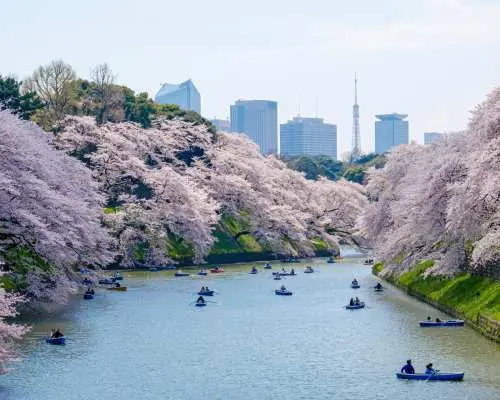


Imperial Palace East Garden and Heritage of Edo Castle Private Tour
- Explore the Palace's East Gardens to enjoy beautiful seasonal flowers and walk through the grounds of the old Shogun's castle.
- Take a stroll around Nihonbashi, Tokyo's bustling commercial hub with over 400 years of history.
- Since it’s a completely private tour, you can explore freely and at your own pace.
Package Options


Sightseeing Tours
| Tour Type | Private tour |
| Tour types | Guided tour |
| Sightseeing type | City walking tour, Historic site tour |
| Transport | Walking |
Product Info
Important Info
Reminders
On the day of the tour, we will walk about 2 km, so please wear comfortable clothes and walking shoes.
In July and August, temperatures in Japan can reach nearly 40°C and it can be extremely hot. Please take care to avoid heatstroke.
Cancellation Policy
- Cancellations 3 day(s) (inclusive) before the selected date are allowed. Unused orders can be canceled for free
- For cancellations made 2 to 2 days prior to selected date, a cancellation fee of 20% will apply
- For cancellations made 1 to 1 days prior to selected date, a cancellation fee of 50% will apply
- Cancellation is not allowed between 0–0 days from the selected date. Orders cannot be canceled or modified, and refunds will not be granted.
- Due to time zone differences, the confirmed cancellation date is based on the supplier’s local time. Please allow 2–5 business days to process your cancellation request, after which the cancellation fee will be charged according to the product’s cancellation policy. Once the cancellation is confirmed, you will receive your refund within 14 working days.
FAQ
The Imperial Palace East Garden offers a unique blend of historical significance and natural beauty in the heart of Tokyo. As the former site of Edo Castle, it provides a direct connection to Japan's rich samurai history and the Tokugawa Shogunate. Visitors can enjoy serene landscapes, seasonal flowers, and impressive stone walls and moats, making it a peaceful escape and a valuable cultural experience for understanding Tokyo's heritage.
Within the Imperial Palace East Garden, visitors can explore the remnants of Edo Castle, including its impressive stone foundations, historic gates like Ote-mon, and parts of its original moats. You will also find beautifully maintained Japanese gardens, such as the Ninomaru Garden, and the tranquil Wadakura Fountain Park. The expansive grounds allow for a leisurely walk, offering diverse views and insights into imperial history.
The current Imperial Palace is situated on the former site of Edo Castle. Edo Castle served as the main residence and administrative center of the Tokugawa shoguns from 1603 to 1868. Following the Meiji Restoration, the castle was replaced by the Imperial Palace, which became the official residence of the Emperor. While the inner palace itself is not accessible, the East Garden preserves significant historical remnants of Edo Castle.
The Imperial Palace East Garden is easily accessible via several gates, with Ote-mon Gate being the primary entrance for most visitors. It is a short walk from major subway stations such as Otemachi Station (various lines) and Tokyo Station (Marunouchi Exit). Clear signage guides visitors from these stations to the garden gates, ensuring convenient public transportation access.
To fully appreciate the Imperial Palace East Garden, including its historical ruins, various gardens, and the Wadakura Fountain Park, it is recommended to allocate approximately 1.5 to 2 hours. This allows for a leisurely stroll, time to read informational displays, and opportunities to take photos without feeling rushed, especially as the tour encourages exploration at your own pace.
Edo Castle's grounds hold immense historical significance as the administrative and military hub of Japan during the Edo period (1603-1868). It was the seat of the Tokugawa Shogunate, which ruled Japan for over 250 years, bringing stability and prosperity. Exploring these grounds offers a tangible connection to the powerful shoguns and the pivotal role the castle played in shaping Japan's history and culture.
The Tokugawa family, also known as the Tokugawa clan, was prominently associated with ruling from Edo Castle. Tokugawa Ieyasu established the Tokugawa Shogunate in 1603, making Edo Castle his primary residence and the center of Japan's political power. His descendants continued to rule from the castle for over two and a half centuries until the Meiji Restoration in 1868.
The term 'Edo' (江戸) literally translates to 'bay-entrance' or 'estuary' in Japanese. Its origin is geographical, referring to the town's original location at the mouth of the Sumida River leading into Edo Bay. This fishing village grew into a massive city under the Tokugawa Shogunate and was renamed Tokyo (東京, meaning 'Eastern Capital') during the Meiji Restoration in 1868.
Get Help


