


Shiga Biwako Day Tour: MIHO MUSEUM, Kyu-Chikurin-in Garden (or Hiyoshi Taisha Shrine) & Shirahige Shrine | Departing from Osaka/Kyoto
- Visit the MIHO Museum, designed by I.M. Pei. It is a harmonious blend of architecture and nature, and a must-see for art and design lovers
- Experience the mystical charm of Shirahige Shrine, known as the “floating shrine of Japan,” where the torii gate stands beautifully in the water, stunning in every season
- Explore the Former Chikurin-in Temple, featuring a traditional kare-sansui (dry landscape) garden and immerse into Edo-period aesthetics and tranquility
- Depart from Osaka or Kyoto with ease, this one-day journey unveils Shiga's cultural treasures and breathtaking natural scenery
Package Options


Sightseeing Tours
| Tour Type | Shared tour |
| Transportation method | Transfer from meeting point, Hotel transfer |
| Minimum participant requirement | 4 travelers |
| Meal arrangement | Arrange yourself |
| Sightseeing type | Natural sights, Temples & shrines |
| Transport | Bus tour |
Product Info
The content of this product is provided by machine translation and may not reflect the actual information, please take this into consideration before booking.
—Introduction to attractions—
- MIHO Museum: Pei’s Paradise
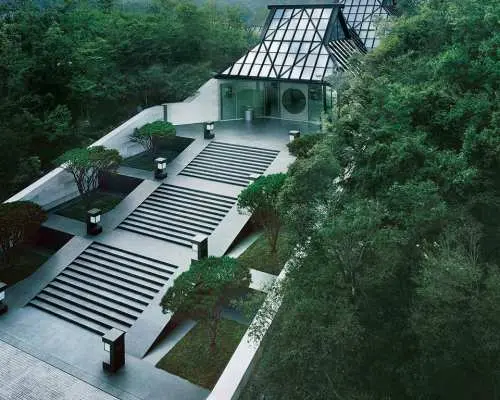
MIHO Museum of Art was designed by the famous architect Mr. I.M. Pei, based on the concept of "Peach Blossom Spring". It is far away from the city. The most special thing is that 80% of the building is buried in the mountains. In summer, the forests are lush and the mountain roads are long. In winter, the mountain is closed due to heavy snow. The collection includes artworks from ancient civilizations such as Japan, China, South Asia, Central Asia, West Asia, Egypt, Greece, and Rome. ※Opening date official website http://www.miho.or.jp/calendar/ Permanent exhibition ticket: 1100 yen; special exhibition ticket 1300 yen. Lunch recommendation (please pay for it yourself) There are restaurants and cafes in the museum, please feel free to choose your own meals.
*Museum Closure Dates:
October 6, 14, 20, 27, 2025; November 4, 10, 17, 25, 2025; ecember 8, 2025; December 15–31, 2025; January 1–March 13, 2026; June 8–July 3, 2026; September 1–25, 2026; December 7–31, 2026;
Regular Monthly Closures: Closed every Monday.
- Former Chikurin-in Temple
The national designated scenic garden where you can enjoy the beautiful scenery of different seasons was once the retreat of the monks on Mount Hiei. Recommended by Japanese photographers, the layout of the attic in the courtyard is the same as that of Rurikoin, and you can take the same mirror reflection, and there is no interruption and no time limit, so you can slowly find the perfect angle. The courtyard is covered with moss, and each season has its own characteristics. You can enjoy the courtyard landscaping while tasting the perfect taste of matcha, or you can walk through the exquisitely arranged mountain stream stone steps and experience the Zen in the Japanese courtyard. Tickets are self-paid: 330 yen; tasting matcha + Japanese confectionery in the courtyard: 400 yen.
*Go to Taisha Shrine when the Former Chikurin-in Temple is closed (on Mondays, the day after a holiday, and 12/26-12/31) Mount Hiei Taisha Shrine: The head shrine of more than 3,800 Hie, Hiyoshi, and Sanno Shrines in Japan, "Hieyoshi Taisha Shrine" uses monkeys as messengers of God.
- Lake Biwa Shirasu Shrine Water Torii
Lake Biwa is a freshwater lake in the mountainous area of central and western Japan, close to Kyoto. It is a symbol of Japan, a national park and the largest lake. It is a designated lake under the Law on Special Measures for the Preservation of Lake and Marsh Water Quality in Japan and is listed in the Ramsar Convention on Wetlands as an internationally important wetland. Like Mount Fuji, Lake Biwa is regarded by the Japanese as a symbol of Japan and is affectionately called the "Lake of Life".
- Shinsaibashi
Osaka's most famous shopping street is home to large department stores, chain drugstores, old brand stores, and small shops. There are all kinds of goods of all grades and styles, and Hello Kitty and Disney stores are also here. This is also a gathering place for drugstores, and most stores are equipped with Chinese-speaking staff, so you can easily enjoy shopping.
- Dotonbori
Whether it is day or night, this street never rests. As the birthplace of Osaka's food culture, Dotonbori has many delicious snacks such as octopus balls, Okonomiyaki, and Jinlong ramen, as well as traditional Japanese izakayas and various restaurants, such as the popular Kani Doraku.
Other day trip recommendations:
—Important Notes—
- Each person can bring one piece of luggage for free, with no size limit. The excess will be charged 2,000 yen per piece (please note when registering).
- Children aged 0-2 years old can ride for free without occupying a seat; please inform us in advance when registering; children aged 3 years old and above ride the same as adults.
- Small groups of 1-13 people will have driver who also serves as the guide. For bus groups of 14-45 people there will be a driver and a guide. The arrangement will be made according to the number of participants in the group on the day.
- Reference vehicle types: 5-8 seater: Toyota Alphard or equivalent. 9-14 seater: Toyota HAICE or equivalent. 18-22 seater: mini bus. 22 seater or more: large bus. The above vehicles are for reference only and will be adjusted according to the number of people in the group on the day.
A visit to the Miho Museum is like a journey of discovery of a paradise, with beautiful scenery everywhere.


LV once moved the "2018 Early Spring Resort Collection Conference" to the Miho Museum, and during the cherry blossom season there was a beautiful cherry blossom tunnel.


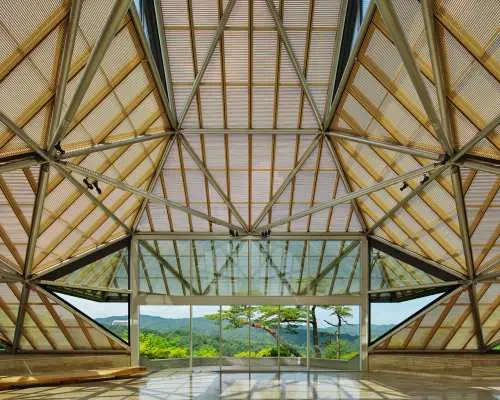
The entire museum is cleverly integrated into the natural forest, with more than 80% of the building structure hidden underground. The entrance corridor seems to lead to a paradise, and the architectural inspiration comes from "Peach Blossom Spring". The museum has a rich collection, covering everything from ancient oriental art (Chinese, Japanese, Egyptian, Silk Road relics) to Western artefacts. Embark on a cultural journey across time and space!


The water torii of Shirahige Shrine stands quietly in Lake Biwa, presenting different scenes and is favored by countless photography enthusiasts.


Shirahige Shrine was built about 1,900 years ago and is the oldest shrine in Omi. It has been selected as one of the elements of the Japan Heritage story. The scenery here is charming, with Oki Island rising above the horizon as the background, and fishing boats passing through the torii gates in the lake, the scenery is particularly beautiful.


Former Chikurin-in Temple is a photographers favourite! The layout of the attic in the courtyard is the same as that of Rurikoin and is perfect for capturing mirroring images!


Take a walk along the ingeniously designed stone steps along the mountain stream and experience the Zen in the Japanese garden.


Purchase Notice
【Travel conditions】
- Travel origin and destination: Osaka and Shiga
- Travel days: Round trip
- Transportation: Chartered bus
- Bus company name: Reisei Tourism Industry Co., Ltd., etc
- Meals: Breakfast 0 times Lunch 0 times Dinner 0 times
- Accommodation facilities: None
- Minimum number of people in a group: 4
- Team Leader: 1
【Travel planning/implementation】
- Operating company name: TuYi Group Japan Co., Ltd.
- Address: 722 Shuzenji, Izu City, Shizuoka Prefecture
- License Number: Shizuoka Prefectural Governor Registered Travel Agency, No. 2-633
- Travel Agency Association: Regular Member of the Japan Association of Travel Agents (JATA)
Reminders
A minimum of 4 traveler(s) are required for the tour to depart. If the number of participants does not reach the minimum requirement, the tour will be canceled. An email regarding tour cancellation will be sent 4 day(s) before the departure date
In the event of inclement weather such as typhoons or snowstorms, a decision on whether to cancel the tour will be made 1 day(s) before departure (local time 18:00). Notifications will then be sent via email
Please arrive at the designated location 15 minute(s) before the scheduled departure time, as the tour will depart on time
During the trip, please carry your passport and valuables with you and keep them properly. If they are lost, stolen, or damaged, you will be responsible for the consequences.
Elderly people, patients with cardiovascular diseases such as hypertension and heart disease, and pregnant women are advised to be accompanied by their relatives.
This tour does not accept individual registrations from customers under the age of 18. If you wish to register, please have your guardian register with you.
This is a fixed carpooling itinerary. Please be sure to abide by the stay time at each attraction and follow the arrangements of the driver and guide.
Please note that no refund will be given if you fail to participate or cancel the trip due to personal issues, lateness, etc.
If you leave the group on your own during the trip, the transaction will be deemed invalid and no fees will be refunded. If personal or property safety is affected as a result, the consequences will be borne by you.
The arrival time of each itinerary may change due to traffic conditions, weather, festivals, and crowds on the day. Please forgive us if the itinerary is delayed or cancelled due to the above or other force majeure factors. We cannot request a refund on this basis.
Please be sure to abide by local laws and regulations in Japan and do not bring items prohibited by Japanese law to avoid violating the law and affecting your own rights.
During free activities, you should pay attention to your own personal and property safety. If you fail to heed the advice and an accident or loss occurs, you will be responsible for the consequences.
The boarding and alighting locations must be the same and cannot be changed.
The journey is long, so it is recommended to wear comfortable and convenient clothing, and prepare some light food and drinking water in advance to ensure a more pleasant and smooth journey.
Cancellation Policy
- Cancellations 11 day(s) (inclusive) before the selected date are allowed. Unused orders can be canceled for free
- For cancellations made 8 to 10 days prior to selected date, a cancellation fee of 20% will apply
- For cancellations made 2 to 7 days prior to selected date, a cancellation fee of 30% will apply
- For cancellations made 1 to 1 days prior to selected date, a cancellation fee of 40% will apply
- Cancellation is not allowed between 0–0 days from the selected date. Orders cannot be canceled or modified, and refunds will not be granted.
- Due to time zone differences, the confirmed cancellation date is based on the supplier’s local time. Please allow 2–5 business days to process your cancellation request, after which the cancellation fee will be charged according to the product’s cancellation policy. Once the cancellation is confirmed, you will receive your refund within 14 working days.
FAQ
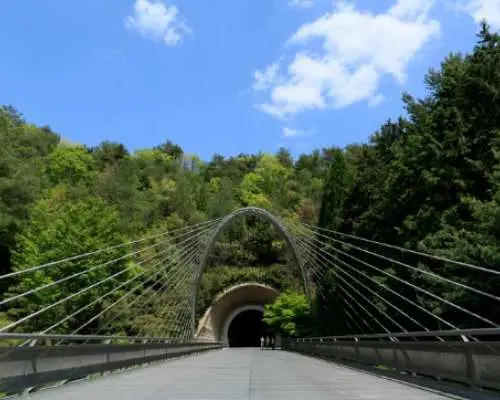
The MIHO Museum, designed by the renowned architect I.M. Pei, is a harmonious blend of architecture and nature, often referred to as a hidden art sanctuary. It features a stunning design that integrates seamlessly into the surrounding mountains, accessed via an impressive tunnel and suspension bridge. Visitors can explore diverse collections of ancient art from various civilizations, presented in a serene and thoughtfully designed environment that enhances the appreciation of both art and natural beauty.
The MIHO Museum typically observes closure days, often on Mondays, and may have extended closures during specific periods like winter or for exhibition changes. Its operating hours generally run from late morning to late afternoon. As schedules can vary seasonally and for special events, visitors are advised to verify the latest schedule and specific closure dates to ensure a smooth visit.
For a comprehensive and enjoyable visit to the MIHO Museum, it is generally recommended to allocate approximately 2 to 3 hours. This duration allows ample time to appreciate the museum's unique architecture, including the scenic tunnel and bridge approach, explore its diverse art collections, and take in the serene natural surroundings. The pace can be adjusted based on individual interest in the exhibits.
The MIHO Museum's architectural concept, spearheaded by I.M. Pei, is centered on a vision of paradise and harmony between nature and human creation. Over 80% of the building is built underground, allowing it to blend into the mountain landscape. The journey to the museum through a tunnel and suspension bridge symbolizes a transition from the everyday world to a secluded, spiritual realm, reflecting the founder's vision of an artistic utopia.
Mt. Hiei Hiyoshi Taisha Shrine is one of Japan's oldest and most significant shrines, with a history spanning over 1,000 years. It serves as the head shrine of Hie Shintoism, overseeing numerous Hiyoshi shrines across Japan. Located at the foot of sacred Mt. Hiei, it has long been revered as the guardian shrine of Kyoto and features unique architectural styles and extensive grounds encompassing over 40 subsidiary shrines.
Shirahige Shrine is renowned for its iconic torii gate standing majestically in the waters of Lake Biwa, earning it the nickname 'the floating shrine of Japan.' This picturesque scene, especially beautiful at dawn or dusk, offers a mystical charm in every season. As an ancient shrine, it is also known for its spiritual atmosphere and connection to longevity and matchmaking, drawing visitors for both its scenic beauty and cultural significance.
At the Former Chikurin-in Temple, visitors can immerse themselves in the tranquility of a meticulously maintained traditional kare-sansui (dry landscape) garden. This garden, characteristic of Edo-period aesthetics, features raked gravel, rocks, and carefully placed vegetation to evoke natural landscapes. It provides a peaceful retreat where one can appreciate traditional Japanese garden design, history, and serene beauty.
A Shiga Lake Biwa day tour unveils a rich tapestry of cultural treasures and breathtaking natural scenery. Highlights often include the architectural marvel and art collections of the MIHO Museum, the mystical floating torii gate of Shirahige Shrine on Lake Biwa, the ancient history and spiritual significance of Mt. Hiei Hiyoshi Taisha Shrine, and the serene Edo-period dry landscape garden of the Former Chikurin-in Temple. The tour offers a diverse experience showcasing Shiga's unique charm.
Get Help


