




Chiang Mai Half Day Tour: Lanna Temples & White Pagoda | Thailand
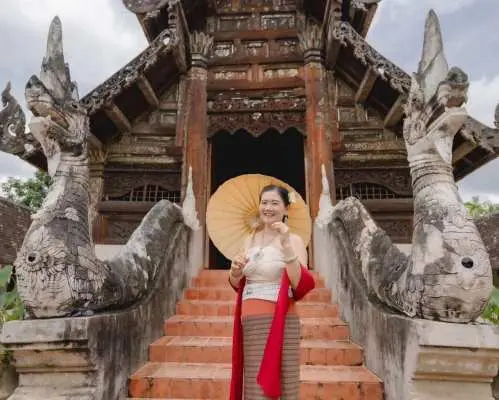
- Visit Wat Ton Kwen, one of the few remaining temples in Thailand featuring a complete, traditional wooden Viharn, famously used as a filming location for many Thai period dramas.
- Marvel at Wat Ban Pong’s White Loha Prasat, a rare architectural marvel set against a lush mountain backdrop, offering a stunning contrast of pure white spires and green nature.
Package Options


Product Info
Important Info
Reminders
A minimum of 2 traveler(s) are required for the tour to depart. If the number of participants does not reach the minimum requirement, the tour will be canceled. An email regarding tour cancellation will be sent 1 day(s) before the departure date
Please arrive at the designated location 15 minute(s) before the scheduled departure time, as the tour will depart on time
FAQ
Wat Ton Kwen exemplifies traditional Lanna architecture, notably featuring a complete, ancient wooden Viharn (assembly hall). In contrast, Wat Ban Pong’s White Loha Prasat is a rare 'metal castle' structure with striking pure white spires, representing a distinct architectural marvel set against a lush mountain backdrop. The former showcases intricate wooden craftsmanship, while the latter is known for its unique material and pristine white aesthetic.
When visiting sacred sites such as Wat Ton Kwen and Wat Ban Pong, it is recommended to dress respectfully. This typically means covering your shoulders and knees. Loose-fitting, comfortable clothing is ideal. Visitors are also expected to remove their shoes before entering temple buildings like the Viharn.
Visitors to Wat Ban Pong's White Loha Prasat can marvel at its rare, pristine white architectural marvel, which stands out beautifully against a lush mountain backdrop. This provides a stunning contrast of pure white spires and green nature, offering a peaceful, off-the-beaten-path experience. It's an ideal spot for photography and for those interested in distinctive Thai temple designs.
Wat Ban Pong's White Loha Prasat is significant for its unique 'metal castle' architecture, which is a rare form of Buddhist structure in Thailand, distinct from traditional stupas. Its pure white design holds cultural importance, often symbolizing purity and enlightenment within Buddhist contexts. While specific historical details about its founding may vary, its architectural style makes it a notable site reflecting a unique blend of artistry and religious devotion.
Wat Ton Kwen is highly significant because it is one of the few remaining temples in Thailand that features a complete, traditional wooden Viharn (assembly hall). This makes it an authentic and well-preserved representation of ancient Lanna architectural style. Its traditional charm has also led to its use as a filming location for many Thai period dramas, highlighting its cultural importance and historical accuracy.
Since Wat Ton Kwen and Wat Ban Pong are described as off-the-beaten-path locations away from city crowds, direct public transport might be limited. Common options for reaching such sites include ride-hailing services like Grab, which are widely available in Chiang Mai. Alternatively, visitors often opt for chartered songthaews (red trucks) or private car hire for convenience and direct access.
Songthaews, often recognized as red trucks, operate as shared taxis on fixed routes or can be chartered for specific destinations like temple areas. Tuk-tuks are three-wheeled motorized rickshaws offering a more direct and often faster way to travel short distances within and around the city. Both require negotiating fares if chartered, with tuk-tuks generally being more expensive for longer rides.
Photography enthusiasts will find Wat Ton Kwen appealing for its intricate, traditional wooden Viharn, which offers rich textures and historical aesthetics. Wat Ban Pong’s White Loha Prasat provides stunning photographic opportunities with its pure white spires dramatically contrasted against a lush, green mountainous backdrop. Both locations offer a peaceful atmosphere, ideal for capturing serene cultural and natural landscapes.
Get Help


