


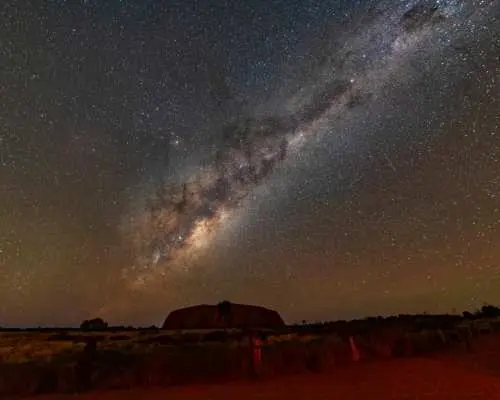

Uluru Astro Tour at Uluru-Kata Tjuta National Park | Northern Territory
Get the ultimate stargazing experience at the one and only Uluru-Kata Tjuta National Park!
- Gaze at the stunning sky from the best seats in the house
- Sit back and relax onboard the round-trip hotel transfers
Package Options


Sightseeing Tours
| Transportation method | Hotel transfer |
| Additional service & facility | Transfer included |
| Sightseeing type | Star gazing |
| Transport | Charter car |
Product Info
— What You Can Expect —
Go for an unforgettable stargazing experience! Look at stars, planets, and celestial objects in the night sky with your naked eye and a computerised telescope. An astronomy guide will take you on a memorable journey with stars, sounds, and surprises.
Head to an ideal viewing area at the Uluru-Kata Tjuta National Park and stay for about 90 minutes. Your guide can personalise the experience depending on your interests—whether it's identifying the zodiac signs or exploring your place in the universe.
Gaze upon a blanket of stars from the best seat in the house


Purchase Notice
- A 9.25" Schmidt-Cassegrain telescope, binoculars and laser pointers will be provided
- There is no toilet on-site, so travellers are advised to use the toilet before departure
- Travellers are advised to wear comfortable, closed shoes and warm clothes, as the temperature can drop drastically at night
Reminders
Please arrive at the designated location 10 minute(s) before the scheduled departure time, as the tour will depart on time
Hotel pickup time is typically between 8:00–8:30 pm, depending on weather conditions and visibility (e.g. moonrise). The exact time is to be confirmed in the early afternoon
Cancellation Policy
- Cancellations 8 day(s) (inclusive) before the selected date are allowed. Unused orders can be canceled for free
- Cancellation is not allowed between 0–7 days from the selected date. Orders cannot be canceled or modified, and refunds will not be granted.
- Due to time zone differences, the confirmed cancellation date is based on the supplier’s local time. Please allow 2–5 business days to process your cancellation request, after which the cancellation fee will be charged according to the product’s cancellation policy. Once the cancellation is confirmed, you will receive your refund within 14 working days.
FAQ
Uluru-Kata Tjuta National Park boasts exceptionally dark skies due to its remote desert location, far from city light pollution. This allows for unparalleled visibility of the Milky Way, constellations, and other celestial objects. The vast, flat landscape also provides an unobstructed 360-degree view of the night sky, creating an immersive and breathtaking stargazing experience unique to this iconic Australian landmark.
The cooler, drier months from May to September generally offer the clearest skies and most comfortable temperatures for stargazing at Uluru. During this period, humidity is lower, reducing atmospheric haze and enhancing visibility of the stars. Additionally, the Milky Way is often prominent during these months, making it an excellent time for an astro tour.
To fully appreciate Uluru and Kata Tjuta, a minimum of 2 to 3 days is recommended. This allows sufficient time to experience both sunrise and sunset at Uluru, explore the base walk, discover Kata Tjuta's domes and valleys, and participate in cultural and nature-based activities like stargazing. A longer stay provides a more relaxed pace and deeper immersion.
Within Uluru-Kata Tjuta National Park, options include organized tour buses, private vehicles, and sometimes shuttle services operating between Ayers Rock Resort and key viewpoints. Many tours, like the Uluru Astro Tour, include round-trip transfers from local hotels, offering a convenient way to access the park and participate in activities without needing personal transport.
Yes, there are specific guidelines. While general photography of Uluru is allowed, certain areas within the National Park, particularly those of cultural significance to the Anangu traditional owners, are marked as 'no photography' zones. This is to protect sacred sites and maintain cultural respect. Always look for signage and adhere to instructions from park rangers or tour guides regarding photography.
Climbing Uluru has been prohibited since October 2019. This policy was implemented out of respect for the Anangu traditional owners, who consider Uluru a sacred place and request visitors not to climb it. The ban also addresses safety concerns due to the challenging climb and environmental impact, encouraging visitors to experience Uluru in a culturally sensitive and respectful manner through walks around its base.
Yes, the Uluru Astro Tour typically includes convenient round-trip hotel transfers. This means you will be picked up from your accommodation at Ayers Rock Resort and returned after the stargazing experience. This service ensures a hassle-free journey to and from the remote stargazing location, allowing you to relax and fully enjoy the night sky without worrying about driving.
During an Uluru stargazing experience, visitors can marvel at the brilliance of the Milky Way galaxy, often visible as a luminous band across the dark sky. You can also spot distant planets, nebulae, star clusters, and numerous constellations that are clearly visible from the Southern Hemisphere. Local guides often share Indigenous dreamtime stories related to the stars, adding a unique cultural dimension to the viewing.
Get Help


