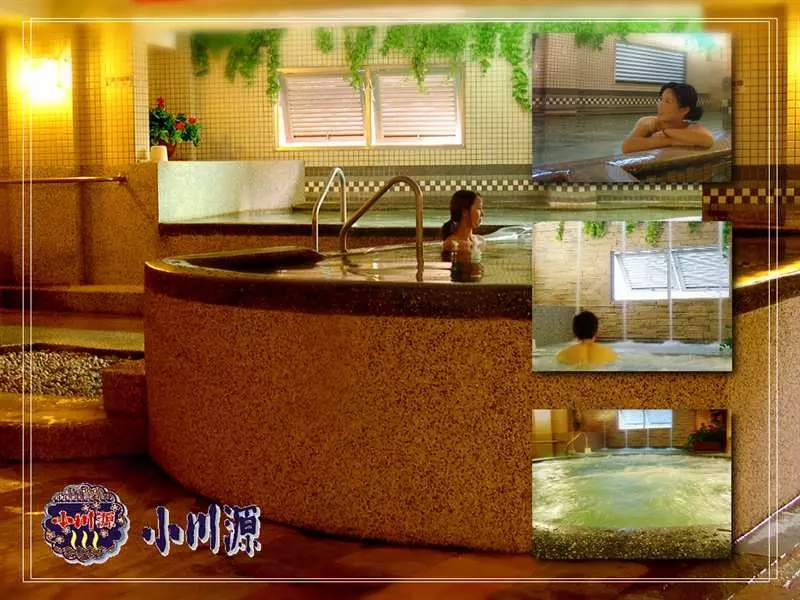
New Taipei City private collection of Attractions|New Taipei City rent a car for self-driving, carefully select more than 8 suitable net beauty must go to check in Attractions, Xiaochuanyuan Hot Spring Museum and New Taipei City Yingge Ceramics Museum, etc.
Top 1
Chiayi Alishan - Tufuya Tribe and Secret Giant Tree Forest 2-Day Tour - Group of 4
Tufuya Tribe and Secret Giant Tree Forest 2-Day Tour - In-depth Travel - Group of 4
Experience a different kind of Alishan secret tour, accompanied by Tsou cultural guides for a comfortable, relaxing, and luxurious getaway.
- Tufuya is a major Tsou tribe. Led by the locals, take a leisurely walk through the village and listen to their stories.
- The next day, visit the Noyoca Giant Tree Forest. Every step you take is on trails maintained by hand without the use of machinery. They may not be as smooth as concrete, but they are closer to nature and full of warmth.
- The serving plates convey a plastic-free concept.
Information
- Address:No. 220-1, Neighborhood 8, Alishan Township, Chiayi County 605, Taiwan
- Business hours:Duration2day(s)
Top 2
Xiaochuanyuan Hot Spring Museum(小川源溫泉館)
Established in 1997, Wulai’s first standard hot spring bath is committed to "allowing customers to use hot springs correctly and provide the best water quality" as its purpose, to enhance hot spring culture, use hot springs correctly, and supply 100% pure hot springs. Then use professional equipment to cool down to fit the human body. Never add a drop of mountain spring water or tap water for cooling, and the effect will be better after soaking. The purest and most authentic Wulai Hot Spring is used, so insiders are all eager for it! To bathe in hot springs, you need to establish the concept of "reserve leisure and don't have money to see a doctor". This is the fundamental source of hot springs. Today, when civilization diseases are flooded, there are multiple ways to keep fit and healthy, and you need to persevere, as well as hot springs. The person in charge, Mr. Hong Rongchuan, hopes that all customers can feel the importance of hot spring water quality, so Xiaochuanyuan Hot Spring is different from Fun Recreation Hot Spring and playing in the water. Every customer can come to Xiaochuanyuan Hot Spring and sweat a lot like exercise, so that it will not Lost the purpose of hot springs. FB fan group Top 3
Vanilla Flower Source Hot Spring Health Museum(香草花源溫泉養生館)
Themed clubhouse with Mediterranean style, blue sky and white walls and azure blue water, the longing for the Mediterranean Sea is in the Vanilla Huayuan Hot Spring Health Center in Wanli. We have a Bali-style hot water SPA, a Mediterranean-style cold water swimming pool, a children’s play area, a Japanese hot spring, a European open-air hot water SPA aromatherapy pool, and a steam room with high and low temperature ovens with several functions. The lazy sun is shining on the glass house, and the gentle breeze is blowing on you and me, let us wash your soul from the ups and downs. Top 4
New Taipei City Thirteen Lines Museum(新北市立十三行博物館)
The "Thirteen Lines Museum" in Bali is not only the only archaeological museum in northern Taiwan, but also the first museum in New Taipei City to be certified as an environmental education field. The feature is a relaxed and interesting interactive form, which allows visitors to know what life the Shisanxing people lived a thousand years ago. It is very suitable to visit and learn little knowledge; Shisanxing culture belongs to the Iron Age in Northern Taiwan and is currently the only one in Taiwan. A prehistoric inhabitant with ironmaking technology. The museum has permanent exhibitions of important cultural relics unearthed from the ruins, a special exhibition hall, and an archeological study and experience room, which introduces in detail the historical relics and backgrounds of Taiwan such as the Shisanxing Culture and Yuanshan Culture. After visiting the museum, don’t forget to go to the "Whaleback Sand Dune" on the top of the museum, where you can watch the sea and the Tamsui Fisherman’s Wharf; and the "Time Sky Bridge", which was reopened in 2017, is located on the top floor, allowing visitors to move around. While looking down from the transparent glass, the "Shisanhang Site Archaeological Exploration Pit" from 1800 to 500 years ago and the "National Dazukeng Site" from 6500 to 4500 years ago, showing the flow and depth of time, it is worth seeing . The Shisanxing Museum is Taiwan’s first archaeological museum. It was originally built to protect the "Shisanxing Site", a national second-class historical site. The Shisanxing Culture belongs to the Iron Age in Northern Taiwan and is currently the only confirmed possession of iron smelting in Taiwan. Prehistoric inhabitants of technology. In 1955, an Air Force plane passed over Bali. The compass on the plane showed an abnormal magnetic response and found the ruins of Thirteen Lines. Then geologists and archaeologists came to explore and discovered that this is a prehistoric site, and this archeological museum was also established. The museum has permanent exhibitions of important cultural relics unearthed from the ruins, a special exhibition hall, and an archeological study and experience room, which introduces in detail the historical relics and backgrounds of Taiwan such as the Shisanxing Culture and Yuanshan Culture. More than a thousand years ago, the residents on the left bank of the Tamsui River lived in Ganlan houses, using clay pots with human faces, and their daily diet was fish, shrimp and shellfish from the sea. Their way of life is not what we can imagine today, but from the Thirteen Lines Museum you can get a glimpse or two. The museum introduces the Shisanxing culture discovered from the site in a very interesting way, let us know what life the Shisanxing people lived a thousand years ago; at the same time, it also holds special exhibitions from time to time, sometimes introducing Danshui River. The historical trajectory of development sometimes contains archaeological explorations that are rich in science and education. No matter which type, the museum is designed to be as relaxed and interesting as possible, so that visitors can absorb a wealth of knowledge while entertaining. Inspire children's interest in history. The "Human Face Pot" is the treasure of the Thirteen Lines Museum. According to legend, the aborigines of the cannibals used to have grass-growing activities in the past. Later, they gradually replaced them with such sacrificial objects. Top 5
Sanzhi Visitor Center and Celebrity Museum(三芝遊客中心及名人文物館)
The Sanzhi Visitor Center is located on a hillside surrounded by mountains. The whole area has a wide view. In addition to providing tourists with a comfortable and spacious resting space, it can also conduct tourism consultation, exhibition site introduction and information retrieval, which is convenient and diverse. The Celebrity Museum showcases the life contributions of the four celebrities of Sanzhi. There are a generation of famous doctor Du Congming, Taiwan’s first international composer Jiang Wenye, the first directly-elected president Lee Teng-hui, and political pioneer Lu Xiuyi. Their life stories highlight The good scenery of outstanding celebrities in Sanzhidi Lingren. Top 6
New Taipei City Yingge Ceramics Museum(新北市立鶯歌陶瓷博物館)
[The purpose of building the Tao Museum] The New Taipei City Yingge Ceramics Museum is the first professional ceramic museum in the country. It focuses on the development of ceramics in Taiwan over the past 100 years and presents the memory and history of the ancestors’ lives in this land; it is committed to integrating all This resource, establish a benign interaction with the locality, promote cultural tourism construction, fully demonstrate Yingge’s industry and local characteristics, and stimulate the public’s care and interest in ceramics. At the same time, it actively expands its horizons and promotes international ceramics cultural exchanges, hoping to continue Continuous efforts to establish the subjectivity of Taiwan's ceramic culture. The "Yingge Ceramics Museum", opened in 2000, is the first professional museum in Taiwan with the theme of "ceramics". It is listed alongside the "Yingge Old Street" as two major centers for the promotion of ceramics-related culture. The Tao Museum is located on the busy cultural road. At the entrance, a large wall with clear water molds is used to cut off the noise of the outside world symbolically, and also vaguely reveal the quiet atmosphere of the museum to passers-by. There are 2 floors underground and 3 floors above ground, exhibiting Taiwan’s 200-year kiln culture. There are professional pottery training courses and pottery hands-on DIY courses in the museum. In addition, there are green spaces and installation art behind the pavilion, as well as a paddling pool open for children in summer, which is suitable for parents and children to have fun. [Appearance of the Tao Museum] The overall architectural form uses clear water molds, steel skeletons, and transparent glass to penetrate the internal and external environment, which makes the space of the Tao Museum to produce infinite extension and changes in virtual and real, presenting a simple beauty. The beautiful building constructs an excellent stage for ceramics display, and also a beautiful landmark for Yingge. When you come to the Tao Museum, you will step on the layered stone ladder, cross the bridge over the water, and pass through the large water wall and pool. The created water sound and visual effects produce the precipitation of mood and the conversion of emotions, and enter the Tao Museum with a pure heart. [Taobo Pavilion] Enter the pavilion, a continuous and richly layered space composed of fair-faced concrete, stone-washed walls, gray stone, and brown wood. It is a three-story building with two underground floors. In the body, free time in art; the Tao Museum building itself is a stage that embraces infinite possibilities, the exhibits are not the only protagonist, the audience is also the protagonist of the space. There are "Children's Experience Room" specially designed for children aged 4-10 and the "Ceramic Art Workshop" for amateur pottery enthusiasts to research, create and communicate, providing a more intimate tactile experience between the people and the soil. Design different themes every 2 months, so that people have a different experience every time they come. [Ceramic Art Park] When visitors pass through the tunnel into the ceramic art park, they will find that pottery art is so intimate, naturally in every corner of life. The Tao Museum is not only about exhibitions. Visitors can get closer to him and feel that Tao is living around us. Located at the back of the Tao Museum, the ceramic art park expresses the diverse styles of ceramics. The themes are closely related to "pottery and earth", "pottery and fire", "pottery and water", "pottery and light", "pottery and wind", "Pottery and Green" and "Pottery and People" have also planned demonstration areas. At present, the kick reel furnace blanking masters are arranged to show their superb skills during holidays. Because they are now replaced by electric blanking, it is difficult to see them in Taiwan, yes. It will be a rare experience for the public. In addition to providing an outdoor exhibition environment for artistic creation, the Ceramic Art Park also incorporates more soil, water and greenery to show the balanced relationship between man-made creation and nature. With no trace of axe and axe, the pottery’s phantom style is integrated into In the natural environment, people are invited to experience the infinite possibilities of ceramics in a leisurely journey. In addition, the water play area and sandpit area open in summer (June-October) are also loved by everyone; not only can children play in the park as much as possible, they can also enjoy the coolness in the water play area in the hot summer. Unleash your creativity in the sand play area and create your own big castle. If you’re hungry, there are scented kiln-baked bread and kiln-baked pizza; the bread kiln and pizza kiln of the Tao Museum combine the interior made of refractory bricks and thermal insulation bricks, and use the traditional four-corner kiln structure of Yingge. The bricks absorb heat and heat faster, which not only saves time but also reduces the consumption of materials, and has made a good activation application for the four-corner kiln that is no longer seen. The surface of the dough baked in the kiln is crispy, retains internal moisture, and is full of fragrance, which is unmatched by ordinary electric ovens. The baked food has a light woody fragrance. All citizens of New Taipei City can enter the venue for free with an ID card. The weather is so hot and you can enter for free to blow air-conditioning and you can also gain knowledge. The outdoor ceramic art park opens the water square playing area every summer from June to October. You can bring your children. Enjoy playing in the sand and water here. The hall is intimately equipped with barrier-free toilets, special elevators and special ramps, so that elders at home or those with limited mobility can rest assured to relax in the exhibition hall.Information
- Address:200 Wenhua Road, Yingge District, New Taipei City
- Phone:886-2-86772727
- Business hours:Monday~Friday 09:30~17:00, Saturday, Sunday and national holidays 09:30~18:00; [Holiday] The first Monday of each month (if it falls on a national holiday, it will be open as usual, but the museum will be closed on the next day ), Lunar New Year’s Eve, Lunar New Year’s Day, natural disaster cessation days announced by the government, and other necessary closing days will be announced separately.
- Parking lot: Yes
Top 7
Three Gorges Museum of Historical Relics(三峽歷史文物館)
The Three Gorges Museum of Historical Relics can be said to be the best example of the recycling of ancient buildings. Built in 1929, it was originally an old town hall in the Japanese occupation era. It was the most representative red brick building in the Three Gorges at that time. It was known as "the most beautiful building in Taiwan." "Office Building" was changed to "Historical Relics Museum" in 1995. The cultural relics museum itself is divided into two floors. The first floor regularly organizes exchange exhibitions, theme exhibitions, and exhibitions of various art works. The second floor is the exhibition space of the Three Gorges humanities and historical relics, which houses a large number of local historical materials and cultural relics. It has made a considerable contribution to spreading local culture. The 70-square-meter two-story brick building at Quanta is a building of the same period as the National Taiwan University Hospital, Public Sales Bureau, and Supervisory Institute. If you look closely at these red brick buildings that combine Japanese and Western styles, you will find that they are different in design. Few things in common. Slow down and visit here, you can see the trajectory of the development of the Three Gorges in the past, the types of industries in the past, the past elegance of browsing the old streets, and the once thriving coal mine, dyeing, tea, camphor and other industries. There is also a blue dye exhibition center next to the heritage museum, which is connected to the blue dye park behind the old street. There are blue dye teaching, DIY blue dye experience and blue dye products. Even if you come in a hurry, you can feel the representative of the Three Gorges area. The charm of sexual folk crafts, and only charge basic fees such as material costs. Top 8
North Coast Recreation Discovery Center(北海岸遊憩探索館)
The Cognitive Discovery Hall takes "surprising exploration, intellectual knowledge, and family leisure" as the design main axis. It uses a magnifying glass to see through the road, sea and sky characteristics of the north coast, and uses colorful colors to integrate lively and childlike hand-drawn text to attract young people and parents. Same tour. Visitors can learn from the emblem design of the museum that the museum is a think tank that provides tourists with rich and diverse knowledge and is suitable for a family travel experience. The Roaming Discovery Hall is awe-inspiring the North Coast: through a three-dimensional interactive landscape model, the theme and itinerary of transportation, landscape, and specialties are introduced. A great exploration of landscape wonders: Using FRP ground and Queen’s head models to introduce coastal geology, topography and natural landscapes, while showing the beauty of natural tidal rhythms, arousing the awareness of respecting the environment and cherishing the ecology. The great discovery of deep sea mysteries: use mini submarines to carry tourists to explore the deep sea mysteries. With the addition of three-dimensional theater, ecological kaleidoscope, electronic photo album and fish school interactive projection, you can fully experience the fun of deep sea mobilization. The knowledge jungle on the north coast: through the connection of the starry sky painting corridors, the environment is returned from the sea floor to the land. With eagles hovering in the air, windows peeping at the footprints of migratory birds, and interactive e-books, help understand the north coast and the Guanyin Mountain National Scenic Area Abundant land and air resources. Riding the wind and waves: This area has large-scale recreational experience equipment such as surfing games, iron horse tours, and virtual interactive yacht experience. It also uses tofu rock, paragliders, hang gliding, lighthouses and green stone troughs and other installation art to deeply experience the diverse tourist life of the North Coast . Artist's secret base: a multifunctional space, using sunlight as a conceptual element, which can be used as the holding of educational activities and the inheritance of art. The location of the space presents brilliant sunshine, which symbolizes the enthusiasm of the people in the North Coast area and the liveliness of art and culture.


