New Taipei City hide Attractions|I want to go to New Taipei City check-in locations on IG.com, there are more than 8 super popular recommended lazy bags, Yuantong Temple and Zhonghe Zizhu Temple, etc.
Top 1
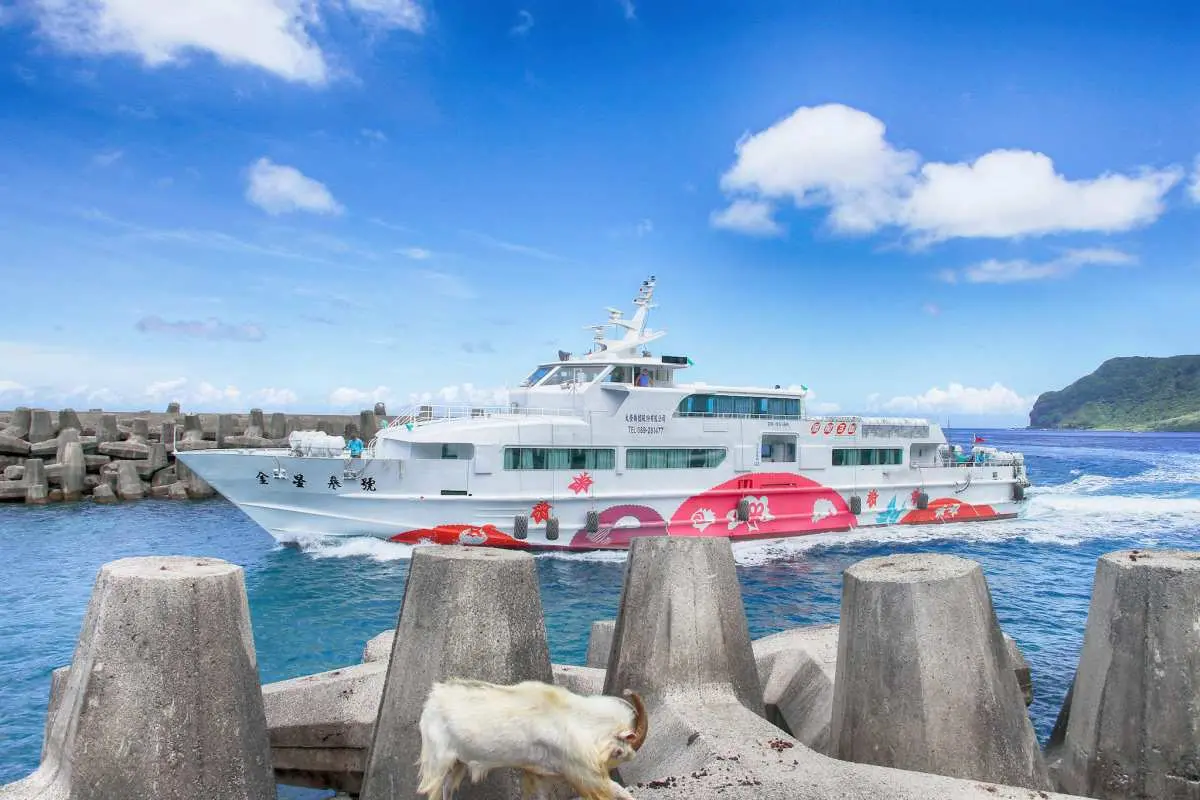
Lanyu Ferry Tickets | Venus Ferry
Order Orchid Island ferry tickets online now, depart from Taitung Fugang Fishing Port/Kenting Houbihu Fishing Port and back to Orchid Island, and enjoy the sea views along the way. Book online and pick up tickets easily on site! Let KKday solve your outlying island transportation in the most convenient, fastest and most time-saving way.
- Easily book online on KKday and pick up your tickets directly at the counter, safe and convenient
- There are multiple boat trips for you to choose from to best suit your travel plans.
- Enjoy the sea views and the beautiful scenery of Taiwan along the way.
- Book now to enjoy KKday’s exclusive and lowest discounts throughout the year!
- Book your ferry tickets in advance and enjoy a comfortable sea voyage
Information
- Address:Taitung Fugang Fishing Port
- Business hours:Duration
- Recommendation: 4 stars
Top 2
Baofu Palace(保福宮)
Baofugong is a Taoist temple that was created in the Daoguang period of the Qing Dynasty. It is located in Xiaxili, Ren'ai Road, in the southeast of the Taipei Basin. It was separated from the Dalongdong Baoan Temple in Taipei City (commonly known as Dao Gong Miao) and dedicated to Emperor Baosheng. Wu Ben, from the worship of merit and righteousness. In the early years, due to the long distance to visit Taipei to worship the Great Emperor, it was necessary to cross the Xindian River. When there was no Zhongzheng bridge in fashion, it had to rely on ferry boats. Whenever typhoons and heavy rains, floods raged, the trip was cut off, which caused great troubles, so the ancestors chose a location "Lunliao" The "foot" is enshrined, which is three hundred meters behind the current site. At that time, the village was sparsely populated, with less than 100 households, and the economy was weak. It was unable to build it. Only bamboo and grass were used as building materials to build a temple of grass that was slightly built into a shrine for the villagers to pray and worship. After being destroyed by typhoons and floods, damaged by insects and ants, and collapsed several times, Jingxinmin Lin Guangcheng, Sun Jin, Xu Jiu, etc. rebuilt the shrine for the first time; after many years, the temple looks bad and old, Jingxinmin Zeng Wancheng granted land Lin Guangcheng and Lin Guangcheng were running, and they were completed in the twelfth year of Tongzhi, which was the second reconstruction; in the third year of Xuantong, the temple was destroyed by a typhoon. In the fifth year of the Republic of China, it was rebuilt by Lin Huosheng, Chen Kunyuan and others, which was the third reconstruction; In seventeen years, believers Lin Wang and Hong Baoshu proposed reorganization, and in sixty years began to become today's temple. At that time, the division of townships and towns was divided by "faith". Yonghe was from Quanzhou and believed in Emperor Baosheng, and Zhonghe was from Zhangzhou, who believed in Mazu. Tanzhili and Zhongyonghe had a good cultural standard for several years. It was planned to reach Yonghe, and locals with strong beliefs hoped to be divided into neutrality. Fortunately, at that time, a town citizen represented Yonghe Elementary School teacher Cai Guomin voted for Yonghe. The credit is so great that Baofu Palace still stands in Yonghe area. . The Baofu Palace is complete in shape and exquisitely carved. It inherits the traditional style of southern China. The temple ridge dovetail, cut and glued and carved, is colorful and dazzling; the main hall is carved with stone dragon pillars, dragon body pillars, dragon claws and beads, composed of bluestone, and engraved. Fine, majestic and beautiful; in the temple, the algae wells, buckets, melon tubes, stacking buckets, flower and bird columns, stone figures, beasts and other carvings are unique and exquisite. At present, there are many good men and women, and they often visit the temple to pray for the safety of the family. The incense is quite prosperous. Top 3
Yuantong Temple(圓通禪寺)
The Yuantong Temple in Zhonghe District, New Taipei City was founded in the 15th year of the Republic of China (Showa 1st year, 1926) and it took 51 years to complete. The stone and sand make the whole stone temple that stands on the mountain and its surroundings look particularly fusion, and both have a majestic aura. There is a giant lion and a giant stone sculpture on the left and right sides of the entrance of the temple. The weather is majestic. You can see the main hall of Yuantong Temple when you walk into the mountain gate. The Tang-style style has a slightly Japanese flavor, reflecting the history and humanities of Taiwan. In the thirteenth year of the Republic of China, Miaoqing Nishi moved from Hsinchu to Zhonghe. He deliberately established the dojo. It took two years to visit and find land. Because the current site overlooks the Wugu Guanyin Mountain, it is majestic. Construction began in the fifteenth year of the Republic of China. The Hall of Merit was first built, the foundation was reopened, the walls were built with stones on the mountain, and gravel sand was used as building materials. After decades, the Daxiong Hall was completed. Unfortunately, due to long-term hard work, the teacher Miaoqing passed away in the 44th year of the Republic of China. Enjoy life at fifty-five years old. The second abbot, Da Chan, passed away in 1965, and the third abbot, Da Jinn, and the chairman Da Sheng, jointly planned the unfinished project in the temple, and continued construction until it was completed in 1966. , The inauguration ceremony was held in the same year. The construction of Yuantong Temple took a total of 51 years, and it took two generations and three abbots to complete this field, which is truly not easy. The current abbot, Master Ruhui, was ordained to become a monk in 1949. He graduated from the Chinese Buddhist Sanzang College. After studying Buddhism, he enjoyed calligraphy. In order to complete that year, the teacher wished to build a scripture library, dedicated to the study of Buddhism, and completed a Yuantong Temple library in 1971. Top 4
Nanshan Fangsheng Temple(南山放生寺)
Founded on New Year's Day in the 52nd year of the Republic of China (1963), the land area is about 2,100 square meters. There is a freeing pond in the temple, about 300 square meters, making the environment a Buddhist resort with water, trees, lawns and flowers. Temple buildings have been added one after another, and the temple is solemn, dedicated to Buddha Shakyamuni and Medicine Buddha. In the temple, there are three-foot-high white jade Buddhas presented by overseas Chinese monks from Myanmar, two relics of Buddha relics presented by overseas Chinese monks from India, and a Buddha enlightened bodhi tree transplanted from Sri Lanka (Ceylon) (belonging to the third generation). Two fourth-generation trees have been planted, which are very rare. There are many different types of Buddhist scriptures in the collection, and it is planned to open a library in the future. The abbot of Nanshan Fangsheng Temple, the founding abbot of Nanshan Fangsheng Temple, came to Taiwan by boat from Shanghai alone in the 38th of the Republic of China. Because of the continual disasters caused by wars in modern times, the lives are overwhelmed, and the people are not living for a living, so they advocated release activities and prayed for the opportunity to open up a large-scale release pool. I hope to resolve the violence with compassion. Later, someone introduced a field in Nanshijiao (the current site of Fangsheng Temple) about 2100 square meters. The landlord had long been anxious to get rid of because of the soft geology and low value of utilization, but there were few people interested in it for a long time. Later, the elders wanted to build temples and sold them to the elders at a low price. Therefore, the elder Lianhang first digs a release pond covering an area of about 500 square meters to store the released aquatic creatures, and continues to promote the release. After the excavation of the release pond, there were ponds to gather water, and the land around the area began to dry up, so there was vacant land for building houses. The wet and soft land that was originally difficult to use has been incredibly turned into a three-treasure land with high use value and a wide range of living beings due to the establishment of the release pond. The endless natural spring water is also the best place to set up the release pond. The prerequisites, all changes, are like the ingenious arrangements of Buddhas and Bodhisattvas. Since the land was purchased in the 1950s, the construction began in 52, and it was completed in the 54s. The prototype of the Fangsheng Temple was roughly completed in four years. It was at that time that many contemporary calligraphy masters offered their pens to congratulate them, and then they were compiled and published, and it became a calligraphy collection that integrates religion, art, and culture-"Nanshan Fangsheng Temple Protecting Life Stele Forest". Since then, Fangsheng Temple has been named after the pond, and because it is located at the foot of Nanshan Mountain in Nanshijiao, it has been called "Nanshan Fangsheng Temple." Then, to celebrate the 100th anniversary of the founding of the Republic of China, more than 70 pieces of calligraphy in the "Nanshan Fangsheng Temple Protective Stele Forest" were preserved in the temple, and the carved steles were erected next to the Fangsheng pond as a permanent commemoration of the opening of the pond and the construction of the temple. These seventy pieces of calligraphy inscriptions were all written by calligraphy masters in the 1950s. They are indeed a rare cultural and artistic construction in Taiwan. The temple also planted a very precious bodhi tree sapling donated by Sri Lankan Buddhist organizations in the early years. This is the third generation of Bodhi tree when Buddha Shakyamuni became enlightened in India. Later, two fourth-generation bodhi saplings were naturally derived. After transplanting and planting, they have grown extremely strong and stand beside the third-generation bodhi tree. After the 921 earthquake in the Republic of China in 1988, many damages were found in the old Buddhist temple. In addition, the number of believers was increasing, and the original space was no longer sufficient. Therefore, with the joint efforts of the public, in 1992, the reconstruction of the Daxiong Hall, Daliao (kitchen) and Sengliao (dormitory) was started. The first phase of the project was completed in 1994. The second phase of the project started in October 1996 and was completed at the end of 1998, completing the construction of the Buddhist Hall, the Meditation Hall, the Pharmacist Hall, and the Daxiong Hall. On the outer wall of the temple, there is a blue bucket stone "Five Hundred Arhats" sacred hand-relief from Fujian, which has become a unique religious building. Because Huaxing Street near Fangsheng Temple is the famous Burmese Street in Taiwan, many Burmese expats live nearby. In Jia Temple, Myanmar Zen masters are often invited to hold meditation activities. Therefore, in the overall construction plan, a Burmese-style pagoda was built in the release pond, which combines the spiritual symbols of the North and South Buddhism architecture, and at the same time, it can also make the nearby Burmese overseas Chinese have sustenance. The main temple of this temple is dedicated to "Sakyamuni Buddha". There is also a Buddhist hall dedicated to "The Medicine Master Liuliguang Tathagata", and the Buddhist hall dedicated to the "Three Western Saints". In addition to the regular annual pujas, Buddhist lectures and meditation camps are held from time to time. At the same time, it also provides hospice care for the people, and leads the people to recite the Buddha and holds a super recommendation ceremony every Saturday to make the seventh for the newly dead and supersedes, assist the people to deal with all the aftermaths of the relatives and relatives, so as to calm the hearts of the family members for the benefit of the sun and the sun. In the early days, many junior college and children's Buddhist camps were held. Beginning in October 1995, the "Nanshan Buddhist Culture Seminar" was held every year. A total of 16 master and doctoral dissertation seminars were held every two days. Buddhist experts and scholars were invited to discuss the principles of Buddhism and provide scholarships for publishers. , To encourage young scholars to participate more in the study of Buddhism. At the end of 1997, Taiwanese Pali scholars and experts were invited. After several meetings and exchanges, since September 1998, the Chinese translation of "The Pali Sacred" has been formally started. As of the year of the Republic of China in 101, many books related to meditation have been published, and a Chinese translation of "The Pali Sacred" has been completed. Top 5
Jinshan Temple(金山禪寺)
The temple was built in the 52nd year of the Republic of China (1963) and completed in 54 years. The mountain was opened by Master Shi Shengxi, who worshipped Avalokitesvara Bodhisattva and Sakyamuni Buddha, and enshrined Dazhi Manjusri Bodhisattva, guardian Wei Tuo Zun Buddha, Jialan Bodhisattva and so on. The current abbot is Master Shi Yanming. There are currently about ten masters. The source of believers is Sanchong, Yonghe, Zhonghe, Banqiao, and Taipei City. It is a pure Buddhist monastery. The main building of the temple is the upper and lower halls. There are side halls on both sides, and there is a zhaitang next to it. The location is east to west, surrounded by mountains on three sides, convenient transportation and beautiful scenery. Top 6
White Horse Temple(白馬寺)
The White Horse Temple was founded in the 57th year of the Republic of China (1968), with an area of 688. Basanping. The main worship is to Sakyamuni Buddha, and the deputy worship is to the three western saints. The monastery was originally led by two nuns, Dawu and Jingding, to open the mountain and establish a Buddhist monastery. At the beginning, the temple borrowed three houses at the current site from the believers. When it was first established, it was originally built for self-study. Later, the believers donated it in the Republic of China. In the sixty-five year (1976), the mountain was purchased and opened, and the Wuguantang was built in 1969. When the Amitabha Palace was built in 1973, it coincided with a flood. It took two years to complete the project, and it was completed in the 1980s. In the second year, the construction of the Daxiong Hall was started. The main feature of the temple is to practice the Pure Land Buddhism as the main method, and to recite the Buddha as the method of practice. It aims to promote the Pure Land Method. Currently, Master Shi Dawu is the abbot. In addition to irregular relief and relief, the White Horse Cultural and Educational Foundation was established in March of the Republic of China. The main service nature is to provide scholarships and lectures. Top 7
Nanshan Guanyin Temple(南山觀音寺)
Established in August in the 74th year of the Republic of China (1985), the main worship is Guanshiyin Bodhisattva, Manjushri Bodhisattva, Samantabhadra Bodhisattva, and Ksitigarbha Bodhisattva. The main building of the temple is the main hall, platform, dormitory, dining hall, kitchen, etc., all of which are gangjin cement buildings. In 1978, the seat ceremony was held. In 1989, the Mayor Lu Fanghai Memorial Pavilion was built, and in the 1980s, the Memorial Pavilion of Zhonghe District Farmers’ Association was built. Every year on the 19th day of the lunar calendar, the Avalokitesvara Buddha’s birthday offering ceremony will be held; on the 19th day of the lunar calendar, the Avalokitesvara Buddha’s monk practice and practice meeting will be held; on the 9th day of the lunar calendar, the Avalokitesvara Buddha’s practice of the Taoist Lianghuangbao confession meeting The weather is smooth and the country is peaceful. Top 8
Zhonghe Zizhu Temple(中和紫竹寺)
The building area of Zizhu Temple is 60 square meters, and the main worship is Guanshiyin Bodhisattva, and the deputy worship is to the Mother of God, Guan Sheng Emperor, and Monkey King. The reason for its establishment was that in 1956, a young boy went to Zizhu Temple in Qishan to pray for incense. Due to the instructions of the Buddha, he chose to build a branch temple at the current site. It was originally a private house left over from the Qing Dynasty. Later, Mr. Chen Qingyong was in charge of building the temple.


