



Guided Avenue Of Sphinxes Tour With East Bank Luxor Temples
- Center your day on Avenue Of Sphinxes Tour with a guide.
- Visit Karnak Temple Tour during a focused East Bank route.
- Continue to Luxor Temple Tour with guided storytelling.
- Enjoy one of the clear Luxor Tours without West Bank stops.
- Travel privately with hotel pickup and selected guide language.
- Customize participants, tickets, lunch, and guide language.
- Select English, Italian, German, French, Spanish, or Russian.
- Book privately for 1 to 9 participants in your group.
- Choose tickets and lunch included or exclude both services.
- Pickup details are confirmed one day before your activity date.
Package Options
Product Info
Begin your private East Bank Luxor experience with pickup from your hotel or selected pickup point, then travel by private air-conditioned vehicle with your guide. This tour is built for guests who want a focused temple route that connects Karnak Temple Tour, Luxor Temple Tour, and Avenue Of Sphinxes Tour in one organized experience. The day stays dedicated to the East Bank only, without adding West Bank tombs, Queen Hatshepsut Temple, Colossi Of Memnon, museum stops, felucca sailing, or hot air balloon activities unless booked separately. Transfer time may vary depending on your hotel location, and final pickup details will be confirmed one day before your activity.
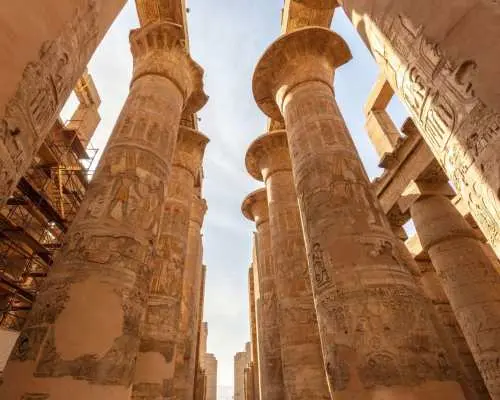
The route begins with Karnak Temple Tour, giving the day a strong ancient opening. Karnak introduces Luxor through one of its major temple settings, where open spaces, stone structures, and historic details create a powerful first impression. With your selected guide language, the visit becomes easier to follow. Your guide explains the site according to the confirmed package, ticketing process, access conditions, local operation, and daily timing.
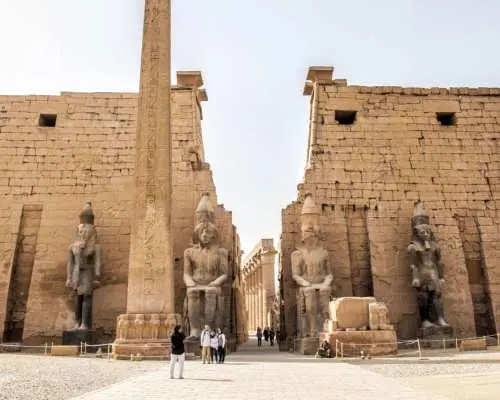
After Karnak, continue to Luxor Temple Tour. This second temple stop brings the route closer to the ancient city atmosphere and adds another important East Bank perspective. Luxor Temple has a different feeling from Karnak, and the contrast between the two sites helps guests understand the temple landscape more clearly. Your guide connects the visits naturally, so the experience feels like one continuous East Bank story rather than separate stops.
The main focus of this product is Avenue Of Sphinxes Tour. This section gives the day its connecting theme, linking the temple experience with one of Luxor’s recognizable ancient routes. The Avenue Of Sphinxes adds a sense of movement and historical connection between the temple areas, making the route feel more complete. Access, walking flow, and timing may depend on local operation, site conditions, ticketing rules, and the confirmed package.
The tour is suitable for travelers who want a shorter and more focused Luxor program compared with full-day routes that include tombs, museums, or West Bank monuments. It keeps attention on temples and ancient city atmosphere, making it easier for guests to enjoy the East Bank without rushing between unrelated locations. The visit order may change slightly due to traffic, site access, ticketing flow, or daily scheduling, but the intended route remains focused on Karnak Temple, Luxor Temple, and Avenue Of Sphinxes.
Guided Avenue Of Sphinxes Tour With East Bank Luxor Temples
This main option follows the provided itinerary: Karnak Temple Tour, Luxor Temple Tour, and Avenue Of Sphinxes Tour. After selecting the tour, guests can customize the booking through the available sub-options. Tour guide language can be selected from English, Italian, German, French, Spanish, or Russian. Participant number can be selected from 1 to 9 participants. Package type can be selected as with tickets and lunch included or without tickets and lunch.
If the with tickets and lunch package is selected, the listed required entry tickets and lunch are included according to the confirmed booking. Lunch location may vary depending on daily timing and operation, so guests should not expect one fixed restaurant. If the without tickets and lunch package is selected, the tour still includes private transport, guide service, and the guided East Bank route, but entry tickets and lunch are not included and must be paid separately if needed.
These selections apply only to the selected tour option, so guests should review the guide language, participant number, package type, and confirmed itinerary carefully before purchase. Please ensure the phone number provided during booking is connected to WhatsApp for quick pickup and timing updates. If it is not connected to WhatsApp, kindly share an alternative number in advance.

Your tour begins with pickup from your hotel or selected pickup point. Transfer time may vary depending on your hotel location, and final pickup details are confirmed one day before the activity. After meeting your guide and driver, travel by private air-conditioned vehicle to begin the East Bank route. Start with Karnak Temple Tour according to the selected guide language, confirmed package, ticketing process, site access, and local operation. Your guide introduces the temple visit based on the day’s timing and available route flow. After Karnak, continue to Luxor Temple Tour for the second guided temple visit. Then follow Avenue Of Sphinxes Tour according to access conditions, timing, and local operation. Lunch is included only if the with tickets and lunch package is selected. If the without tickets and lunch package is selected, lunch is not included. Entry tickets are included only when the ticket-included package is selected. At the end of the tour, return by private vehicle for drop-off.
Purchase Notice
- Please check the selected main option carefully before purchase.
- Sub-options apply only to the selected tour option.
- Available guide languages are English, Italian, German, French, Spanish, and Russian.
- Participant selection is available from 1 to 9 participants.
- Package type may be with tickets and lunch or without both.
- With tickets and lunch includes listed required entries and lunch.
- Without tickets and lunch excludes entry fees and lunch.
- Pickup time may vary depending on your hotel location.
- Final pickup details will be confirmed one day before the activity.
- Please provide a WhatsApp-connected phone number for updates.
- If your number has no WhatsApp, share an alternative number early.
- Temple access may depend on local operation and daily timing.
- Avenue access may depend on timing and local operation.
- The visit order may change due to traffic or local operation.
- Lunch location may vary according to daily operation and timing.
- Drinks and personal expenses are not included.
- West Bank visits and tombs are not included.
- Museum visits, felucca ride, and balloon ride are not included.
- Comfortable shoes are recommended for temple walking areas.
- Avenue Of Sphinxes Tour details depend on selected package.
How to Use
How to Use Your Voucher
- Please present the e-voucher on-site
FAQ
1. Can visitors walk along the Avenue of Sphinxes during the guided tour?
Yes, visitors can walk along parts of the Avenue of Sphinxes. The guided tour is specifically designed to allow you to experience this ancient processional route on foot, linking Karnak and Luxor Temples. Your guide will provide context and historical details during the walk, enriching your understanding of this significant pathway.
2. What are the approximate physical dimensions and scale of the Avenue of Sphinxes?
The Avenue of Sphinxes is approximately 2.7 kilometers (1.7 miles) long, connecting the Karnak Temple complex with Luxor Temple. It features around 1,000 sphinxes, primarily in a criosphinx (ram-headed) form and some human-headed sphinxes, lining both sides of the ancient processional path.
3. What is the historical purpose and significance of the Avenue of Sphinxes?
The Avenue of Sphinxes, also known as the Path of the Gods, served as a grand ceremonial road for ancient Egyptian festivals and processions, most notably the Opet Festival. It symbolically connected the cults of Amun at Karnak and Luxor Temples, reinforcing the divine authority of the pharaohs and the unity of Upper and Lower Egypt.
4. What notable archaeological discoveries have been made along or related to the Avenue of Sphinxes?
Significant archaeological work led to the full excavation and restoration of the Avenue of Sphinxes, revealing hundreds of well-preserved sphinx statues that had been buried under modern Luxor for centuries. Discoveries also include numerous inscriptions, statues, and smaller artifacts offering insights into the rituals and daily life of ancient Egyptians during its active use.
5. How does private transportation work for the Guided Avenue of Sphinxes tour in Luxor?
For this guided tour, private air-conditioned vehicle transportation is included. You will be picked up directly from your hotel or chosen pickup point in Luxor. After the tour activities, your private vehicle will return you to your designated drop-off location, ensuring a comfortable and seamless travel experience between sites.
6. What are the key highlights to see during a guided visit to Karnak Temple?
During your guided visit to Karnak Temple, you will explore the vast Hypostyle Hall with its forest of towering columns, marvel at the sacred lake, and observe the Obelisk of Hatshepsut and the Great Temple of Amun-Ra. Your guide will share stories about the pharaohs who contributed to its construction and the religious significance of its various sections.
7. What historical insights does the guide provide during the Luxor Temple tour?
Your guide will illuminate the rich history of Luxor Temple, detailing its construction by Amenhotep III and Ramesses II, its conversion into a Roman fort and later a mosque, and its dedication to the Theban Triad. They will explain the symbolism behind the colossal statues, relief carvings, and the overall architectural design, connecting it to the Avenue of Sphinxes.
8. What makes the Guided Avenue of Sphinxes Tour focused specifically on Luxor's East Bank?
This tour is designed to immerse you exclusively in the monumental heritage of Luxor's East Bank. It centers on the newly restored Avenue of Sphinxes, alongside comprehensive visits to Karnak Temple and Luxor Temple. This focus provides a deep dive into the interconnected ancient city's core without including West Bank tombs, museums, or other unrelated sightseeing stops.


