


Xiamen Departure | Quanzhou Day Trip | South Shaolin Temple/Xunpu Village + Kaiyuan Temple + Xiaoxicheng + West Street Bell Tower + Luoyang Bridge | Meals included, optional small group tour (pick-up and drop-off from hotels in Siming District/Huli District of Xiamen Island)
- Quanzhou City: The Starting Point of the Maritime Silk Road – The only UN-certified starting point of the Maritime Silk Road, a historic city you must visit at least once in your life.
- Kaiyuan Temple, a thousand-year-old temple – one of China's four most famous temples, boasts magnificent architecture and extremely high religious and artistic value. West Street Ancient Charm – the best-preserved ancient street area, with over 20 historical sites, offering a stroll through a historical panorama.
- Xunpu Fisherwoman Charm – A village of Arab descendants, where women wear flower hairpins and are one of the three major fisherwomen of Fujian.
- Luoyang Bridge + Southern Shaolin Temple – One of the Four Famous Ancient Bridges + Southern Shaolin Kung Fu as Depicted by Jin Yong: A Must-Visit for History and Kung Fu Lovers
- Hotel pick-up and drop-off service within Xiamen Island
Package Options


Sightseeing Tours
| Tour Type | Shared tour |
| Transportation method | Hotel transfer |
| Departure Time | Standard Departure (8-9 am) |
| Tour types | Guided tour |
| Meal arrangement | Lunch included |
| Additional service & facility | Transfer included |
| Sightseeing type | City walking tour, Temples & shrines, Historic site tour |
| Transport | Bus tour |
Product Info
— Solution Introduction —
- Departure city: Xiamen
- Participant Requirements: Suitable for all ages (Those aged 75 and above must be accompanied by a relative under 65 years of age and present a valid health certificate from a hospital; otherwise, they will not be allowed to participate in this activity).
- Meeting point
Pick-up and drop-off service is available from hotels in Siming District and Huli District of Xiamen Island; travelers from outside the island should make their own way to the meeting point on the island.
*Note: Your tour guide will contact you the day before your trip. Please check your phone or text message. If you do not receive a message, please inform your travel concierge.
As a direct bus service is provided, some hotel guests may need to walk to the nearest meeting point or take a taxi to their designated hotel for departure. Specific arrangements will be confirmed by our staff. Guests near airports or train stations will need to make their own way to the designated pick-up point; please contact customer service for details.
— Package Details —
Large group tour with meals included
Included attractions: Xiamen + Quanzhou + South Shaolin Temple + Luoyang Bridge + Xunpu Village + Kaiyuan Temple + West Street & Bell Tower + Chinese lunch
Note: During peak seasons such as summer vacation, Spring Festival Golden Week, National Day Golden Week, and May Day Golden Week, the number of adults in small groups will be increased accordingly (excluding children).
- Kind tips -
Shops are located around the scenic area in Quanzhou, but these are not included in this product's shopping list. Please exercise caution when shopping within the scenic area. If you are approached by unsolicited merchants, please make your own judgment regarding whether to purchase; the travel agency is not responsible for any quality issues or disputes.
— Itinerary —
07:30 Pick-up service from hotels in Siming/Huli districts of Xiamen.
08:30 Pick-up and drop-off in Fengze/Licheng District, Quanzhou (If the meeting point is not on your way, you will need to take a taxi; the meeting point will be arranged by the tour guide).
09:00 Explore the Quanzhou Southern Shaolin Temple – the origin of Shaolin Southern Fist martial arts culture
At 10:30, take a bus to visit Luoyang Bridge, one of the four famous ancient bridges in China.
Enjoy authentic Minnan-style Chinese cuisine at 12:00.
13:00 Visit Xunpu Fishing Village
Note: The hair ornaments are a symbol of local Xunpu culture. You can choose to experience wearing them yourself; the cost is 40 yuan per person.
14:30 Visit Kaiyuan Temple, one of the four famous ancient temples.
15:30 Walk to [West Street and Bell Tower], free time.
The tour ends at 16:00, and you will be dropped off at your respective hotels (following the principle of returning you to your hotel where you were picked up).
16:30 Meet up and take the bus back to Xiamen
Arrive in Xiamen at 17:30 and be dropped off at your respective hotel in Xiamen (following the principle of picking you up from your hotel and dropping you off at the same hotel).
※The times listed above are for reference only and are subject to change based on actual road conditions.
*The order of the tour may be adjusted according to actual circumstances, but no attractions will be omitted. Please understand that the tour may end later than scheduled during holidays and peak seasons due to traffic congestion.
— Travel Notice —
- Staff will contact you between 8:00 PM and 9:00 PM the night before your trip to arrange the approximate pick-up time, pick-up location, and vehicle number. On the day of your trip, pick-up time is between 8:00 AM and 8:30 AM.
- For those holding senior citizen cards, military officer cards, or other discount certificates, the tour guide will refund the ticket fee at the discounted price on-site, not the original price.
- Shopping areas are located within the scenic spots; this is an activity undertaken by the scenic area itself. Any purchases made by guests are not the responsibility of the travel agency.
- Personal Consumption Notice: Shopping, entertainment, and other activities not arranged by the travel agency are considered personal expenses of the tourist. The travel agency is not responsible for any disputes or losses arising from such activities. Please shop rationally, pay attention to product quality and price, and request an official invoice from the merchant.
- Special Notice: Please be sure to bring your personal travel items and valid ID card (children should bring the original household registration book or birth certificate, and passengers aged 16 and above who have not obtained an ID card must bring the original certificate issued by the police station), and take good care of them.
- If the tour cannot proceed as scheduled due to force majeure or unforeseen circumstances such as weather conditions or emergencies, any additional costs incurred due to itinerary changes will be borne by the traveler, while any reduced costs will be refunded by the travel agency.
- Fujian has a generally mild climate with abundant rainfall, classified as a maritime climate. Summers are hot, generally exceeding 30°C in July and August; winters often fall below 10°C; long hours of sunshine and abundant sunlight. The average annual temperature is 21°C. Hotel rooms in Xiamen generally do not have heating.
- The times indicated in the itinerary are for reference only. If the itinerary is affected by force majeure (natural disasters, traffic jams, queues, government actions, etc.), the travel agency may make adjustments to the itinerary to ensure its smooth operation. Any additional costs incurred due to changes that prevent the trip from proceeding as planned will be borne by the traveler.
- Passengers should carry necessary medications (such as cold medicine, antidiarrheal medicine, motion sickness medicine, band-aids, etc.) according to their own physical condition, and prepare clothing and umbrellas or raincoats according to weather changes.
- Travel time in the itinerary does not include sightseeing time. The order of sightseeing on the day may be adjusted by the travel agency without affecting the overall itinerary. The sightseeing time indicated in the itinerary is based on normal circumstances, and sufficient time for sightseeing can generally be ensured during the off-season when there are fewer crowds.
- Please fill out the feedback form truthfully. The travel agency handles complaints based on the locally signed tourist feedback form; please fill it out truthfully on-site. Please provide feedback promptly if you have any comments so that we can resolve them as soon as possible. Thank you for your understanding and cooperation.
- When visiting or engaging in activities at the beach, it is essential to be aware of local tide conditions and pay special attention to safety; swimming in the sea is strictly prohibited. Individuals with special health conditions should be wary of seafood allergies.
- This product is a group tour for individual travelers. While the promised service content and standards remain unchanged, you may share transportation and activities with guests from other travel agencies. By submitting your order, you agree to the unified itinerary arrangements under the group tour arrangement.

Quanzhou Kaiyuan Temple
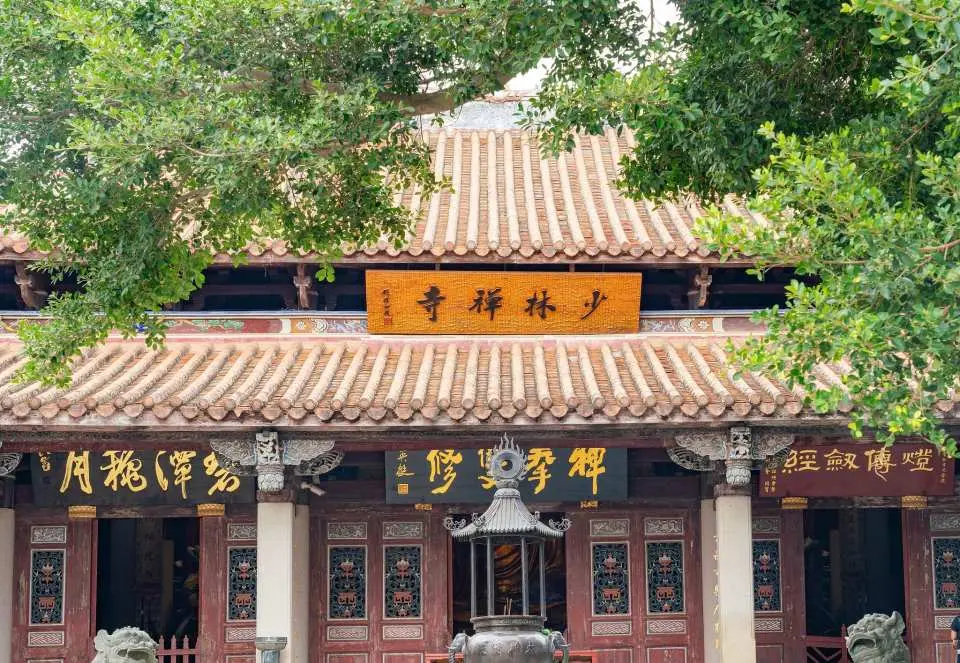
Quanzhou Southern Shaolin

Xunpu Fishing Village
Purchase Notice
- Staff will contact you between 8:00 PM and 9:00 PM the night before your trip to arrange the approximate pick-up time, pick-up location, and vehicle number. On the day of your trip, pick-up time is between 8:00 AM and 8:30 AM.
- For those holding senior citizen cards, military officer cards, or other discount certificates, the tour guide will refund the ticket fee at the discounted price on-site, not the original price.
- Shopping areas are located within the scenic spots; this is an activity undertaken by the scenic area itself. Any purchases made by guests are not the responsibility of the travel agency.
- Personal Consumption Notice: Shopping, entertainment, and other activities not arranged by the travel agency are considered personal expenses of the tourist. The travel agency is not responsible for any disputes or losses arising from such activities. Please shop rationally, pay attention to product quality and price, and request an official invoice from the merchant.
- Special Notice: Please be sure to bring your personal travel items and valid ID card (children should bring the original household registration book or birth certificate, and passengers aged 16 and above who have not obtained an ID card must bring the original certificate issued by the police station), and take good care of them.
- If the tour cannot proceed as scheduled due to force majeure or unforeseen circumstances such as weather conditions or emergencies, any additional costs incurred due to itinerary changes will be borne by the traveler, while any reduced costs will be refunded by the travel agency.
- Fujian has a generally mild climate with abundant rainfall, classified as a maritime climate. Summers are hot, generally exceeding 30°C in July and August; winters often fall below 10°C; long hours of sunshine and abundant sunlight. The average annual temperature is 21°C. Hotel rooms in Xiamen generally do not have heating.
- The times indicated in the itinerary are for reference only. If the itinerary is affected by force majeure (natural disasters, traffic jams, queues, government actions, etc.), the travel agency may make adjustments to the itinerary to ensure its smooth operation. Any additional costs incurred due to changes that prevent the trip from proceeding as planned will be borne by the traveler.
- Passengers should carry necessary medications (such as cold medicine, antidiarrheal medicine, motion sickness medicine, band-aids, etc.) according to their own physical condition, and prepare clothing and umbrellas or raincoats according to weather changes.
- Travel time in the itinerary does not include sightseeing time. The order of sightseeing on the day may be adjusted by the travel agency without affecting the overall itinerary. The sightseeing time indicated in the itinerary is based on normal circumstances, and sufficient time for sightseeing can generally be ensured during the off-season when there are fewer crowds.
- Please fill out the feedback form truthfully. The travel agency handles complaints based on the locally signed tourist feedback form; please fill it out truthfully on-site. Please provide feedback promptly if you have any comments so that we can resolve them as soon as possible. Thank you for your understanding and cooperation.
- When visiting or engaging in activities at the beach, it is essential to be aware of local tide conditions and pay special attention to safety; swimming in the sea is strictly prohibited. Individuals with special health conditions should be wary of seafood allergies.
- This product is a group tour for individual travelers. While the promised service content and standards remain unchanged, you may share transportation and activities with guests from other travel agencies. By submitting your order, you agree to the unified itinerary arrangements under the group tour arrangement.
Reminders
A minimum of 1 traveler(s) are required for the tour to depart. If the number of participants does not reach the minimum requirement, the tour will be canceled. An email regarding tour cancellation will be sent 1 day(s) before the departure date
FAQ
1. Why is South Shaolin Temple in Quanzhou a renowned historical site?
The South Shaolin Temple in Quanzhou is famed for its deep historical roots and strong association with martial arts, particularly in the tradition of Southern Shaolin Kung Fu. It is recognized as a significant center for the development and preservation of Chinese martial arts, as well as a spiritual site with centuries of heritage. Its legacy is often intertwined with legendary tales and the rich cultural tapestry of Quanzhou, a city known as the starting point of the Maritime Silk Road.
2. How many Shaolin Temples exist, and what distinguishes the South Shaolin Temple in Quanzhou?
While the original Shaolin Temple is in Henan, historical records and local traditions suggest the existence of "Southern Shaolin" temples, with the Quanzhou site being one of the most prominent contenders. It distinguishes itself through its unique Southern style of martial arts, which developed differently from its Northern counterpart. This temple is specifically noted for its connection to various martial arts lineages and its role in preserving distinct Southern Chinese cultural and martial traditions, often referenced in historical texts and popular culture.
3. What martial arts traditions are specifically associated with the South Shaolin Temple in Quanzhou?
The South Shaolin Temple in Quanzhou is renowned for its unique Southern Shaolin martial arts. These styles are often characterized by close-range combat, swift hand techniques, and stable stances, differing from the Northern Shaolin styles that emphasize long-range attacks and high kicks. The temple has played a vital role in developing and preserving these distinct Southern Kung Fu traditions, making it a significant site for martial arts enthusiasts and those interested in Chinese combat forms.
4. Is the South Shaolin Temple in Quanzhou managed by the state or private organizations?
The South Shaolin Temple, like many significant cultural and religious sites in China, operates under the general oversight of religious affairs departments, but it is primarily managed by its monastic community. While it receives some support for preservation and development as a national heritage site, its daily operations and religious practices are typically administered by the resident monks and temple management, ensuring the continuity of its spiritual and martial arts traditions.
5. What are the must-visit historical and cultural highlights of Kaiyuan Temple in Quanzhou?
Kaiyuan Temple in Quanzhou is one of China's most significant ancient Buddhist temples, known for its grand architecture and rich religious and artistic value. Key highlights include the iconic East and West Pagodas (Zhenguo Pagoda and Renshou Pagoda), which are ancient stone structures and symbols of Quanzhou. Visitors can also explore the main hall, Daxiong Grand Hall, which houses exquisite Buddhist statues and intricate carvings, reflecting centuries of craftsmanship and spiritual devotion.
6. What unique cultural traditions can be observed among the Xunpu Fisherwomen in Quanzhou?
The Xunpu Fisherwomen in Quanzhou are famous for their distinctive cultural traditions, particularly their unique attire. They are known for wearing "flower headdresses" (簪花圍), an elaborate headwear made of fresh flowers and pearls. As descendants of Arab traders, their village also boasts traditional "oyster shell houses" built from oyster and clam shells, showcasing a fascinating blend of local and maritime heritage, making them one of Fujian's three renowned groups of fisherwomen.
7. What is the historical significance and unique engineering of Luoyang Bridge in Quanzhou?
Luoyang Bridge in Quanzhou is one of China's four ancient famous bridges, renowned for its ingenious engineering from the Song Dynasty. It's historically significant as the first tidal-flats stone bridge in China, utilizing a unique "raft foundation" technique by cultivating oysters on the bridge piers to reinforce them. This innovative method helped the bridge withstand strong tides for centuries, showcasing ancient Chinese engineering prowess and its importance for maritime trade along the Silk Road.
8. What is the travel distance and estimated time from Xiamen to Quanzhou for a day trip?
Quanzhou is approximately 1.5 to 2 hours' drive from Xiamen, depending on traffic conditions and the specific departure point within Xiamen. For a convenient day trip, the tour includes pick-up and drop-off directly from hotels in Xiamen's Siming and Huli districts, providing a hassle-free way to travel between the cities and explore Quanzhou's attractions without needing to arrange separate transportation.


