


Gyeongju Cherry Blossom One-Day Highlights: One Day, A Thousand Years of Beauty
- Gyeongju in a Day: Signature Cherry Blossom Spots + World Heritage Highlights
A view-point-focused route for the most beautiful cherry blossom scenery - Walk with the Blossoms, Discover the Heritage — A One-Day Gyeongju Tour
Linking Daereungwon, Cheomseongdae, and Bulguksa through the best scenic viewpoints - Spring in Gyeongju: “Cherry Blossom Views” and a Thousand Years of Heritage in One Day
A well-balanced itinerary featuring photo stops and historic landmarks - One Cherry Blossom Shot, One Timeless Heritage Moment in Gyeongju
A viewpoint-centered course that captures the city’s iconic sights at their most photogenic angles
Product Info
Gyeongju Cherry Blossom One-Day Highlights: One Day, A Thousand Years of Beauty 🌸
A One-Day Journey Through Time and Spring 🏛️
1. Why Visit Gyeongju in Cherry Blossom Season?
Gyeongju is not simply a city where cherry blossoms bloom—it’s a place where spring gently settles onto a thousand years of history.
During blossom season, petals drift through royal tomb parks, around stone monuments and temples, and along quiet lakes and forest paths. The beauty here isn’t loud or flashy—it’s calm, deep, and the kind that stays with you long after the day ends.
In Gyeongju, you don’t just see cherry blossoms—you experience them as you walk through time, stepping into a landscape where history and spring naturally meet.
2. Places We’ll Visit 🗺️
- Daereungwon Royal Tomb Complex 🏛️
Daereungwon is a large tomb park where the graves of Silla kings, royals, and nobles are gathered. Gentle burial mounds spread out across a wide, open landscape, making it feel like a walk through a garden of history. In cherry blossom season, the soft curves of the tombs and spring blooms create an even more quiet and beautiful scenery. Rather than rushing through, you’ll slow down here—walking at an easy pace and taking in the atmosphere of Gyeongju with your senses.
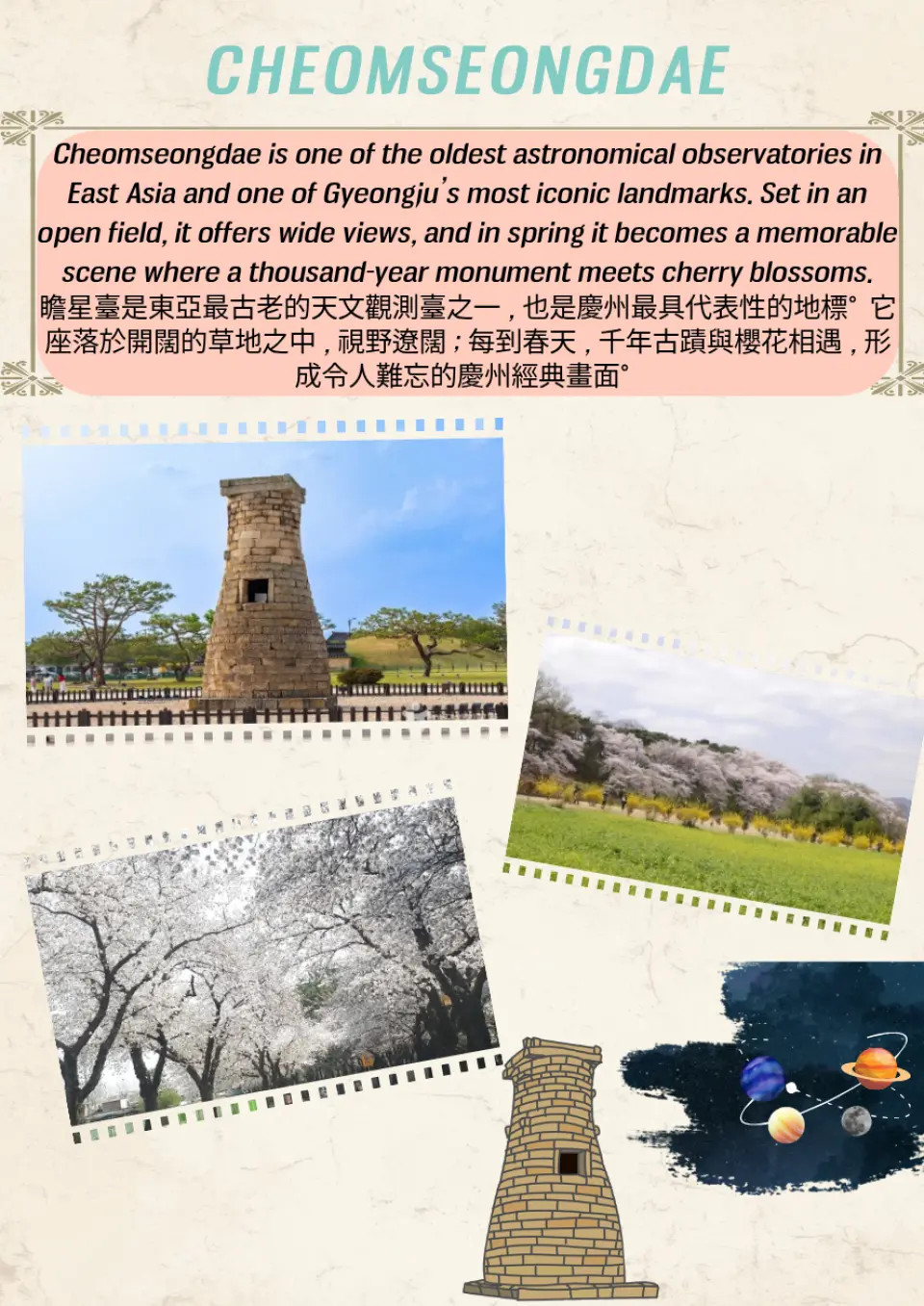
- Cheomseongdae
Cheomseongdae is one of the oldest astronomical observatories in East Asia, built during the Silla period, and it remains one of Gyeongju’s most iconic landmarks. At first glance it may look like a simple stone tower, but it holds fascinating symbolism—its form reflects the sky and the earth, and the number of stones and tiers carries meaningful references. Standing in an open field, it offers a wide, unobstructed view of the surroundings, and in cherry blossom season, it becomes a memorable Gyeongju scene where “a thousand-year monument” meets spring.
- Hwangridan-gil
Hwangridan-gil is a neighborhood where the mood of old alleys and vintage buildings remains, while stylish cafés, local snacks, small boutiques, and distinctive restaurants have gradually moved in—creating a natural blend of past and present. It isn’t a street that appeared overnight; it’s a place that continues to evolve as new culture is added to spaces shaped by time. Because every lane feels a little different, the best way to enjoy it is unhurriedly—wandering slowly and savoring the harmony between Gyeongju’s nostalgic charm and modern creativity.
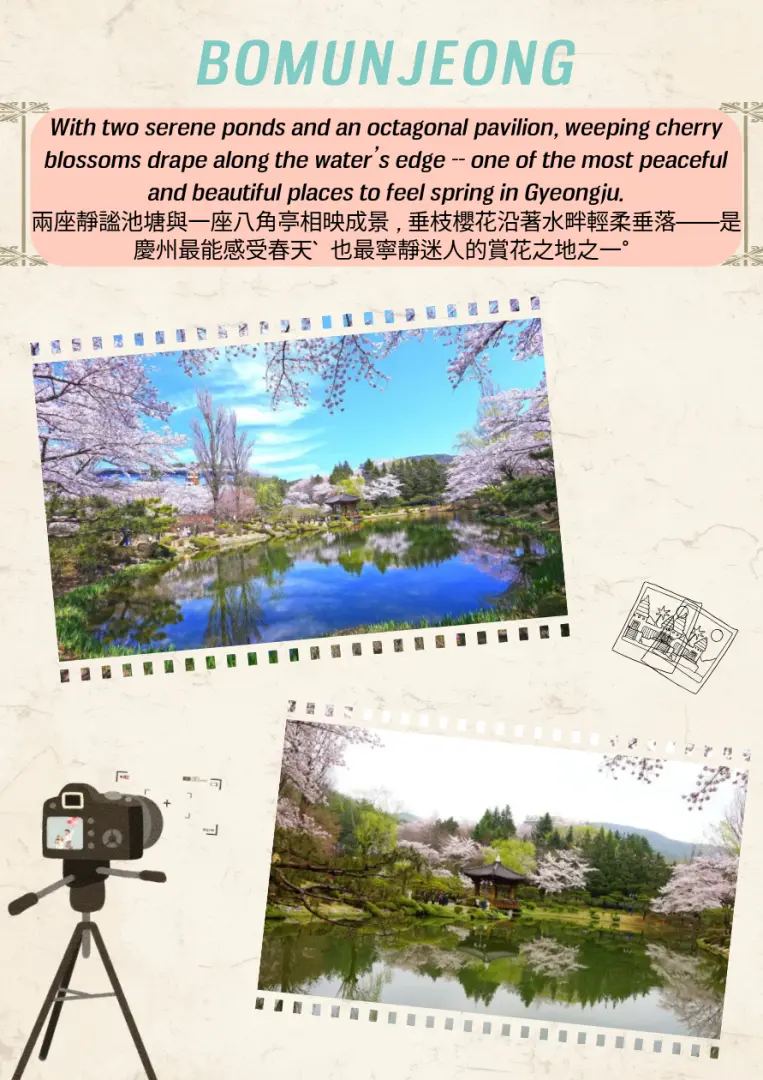
- Bomunjeong 🌸
Famous for its stunning scenery, Bomunjeong is a beloved viewpoint featuring an octagonal pavilion and two peaceful ponds. In spring, weeping cherry blossoms drape gracefully toward the water, creating one of Gyeongju’s most photogenic moments.
- Bulguksa Temple ✨
Bulguksa is a landmark temple that embodies the essence of Silla Buddhist culture, and it is the perfect place to end a day in Gyeongju with a sense of grace and depth. Although it has been restored and preserved over many centuries, you can still feel the beauty and balance of Silla architecture throughout the temple grounds. As you walk slowly through the courtyard and pathways, you're gonna naturally becomes calm, and the day’s Gyeongju story—ponds, royal tombs, alleys, monuments, forests—seems to come together in a quiet, satisfying.
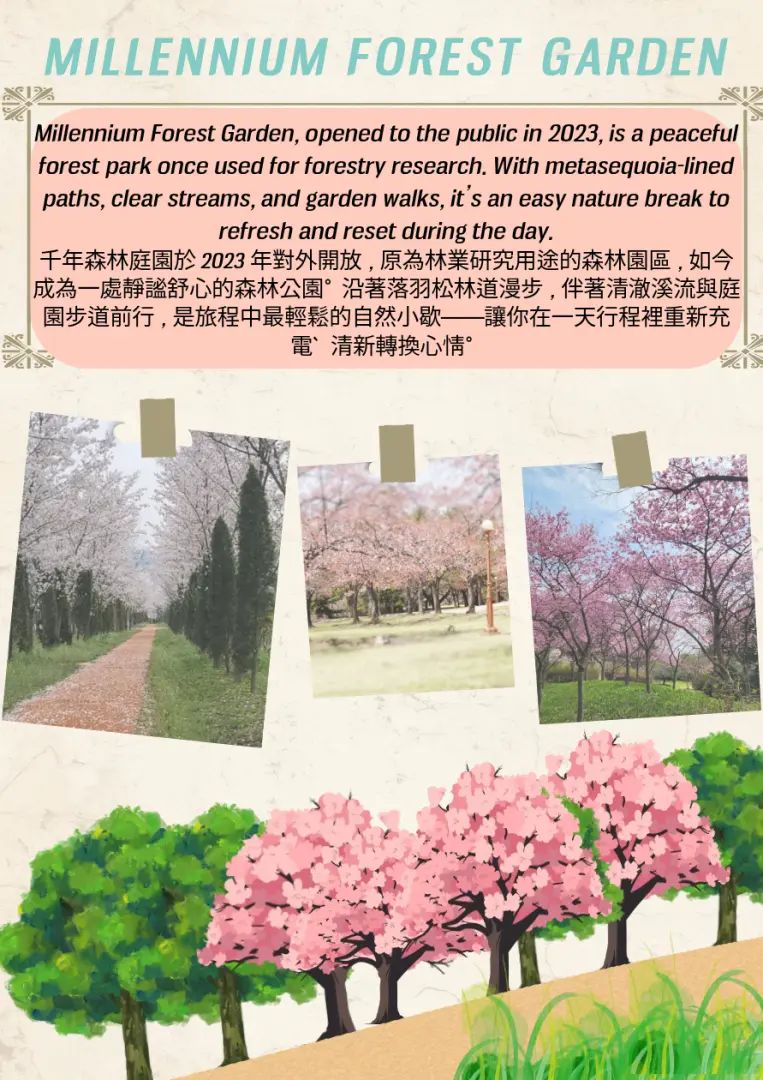
- Millennium Forest Garden 🌿
Gyeongbuk Millennium Forest Garden is a former forest research facility that was opened to the public as a garden-style forest park (officially accessible since 2023). Metasequoia-lined paths, clear streams, mirror-like waterways, and thoughtfully designed garden zones create a refreshing route to pause and breathe during the tour. Even a gentle walk here shifts the mood—
3. The True Charm of This Tour
This tour isn’t about rushing through many places. It’s about experiencing Gyeongju’s story—its time, its spaces, and the gentle beauty of spring—in one seamless day.
Starting at the royal tombs, the journey opens a doorway into time. It then moves past thousand-year-old monuments, through lively streets and a tranquil pond, and finally settles into the quiet of a temple and forest—unfolding like a single, seamless story.











Important Info
Reminders
Please arrive at the designated location 10 minute(s) before the scheduled departure time, as the tour will depart on time
📌 Depending on the situation, you may be required to present your passport. Please make sure to bring it with you. Also, please take extra care to keep it safe and prevent it from being lost.
📌The actual itinerary may vary due to traffic, weather conditions and other factors on the selected date.
📌The time that mentioned at above are estimated only.
📌All pictures shown are for illustration purpose only.
📌Please note that luggage (e.g., suitcases) cannot be loaded onto the vehicle, so kindly take this into consideration when booking.
📌Infant car seats are not provided. Due to limited vehicle space, accommodation may not be possible.
FAQ
A Gyeongju one-day cherry blossom tour typically includes scenic spring routes through Bomunjeong, known for its beautiful blossoms. You'll also explore historical sites such as Daereungwon with its ancient tombs, the trendy Hwangridan-gil area, and the iconic Cheomseongdae Observatory. The itinerary often features a peaceful walk in the Millennium Forest and a visit to Bulguksa, a UNESCO World Heritage temple, where spring blooms meet timeless architecture.
While specific timings can vary slightly, a Gyeongju day tour from Seoul is designed with a well-balanced itinerary to ensure ample time at each stop. The focus is on providing sufficient opportunities for enjoying cherry blossom views, exploring historical landmarks like Daereungwon and Bulguksa, and capturing memorable photos. You can expect enough time for comfortable sightseeing and immersion in each location's atmosphere.
A Gyeongju cherry blossom day trip from Seoul offers a unique opportunity to experience Korea's ancient capital during its most beautiful season. It combines the stunning natural beauty of cherry blossoms at iconic spots like Bomunjeong with visits to UNESCO World Heritage historical sites such as Bulguksa and Daereungwon. The tour provides a well-balanced itinerary, allowing you to immerse yourself in a thousand years of history and capture picturesque moments, making it a comprehensive and memorable cultural and seasonal experience.
Daereungwon in Gyeongju is renowned for its ancient royal burial mounds, offering a glimpse into the Silla Kingdom's regal past. Cheonmachong Tomb, one of its famous tumuli, showcases preserved artifacts. Bulguksa Temple, a UNESCO World Heritage site, is a masterpiece of Silla Buddhist art, featuring stunning stone bridges, pagodas, and statues. Its architectural beauty and spiritual ambiance reflect the rich cultural heritage of Korea's golden age.
Cheomseongdae and Daereungwon are relatively close to each other within Gyeongju's central area, making them easily accessible. Visitors can often walk between these two iconic historical sites, enjoying the surrounding park-like atmosphere. For slightly longer distances within the historical park area, local buses or taxis are also readily available options.
Yes, the T-money card is generally accepted for public transportation, including city buses, throughout Gyeongju. It can also be used for small purchases at convenience stores and some taxis. This provides a convenient cashless payment method for exploring the city's attractions.
Hwangridan-gil is centrally located in Gyeongju, making it easily accessible from major transportation hubs. From Gyeongju Intercity Bus Terminal or Gyeongju Station, it's typically a short taxi ride, often less than 10-15 minutes, or accessible via local bus routes with stops nearby. Many visitors also choose to walk from the station if they prefer a leisurely stroll.
Gyeongju primarily relies on an extensive network of city buses for public transportation, connecting most major attractions and neighborhoods. Taxis are also readily available and offer a convenient option for direct travel. While Gyeongju does not have a subway system, the bus network covers the city comprehensively. For exploring the historical park area, walking and cycling are popular choices.
Get Help


