
![[Chongqing] Dazu Rock Carvings Day Trip (World Cultural Heritage Site, one of the world's eight major grottoes)](https://image.kkday.com/v2/image/get/c_fill%2Ch_800%2Cq_55%2Ct_webp%2Cw_1240/s1.kkday.com/product_scm_8805/20251219091037_V10pJ/jpg)
![[Chongqing] Dazu Rock Carvings Day Trip (World Cultural Heritage Site, one of the world's eight major grottoes)](https://image.kkday.com/v2/image/get/c_fill%2Ch_400%2Cq_55%2Ct_webp%2Cw_500/s1.kkday.com/product_scm_8805/20251219091039_gdYXV/jpg)
![[Chongqing] Dazu Rock Carvings Day Trip (World Cultural Heritage Site, one of the world's eight major grottoes)](https://image.kkday.com/v2/image/get/c_fill%2Ch_400%2Cq_55%2Ct_webp%2Cw_500/s1.kkday.com/product_scm_8805/20251219091037_yrpjg/jpg)
![[Chongqing] Dazu Rock Carvings Day Trip (World Cultural Heritage Site, one of the world's eight major grottoes)](https://image.kkday.com/v2/image/get/c_fill%2Ch_400%2Cq_55%2Ct_webp%2Cw_500/s1.kkday.com/product_scm_8805/20251219091037_dCesa/jpg)
![[Chongqing] Dazu Rock Carvings Day Trip (World Cultural Heritage Site, one of the world's eight major grottoes)](https://image.kkday.com/v2/image/get/c_fill%2Ch_400%2Cq_55%2Ct_webp%2Cw_500/s1.kkday.com/product_scm_8805/20251219091037_lHu5h/jpg)
[Chongqing] Dazu Rock Carvings Day Trip (World Cultural Heritage Site, one of the world's eight major grottoes)
- Dazu Rock Carvings: As a World Cultural Heritage site, Dazu Rock Carvings integrate Confucian, Buddhist, and Taoist sculptures, showcasing the essence of Eastern art.
- Baodingshan Stone Carvings: Appreciate the largest collection of grotto sculptures from the late Tang Dynasty in China, including 13 groups of sculptures such as Dafowan and Xiaofowan, with nearly 10,000 cliff carvings.
- Beishan Stone Carvings: Shaped like a crescent moon from south to north, with niches resembling a honeycomb; the sculptures are delicate and exquisite, demonstrating skillful and ingenious craftsmanship.
Package Options


Sightseeing Tours
| Tour Type | Shared tour |
| Transportation method | Transfer from meeting point |
| Tour types | Guided tour |
| Meal arrangement | Arrange yourself |
| Sightseeing type | Historic site tour, Hiking |
| Transport | Walking |
Product Info
The content of this product is provided by machine translation and may not reflect the actual information, please take this into consideration before booking.
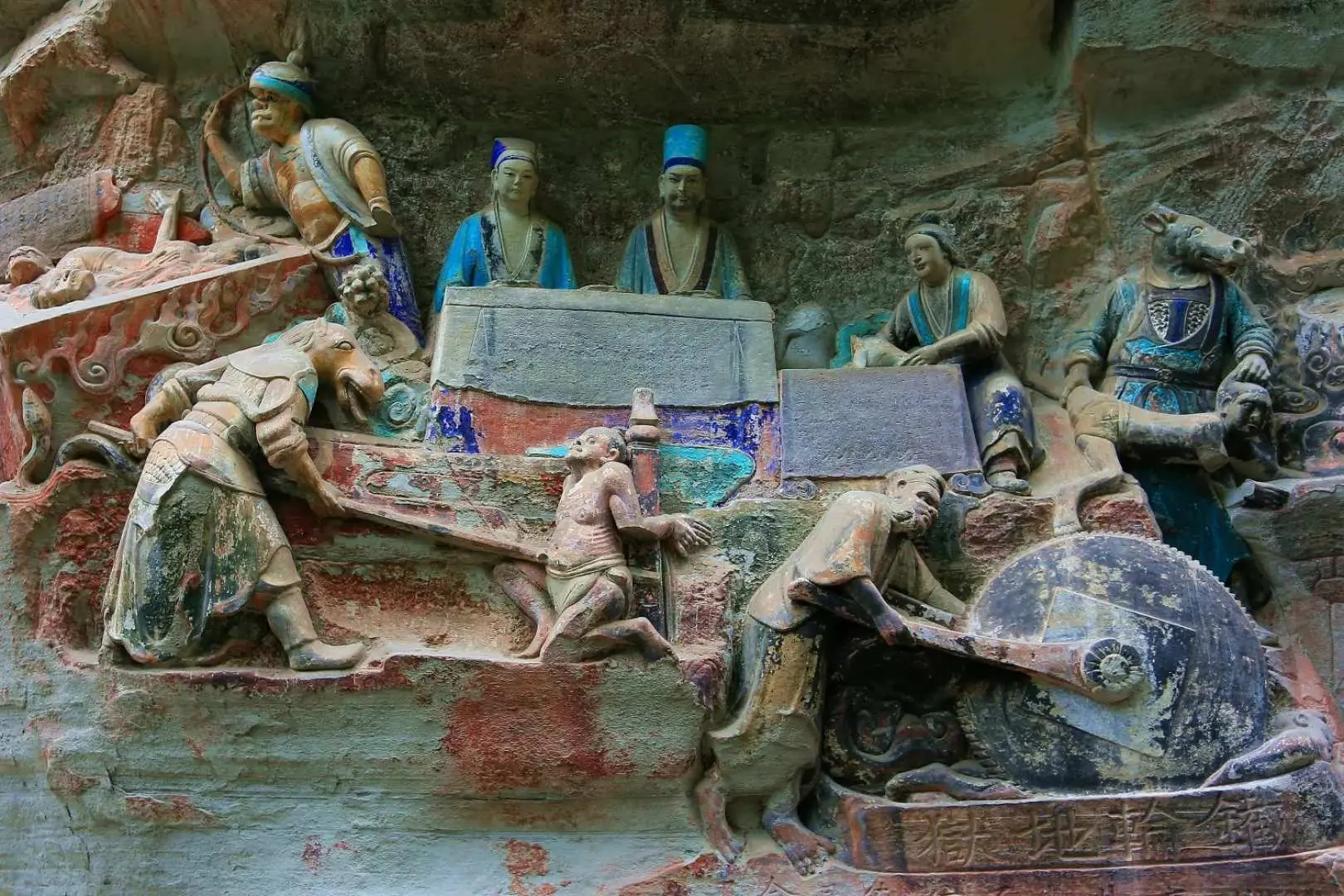
The Dazu Rock Carvings, located in Dazu District, Chongqing, are a World Cultural Heritage site. The Dazu Rock Carvings encompass Baodingshan, Beishan, and Nanshan, among other areas, where visitors can appreciate well-preserved stone carvings from the Tang and Song dynasties. Among the numerous carvings, those at Baodingshan and Beishan are particularly famous. The "Six Paths of Rebirth" and "Ten Evils and Their Retributions" at Baodingshan are especially worth exploring in detail. The Buddhist statues at Beishan possess both the rustic simplicity of Tang dynasty carvings and the refined elegance of Song dynasty sculptures.
Step into the hidden realm of Dazu Rock Carvings—a temple of World Cultural Heritage, the pinnacle of Chinese grotto art. It is not merely a museum of stone carvings, but a thousand-year-old epic etched in stone, each statue whispering the faith and wisdom of the artisans of the Tang and Song dynasties.
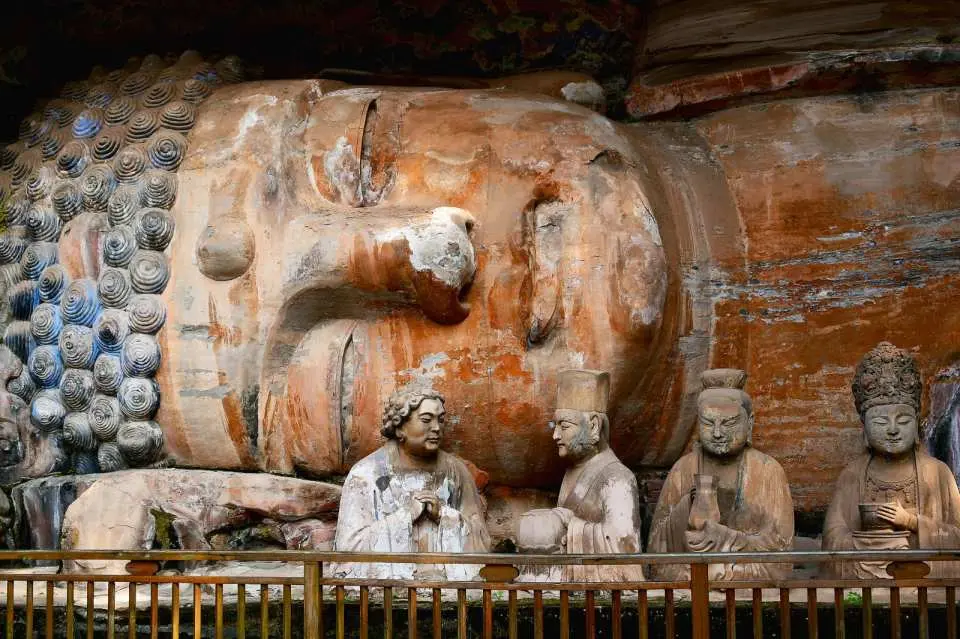
Stepping into Baoding Mountain is like traveling through a time tunnel. On an 88-square-meter cliff face, the Thousand-Hand Guanyin stands majestically with a thousand eyes and a thousand arms, its brilliance undiminished by eight centuries of wind and rain, showcasing the delicacy and grandeur of Song Dynasty art. Strolling before the "Six Paths of Reincarnation" relief, the Buddhist philosophy of cause and effect flows through the sculpture; while the 31-meter-long reclining Buddha's Nirvana relic, with its ingenious composition, inspires awe—the half-body disciples appear to kneel in devotion, and the tiny figures of the mother and aunt hang from the clouds, telling the eternal theme of the cycle of life and death. These stone carvings are not only religious symbols but also narratives of everyday life: the leisurely sound of a shepherd boy playing his flute, the gentle laughter of a chicken-raising woman carrying a basket, blending the mundane into the sacred rock face, making faith tangible.
This is not only an art of stone, but also the eternal whisper of civilization amidst mountains and rivers—a spiritual baptism that transcends millennia, waiting for you to personally experience it.
The Dazu Rock Carvings were first carved during the Yonghui period of the early Tang Dynasty, continued through the late Tang and Five Dynasties, flourished in the Song Dynasty, and were further expanded during the Ming and Qing Dynasties. Ultimately, they formed a vast group of rock carvings that represents the pinnacle of Chinese stone carving art, and can be considered a representative of late-period Chinese grotto art.


The Dazu Rock Carvings, begun in the early Tang Dynasty and continuing into the Ming and Qing Dynasties, are a masterpiece of the fusion of Buddhist culture and traditional Chinese culture. They possess irreplaceable cultural content, artistic appreciation, and scientific research value compared to earlier grottoes.


The stone carvings are located on Beishan Mountain, 2 kilometers north of Dazu District. The cliff face is about 7 meters high, with statues carved along the cliff. The shape resembles a crescent moon from south to north, and the niches are like a honeycomb. There are more than 5,000 statues.

The Dazu Rock Carvings are world-renowned for their grand scale, exquisite carvings, diverse themes, rich connotations, and excellent preservation.


Purchase Notice
- Due to varying standards at different scenic spots/venues, the children's price only includes a seat on the vehicle, insurance, and tour guide services, but does not include entrance tickets to attractions.
- For safety reasons, minors under the age of 18 must be accompanied by an adult to participate in the tour, and the accompanying adult shall be their guardian during the activity.
- This tour is quite strenuous. Please ensure you are in good health and fit for travel. If any member of the group is 70 years of age or older, they must be accompanied by at least one relative or friend aged 18-69 to join the tour. Thank you for your understanding.
- Our staff will confirm the departure time with you between 6:00 PM and 9:00 PM the day before your trip. Please assemble at the designated location and time. As this is a group tour, there may be some waiting time; we appreciate your understanding.
- All attractions require the original ID card or passport/Hong Kong, Macao and Taiwan travel permit for entry. Please be sure to bring the document you filled in when placing your order. Any additional costs incurred due to forgetting or using the wrong document and being unable to enter the attraction will be borne by you.
- The Dazu Rock Carvings scenic area involves a lot of walking, so it is recommended to wear comfortable shoes and bring water and snacks.
- The steps in some areas of the Beishan Stone Carvings are quite steep, so people with mobility issues should be careful.
- The order of visits may be adjusted depending on the day's itinerary, but the content of the visit will not be reduced. If the itinerary is affected by force majeure, the travel agency will assist tourists in resolving the issue, but will not be liable for any losses incurred. Any additional costs incurred as a result will be borne by the tourists themselves.
Get Help


