


【Kamakura Shared Day Trip (9-person group)】Tokyo Kamakura Great Buddha, Enoshima, Enoden Railway Experience, Kamakura High School Station | Includes Enoden Railway | Departure from Tokyo
Groups depart daily, and a group can be formed with just one person.
Enoshima, a cultural property, is the filming location for anime such as *Memories Off* and *Slam Dunk*, and the Great Buddha of Kamakura.
Package Options
Product Info
What You Can Expect
1 Day
- 08:30JR Tokyo Station Marunouchi North Exit (Meeting Point Pick-up and Drop-off Package): Let's begin our beautiful journey today!
- 10:30Enoshima, located in the Shonan Sea off Kanagawa Prefecture, Japan, is a picturesque remote island renowned for its harmonious blend of nature and culture. A bridge connects it to Honshu, like a ribbon leading to a dreamlike paradise. The island is lush with greenery, and winding paths lead to Enoshima Shrine, dedicated to the sea god and beautiful legends. Climbing the observation lighthouse offers breathtaking views of Mount Fuji and the Pacific Ocean, especially enchanting at sunset. Due to its unique scenery, Enoshima has been a popular filming location for numerous movies, TV dramas, and anime. For example, "Slam Dunk" features iconic scenes of the Shonan coastline here, and the Enoshima Electric Railway is a symbol of many youthful stories. Whether in romantic films or youthful anime, Enoshima always adorns the screen with its unique charm, becoming a dream destination for countless people. Enoshima Shrine is an ancient shrine with a history of over a thousand years. It consists of three main shrines: Hetsugami, Nakatsugami, and Okutsugami, enshrining the sea god and Benten, the guardian goddess from beautiful legend. Surrounded by lush greenery, with its stone steps and torii gates, the shrine exudes a profound sacred atmosphere. It is said that one can pray here for safe seas, good fortune, and happy marriages. Enoshima Shrine is not only a center of faith but also attracts many tourists with its mystical atmosphere and rich culture, making it one of Enoshima's must-see landmarks.
- 13:00Kamakura High School Kamakura High School is a symbol of youth, where romance and vitality coexist. Located next to Kamakura-kōkōmae Station, the classic tram crossing in "Slam Dunk" captured an eternal moment of youth and dreams, making it a sacred place for countless tourists. The campus is nestled against verdant mountains and faces the azure sea; the gentle sea breeze and sunshine seem to bathe youth in a golden glow. Shonan Coast Drive (Not included in the itinerary, only a drive-by view) The Shonan Coast is where the little train slowly winds through Kamakura's quaint streets, where you can hear the waves crashing on the beach, where you feel the sea breeze as you accelerate on a motorcycle, where Sakuragi Hanamichi's love for Haruko is—it's sentiment, it's passion.
- 13:40Kamakura High School Station Enoden Experience When you think of Kamakura, the Enoden is undoubtedly one of its most iconic symbols. The Enoden is a streetcar connecting Fujisawa and Kamakura, and its image, rushing past, is frequently seen in numerous Japanese films and anime, becoming a unique part of the scenery. Not only can you admire this flowing greenery from afar, but you can also ride it yourself, experiencing the unique charm of the streetcar weaving through ancient charm and nature, adding a touch of poetry and tranquility to your journey.
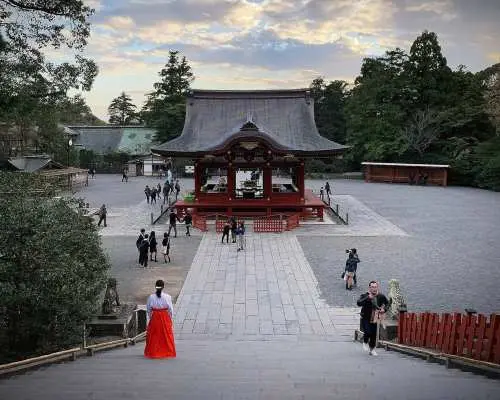
- 14:10Tsuruga Hachimangu Shrine Tsuruga Hachimangu Shrine is one of the most representative shrines in Kamakura and an important heritage site of Japanese history and culture. Built in 1063, it enshrines Hachiman Okami, considered a symbol of the Kamakura samurai spirit. The shrine is built against a mountain, with a solemn layout, and the main hall and dance hall are particularly magnificent. With cherry blossoms in spring and golden ginkgo leaves in autumn, the scenery changes with the seasons, making it a place to linger. It is not only a sacred place for prayer and good fortune but also an excellent place to learn about traditional Japanese culture and history. Komachi-dori This is a bustling street that blends ancient charm with modern flair, and a must-see for tourists exploring Kamakura. Lined with various shops, it offers everything from traditional wagashi and handicrafts to trendy cafes and specialty restaurants. Strolling along it, you can savor authentic Kamakura cuisine, such as matcha ice cream and eel rice, while immersing yourself in the rich historical and cultural atmosphere. Komachi-dori always exudes a unique charm throughout the seasons, making it an ideal place to experience Kamakura's atmosphere and explore shopping and culinary delights.
- 15:40The Great Buddha of Kamakura is a renowned national treasure of Japan, located within the Kotoku-in Temple in Hase, Kamakura City. This bronze Buddha statue, approximately 11.3 meters tall and weighing 121 tons, was first built in the 13th century and symbolizes compassion and wisdom. Seated outdoors, the Buddha has withstood the elements, remaining solemn and dignified, showcasing the exceptional casting techniques and Buddhist culture of the Kamakura period. Surrounded by cherry blossoms in spring and autumn leaves in autumn, it exudes a unique blend of historical and natural beauty. As a landmark of Kamakura, the Great Buddha attracts countless tourists and devotees who come to experience the peace and spiritual power, and to immerse themselves in its profound cultural heritage. Minamoto no Yoritomo established the first samurai government in Kamakura—the Kamakura Shogunate (1192-1333). Therefore, during these 140 years, Kamakura, as the center of Japan at the time, experienced tremendous development in politics, economy, and culture. However, with the establishment of the Muromachi Shogunate's central position, Kamakura, due to its marginalization, began its decline. Especially after the Battle of Koga in Shimōsa Province in 1455, Kamakura even regressed to a village with only agriculture and fishing. Until the mid-Edo period, with the revival of shrines and temples, Kamakura gradually evolved into an important tourist area in Japan. (Entrance fee not included: 300 yen, 50 yen inside the Great Buddha).
- 16:20Depart for Tokyo. Return time is for reference only; the return trip may be earlier if the day's itinerary goes smoothly and traffic conditions are good.
- 18:00Arrived at JR Tokyo Station Marunouchi North Exit, concluding the day's itinerary in a pleasant way!


Important Info
Reminders
In case of delays caused by traffic, weather, or other force majeure factors resulting in the cancellation of some itinerary attractions, please contact customer service. We will arrange a partial refund for you
In the event of inclement weather such as typhoons or snowstorms, a decision on whether to cancel the tour will be made 1 day(s) before departure (local time 20:00). Notifications will then be sent via email
Travelers with the following conditions or other health issues that could be worsened by excessive stimulation should not participate in this activity: High blood pressure, Heart disease, Acrophobia, Asthma, Epilepsy, Pregnant women
Please arrive at the designated location 10 minute(s) before the scheduled departure time, as the tour will depart on time
How to Redeem Your Voucher
How to Use Your Voucher
- Please present your order number
Meeting Point
Location Name: JR Tokyo Station Marunouchi North Exit
Address: Tokyo Station Marunouchi North ExitFAQ
Yes, visitors are allowed to enter the interior of the Great Buddha of Kamakura (Kotoku-in Temple), a practice known as 'Taigai Kuri' (visiting the Buddha's womb). There is usually a small maintenance fee for this experience. Inside, you can get a close-up view of its unique casting structure and understand the design considerations of the internal space. It's a very special opportunity to gain a deeper understanding of this magnificent historical and cultural asset from a different perspective.
The Great Buddha of Kamakura enshrines Amida Nyorai (Amida Buddha). Construction of this statue began in 1252, and it is a national treasure of Japan. Its construction background reflects the prosperity of Buddhist culture during the Kamakura period and the people's prayers for peace and well-being. The Great Buddha is not only an important religious symbol but also a cultural heritage that combines exquisite craftsmanship with profound historical significance, holding a pivotal position in Japanese culture.
While there are no strict mandatory worship rituals when visiting the Great Buddha of Kamakura, it is recommended to maintain solemnity and quietude as a sign of respect for the statue. Many visitors choose to put their palms together in front of the Great Buddha or light incense at the designated incense burners in the vicinity to pray for blessings. If you participate in the 'Taigai Kuri' (visiting the Buddha's womb) inside the statue, please be sure to follow the instructions of the on-site staff and avoid touching the statue itself. Overall, experiencing it with a devout and respectful attitude is sufficient.
The Enoden train is a characteristic mode of transportation connecting Kamakura and Enoshima. Its main charm lies in the beautiful coastal scenery of the Shonan region that can be enjoyed along the route, and its passage through local residential areas, making it an excellent way to experience Japan's nostalgic atmosphere. If your itinerary includes the Enoden experience, you can enjoy convenient arrangements. If you need to take it on your own, the Enoden one-day pass allows for unlimited rides within a day, which is perfect for visiting popular spots like Kamakurakokomae Station and Enoshima, offering flexibility for spontaneous travel.
The most popular photo spot at Kamakurakokomae Station is the level crossing by the sea next to the station. This spot perfectly recreates the scene from the opening of the classic anime 'Slam Dunk' where Sakuragi Hanamichi and Haruko Akagi meet. Many fans wait for trains to pass here to capture the iconic scene of the sea, train, and pedestrians intertwined. When taking photos, please be sure to pay attention to your own safety, respect local traffic order and residents' lives, and do not obstruct vehicle or pedestrian traffic.
When visiting Enoshima, we recommend you visit Enoshima Shrine to experience its unique marine deity beliefs and beautiful approach path. You can choose to ascend the Enoshima Sea Candle (observation tower) at an altitude of about 60 meters for a 360-degree panoramic view of the magnificent Shonan coastline and Mount Fuji in the distance. Additionally, strolling around the island to explore the Enoshima Iwaya caves and savor fresh local seafood are unique experiences not to be missed.
In addition to the magnificent Great Buddha statue itself, the gardens of Kotoku-in Temple are also worth appreciating. The grounds are lush and serene, creating a peaceful and harmonious scene with the Great Buddha, allowing you to experience the unique Zen atmosphere of Japanese gardens. Furthermore, there is a small souvenir shop within the temple grounds where visitors can purchase unique items and view historical materials related to the Great Buddha, providing a more comprehensive understanding of its cultural and artistic value.
The construction of the Great Buddha of Kamakura began in 1252. Initially, a monk named Joko Bhikkhu raised funds, and it received support from the Shogunate at the time. The primary motivation for its construction was to pray for national peace, the well-being of the people, and to console those suffering from war. Despite undergoing several renovations and enduring natural disasters, the solemn image and its original intention of praying for the salvation of all beings remain unchanged to this day, making it an important spiritual anchor and cultural icon of the Kamakura region.
Get Help


