




Kamakura & Enoshima Day Tour | 10-Hour Private Car Charter | Customized Itinerary
- Private charter departing from Tokyo, exploring classic spots in Kamakura and Enoshima in one day
- Various vehicle options available, from sedans to large buses, suitable for groups of all sizes and needs
- 10-hour private driver service, providing comfort and safety while eliminating the need for transfers and waiting times
- Itinerary can be customized freely or followed according to recommended routes for a relaxing tour
- Stroll through Komachi-dori, visit Tsurugaoka Hachimangu, and enjoy the sunset at the Shonan coast to experience the history and Zen spirit of Kamakura
Package Options
Product Info
【Vehicle Introduction】
・5-Seater Sedan (Model cannot be specified) | Max. 3 passengers + 2 pieces of luggage
・7-Seater minivan (Van/Alphard assigned randomly, model cannot be specified) | Max. 6 passengers + 4 pieces of luggage
※ 5 passengers are recommended for maximum comfort; for 6 adults, space will be tight, and we recommend upgrading to a 10-seater vehicle.
・Toyota Alphard Luxury 7-Seater (Captain seats) | Max. 6 passengers + 4 pieces of luggage
※ 5 passengers are recommended for maximum comfort; for 6 adults, space will be slightly tight.
・10-Seater Vehicle (Toyota Hiace or similar) | Max. 9 passengers + 10 pieces of luggage
・14-Seater Vehicle (Hiace Long) | Max. 11 passengers + 8 pieces of luggage
※ Can accommodate up to 13 passengers if there is no luggage.
・18-Seater Vehicle (Toyota Coaster or similar) | Max. 18 passengers + 18 pieces of luggage
Or up to 23 passengers (including auxiliary seats, limited to small luggage, max. 10 pieces)
※ When using auxiliary seats, we recommend carrying small luggage to avoid affecting seating comfort.
【Child Seat and Luggage Regulations】
・This service uses legally registered vehicles, and child seats are not mandatory under Japanese law. One child booster seat can be provided free of charge upon request;
・A fee of JPY 2,500 will be charged for each additional seat from the second one onwards. Please note this in your order in advance. Please be aware that a child seat takes up approximately 1.5 seats and may affect seating comfort and luggage space.
・Standard luggage size is 24–28 inches; oversized luggage or strollers must be notified in advance and will be counted as 2 pieces of luggage.
・If you are unable to board due to exceeding the passenger or luggage capacity, the responsibility and costs will be borne by the traveler.
【Vehicle Arrangement and Service Range】
・Vehicles may be replaced with an equivalent model based on daily availability; specific models cannot be requested.
・If you wish to customize your route, please provide your itinerary when placing your order for customer service confirmation.
・Service Range: Within 300 km from hotels in Tokyo. Cross-regional trips (e.g., Kamakura + Hakone) will incur an additional service fee.
・Pick-up and drop-off locations are limited to hotels or guesthouses within Tokyo city; locations outside this area will incur an additional deadhead fee (JPY 5,000–20,000).
・Urayasu, the Disney area, and Haneda Airport are not within the Tokyo city pick-up/drop-off range; a one-way surcharge (JPY 5,000–10,000) will apply if service is required.
【Charter Service Duration】
・Standard service duration: 10 hours; overtime fees apply if exceeded.
・For trips with different pick-up and drop-off locations (e.g., Mt. Fuji/Hakone), the service duration is 8 hours; travel time for the vehicle to return to base must be reserved for other regions.
・Service hours are between 7:00 and 22:00. If your request falls outside these hours, please note it when ordering for customer service confirmation.
【Other Reminders】
・The driver does not speak English but can use translation software to communicate with passengers.
・If you require an English-speaking driver, please note this when ordering for customer service confirmation. A surcharge of JPY 5,000 will apply if one can be arranged.
・Driver contact information will be provided 1 day before departure (at the latest 3 hours before the service); please wait at the pick-up location 10 minutes in advance.
・If the itinerary includes 'Mt. Fuji 5th Station', an entrance fee (approx. JPY 2,100–3,700) must be paid on-site, which can be paid by the driver on your behalf.
・Communication Reminder: In some regions, LINE IDs cannot be added to each other; we recommend using WhatsApp, WeChat, or email for contact.

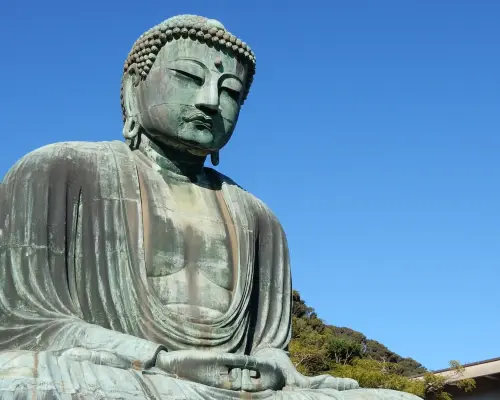
The Great Buddha of Kamakura (Kotoku-in Temple), located in Kamakura City, Kanagawa Prefecture, is one of Japan's most iconic Buddhist statues and a symbolic landmark of the Kamakura region. This bronze Buddha statue is approximately 13.35 meters tall and weighs about 121 tons. Built in the mid-13th century, it was originally enshrined in the temple's main hall, but was later forced to stand outdoors due to repeated earthquakes and tsunamis. The Buddha's solemn expression and serene demeanor, surrounded by lush greenery, showcase the unique Zen spirit and historical atmosphere of Kamakura, making it a classic attraction not to be missed by travelers visiting Kamakura.

Tsurugaoka Hachimangu Shrine, located in the heart of Kamakura City, Kanagawa Prefecture, is Kamakura's most important shrine and historical symbol. Founded in 1180 by Minamoto no Yoritomo, it enshrines Hachiman Okami (the Japanese god of war). The shrine sits atop a small hill, its approach path, "Wakamiya-oji," extending to the main hall, creating a magnificent spectacle. With cherry blossoms in spring and vibrant autumn foliage, the scenery is beautiful in all seasons. As the birthplace of Kamakura's samurai culture, Tsurugaoka Hachimangu Shrine is not only a place of prayer but also a representative site for experiencing Japanese history and tradition.

Enoshima, located in Fujisawa City, Kanagawa Prefecture, is one of the most representative tourist destinations on the Shonan coast, just a few kilometers from Kamakura. The island is famous for its romantic seascapes, shrines, and food streets, and is accessible on foot via the Enoshima Bridge. On the island are Enoshima Shrine, dedicated to the sea goddess; Enoshima Observation Lighthouse, offering panoramic views of Mount Fuji and Sagami Bay; and the popular Iwaya cave dwellings. During the day, visitors can enjoy the azure seascapes, and at night, they can witness a magical light show, making it a classic tourist destination combining nature, faith, and romance.

Komachi-dori, located next to the east exit of Kamakura Station, is one of Kamakura's busiest shopping streets, stretching approximately 360 meters. Lined with traditional confectionery shops, handicraft stores, cafes, and unique restaurants, it blends the charm of the old capital with modern creativity. Here you can savor Kamakura specialties such as matcha sweets, senbei (rice crackers), and soba noodles, and it's also a perfect place to shop for souvenirs and experience local culture. Bustling with people during the day, it transforms into a relaxed atmosphere in the evening, making it a must-visit street to experience the pace of life and Japanese charm of Kamakura.

Hase-dera Temple, located in the Hase area of Kamakura City, is one of Kamakura's most representative ancient temples, famous for its enshrinement of Kannon (Avalokitesvara). Built in the 8th century, the temple's main eleven-faced Kannon statue is said to be 9.18 meters tall, making it one of the largest wooden Buddhist statues in Japan. The grounds are lush with flowers and trees throughout the year: cherry blossoms in spring, hydrangeas in summer, autumn foliage, and plum blossoms in winter, creating a picturesque landscape. From the observation deck, one can enjoy panoramic views of Sagami Bay and the Shonan coast; the tranquil atmosphere and magnificent scenery complement each other, making it a healing sanctuary that combines faith, nature, and art.
Suggested Charter Routes
- Route A: Tsurugaoka Hachimangu Shrine → Komachi-dori Shopping Street → Kamakura Great Buddha (Kotoku-in Temple) → Hase-dera Temple → Enoshima
What You Can Expect
Important Info
Surcharge(s)
Parking Fee
Reimbursement based on actual expenses
Overtime fee
Vehicles with 10 seats or less: JPY 5,000 for each additional hour (each additional 15 minutes counts as 1 hour).
Vehicles with 14 seats or more: JPY 10,000 for each additional hour (each additional 15 minutes counts as 1 hour).
• Delays caused by traffic congestion, waiting, or other unforeseen circumstances will be charged as overtime fees.
Night service fee
The service hours are between 7:00 and 22:00. If the service is outside these hours, please note this when booking for customer service confirmation. An additional night service fee of 5,000 yen per hour will be charged (the fee must be paid to the driver in cash on-site).
Cross-regional service fee
If the itinerary is outside the same area (e.g., spanning Kamakura and Mt. Fuji), a cross-regional service fee will apply. Please specify your desired route when placing your order, and we will confirm with you again.
Reminders
To ensure a comfortable riding environment, please do not eat or drink inside the vehicle and dispose of your trash yourself. If you soil the seats, carpets, or interior trim, you will need to pay a vehicle cleaning fee based on the actual quote from a professional company.
If you need to adjust or change your order information after booking, please inform us no later than two days before your trip. Changes requested the day before or on the day of your trip cannot be accommodated.
The private charter car service is available for 10 hours per day. During the private charter car period, the vehicle cannot be temporarily suspended or the service restart time cannot be delayed.
If a customer ends their trip early within the private charter car period, no refund will be given, and the trip cannot be carried over to the next day.
If your departure or arrival point is outside of Tokyo city limits, the empty driving time will be deducted or an additional fare may apply, depending on the actual situation. Please provide the correct pick-up and drop-off address when placing your order so that customer service can confirm.
Departure time cannot be adjusted on the day of the trip (for example, if you booked a departure time of 10:00 the day before, but the car is delayed by 1 hour due to customer reasons, the private charter car time will still be counted from 10:00).
Private charter car services do not include guided tours within attractions; the driver will wait for you outside the attractions. If you require a guided tour, please specify this in the order notes for customer service confirmation. Service fees and attraction entrance/parking fees will be charged separately. Thank you for your understanding.
In case of traffic congestion, the driver will adjust the route or sequence of the trip according to the actual situation and may suggest a return time to ensure a smooth journey. If the service exceeds the allotted time, an overtime fee will be charged based on the vehicle type. Thank you for your understanding.
If you wish to customize your itinerary, please fill in your itinerary when placing your order for customer service confirmation.
How to Redeem Your Voucher
How to Use Your Voucher
- Please present the e-voucher on-site


