

Tokyo Nikikai Concertante Series Berlioz's "The Damnation of Faust" Ticket Reservations (Ikebukuro, Tokyo)
- Berlioz's masterpiece "The Damnation of Faust" depicts the magnificent Goethe literature in its entirety
- A musical experience that stimulates the senses, accompanied by stunning visual beauty
- Maxime Pascal, a young leader in the French music world, will perform together with the Yomiuri Nippon Symphony Orchestra for the long-awaited first time!
- Performed in the original language [French] with Japanese subtitles
- Watch an opera in Ikebukuro, Tokyo!
Enjoy a full-scale opera at the Tokyo Metropolitan Theatre Concert Hall, located right next to Ikebukuro Station. Tokyo Metropolitan Theatre is also close to Sunshine City and Seibu Department Store Ikebukuro Main Branch, so you can enjoy shopping and sightseeing in Tokyo before or after the show.
Product Info
The content of this product is provided by machine translation and may not reflect the actual information, please take this into consideration before booking.
-Opera Information-
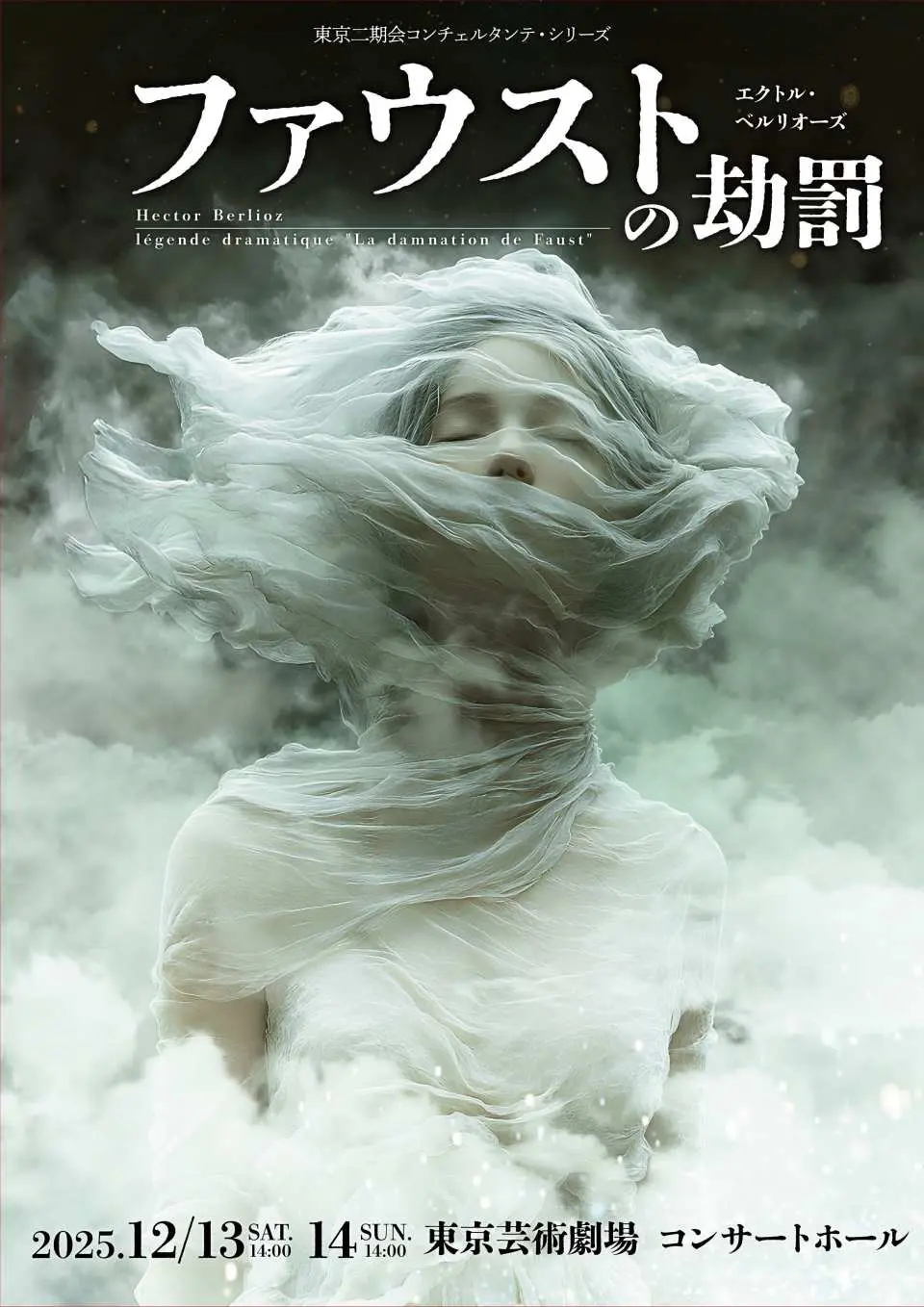
Tokyo Nikikai Concertante Series "The Damnation of Faust"
Performed in the original language [French] with Japanese subtitles
Music: Hector Berlioz Libretto: Hector Berlioz, Armille Gandonnier, Gérard de Nerval Original: "Faust" by Johann Wolfgang von Goethe
Venue: Tokyo Metropolitan Theatre Concert Hall Performance date: December 13th (Sat) and 14th (Sun) 2025 14:00
*Doors open 1 hour before the show starts
Duration: Approximately 3 hours
-About seats-
Available seats: S seats (15,000 yen), A seats (12,000 yen), B seats (9,000 yen)
Here is the seat image
*Seat numbers will be provided when you exchange your ticket on the day. Please note that seats cannot be designated in advance.
Tokyo Nikikai Concertante Series "The Damnation of Faust"

Conductor: Maxime Pascal. This young leader in the French music world will be performing for the first time with the long-awaited Yomiuri Nippon Symphony Orchestra!


How to use KKday Swipe-type E-Ticket
Important Info
Reminders
Preschool children (ages 5 and under) are not allowed to enter.
Your seat number will be provided when you exchange your ticket on the day. Please note that you cannot specify your seat in advance.
Doors will open one hour before the start of the show.
Redemption Location
Tokyo Metropolitan Theatre Concert Hall
Address Info: 1-8-1 Nishi-Ikebukuro, Toshima-ku, Tokyo 171-0021How to Redeem Your Voucher
How to Use Your Voucher
- Please click on the redemption link in the order confirmation email, enter the verification code (skip this step if you have already logged in), and follow the on-site staff's instructions to complete the Swipe to Redeem process
Voucher Redemption Period
- The voucher must be redeemed on the selected date and within operating hours; Invalid after expiration
- Your seat number will be provided when you exchange your ticket on the day. Please note that you cannot specify your seat in advance.
Experience Location
Location Name: Tokyo Metropolitan Theatre Concert Hall
Address: 1-8-1 Nishi-Ikebukuro, Toshima-ku, Tokyo 171-0021Cancellation Policy
- Once the order has been completed, it cannot be canceled, modified, or refunded
- Due to time zone differences, the confirmed cancellation date is based on the supplier’s local time. Please allow 2–5 business days to process your cancellation request, after which the cancellation fee will be charged according to the product’s cancellation policy. Once the cancellation is confirmed, you will receive your refund within 14 working days.
FAQ
Berlioz himself called "The Damnation of Faust" a "légende dramatique" (dramatic legend), a unique classification blending elements of opera, cantata, and oratorio. Unlike traditional opera seria with its rigid structure of arias and recitatives, Berlioz's work features a more fluid form, continuous music, and extensive use of chorus and orchestral effects to tell a dramatic story. It prioritizes dramatic impact and narrative flow over conventional operatic structures.
Berlioz's "The Damnation of Faust" is a profound musical interpretation of Johann Wolfgang von Goethe's epic dramatic poem, "Faust." The performance vividly depicts Goethe's magnificent literature, capturing its philosophical depth and dramatic narrative. It presents the story of Faust's pact with Mephistopheles, his pursuit of earthly pleasures, and his ultimate damnation through a rich combination of vocal soloists, a large chorus, and a powerful orchestra.
"The Damnation of Faust" explores profound themes of good versus evil, human ambition, the pursuit of knowledge, and moral corruption. While it shares structural similarities with an oratorio, featuring a narrative told through music and chorus, it differs by lacking a purely religious subject matter. Instead, it delves into philosophical and humanistic themes, using Goethe's secular text to explore a spiritual struggle, making it distinct from traditional religious oratorios.
Berlioz envisioned "The Damnation of Faust" as a dramatic legend, a form that transcended the boundaries of conventional opera to allow for greater expressive freedom. His artistic vision manifests through the grand scale of the production, innovative orchestration, and the integration of music, drama, and staging to create a multi-sensory experience. The performance aims to stimulate the senses with its stunning visual beauty and powerful musical narrative, immersing the audience in Faust's epic journey.
The musical experience of "The Damnation of Faust" is designed to stimulate the senses beyond auditory pleasure through its stunning visual beauty and dramatic staging. The production combines intricate sets, evocative lighting, and compelling costumes to complement Berlioz's powerful score. This holistic approach creates an immersive atmosphere where the visual spectacle enhances the emotional and dramatic impact of the music, engaging the audience on multiple sensory levels.
The performance of "The Damnation of Faust" in Ikebukuro is conducted by Maxime Pascal, a respected young leader in the French music world. This marks a highly anticipated first-time collaboration. The orchestral accompaniment is provided by the Yomiuri Nippon Symphony Orchestra, renowned for its dynamic performances and commitment to classical and contemporary repertoire, ensuring a powerful and moving rendition of Berlioz's masterpiece.
Berlioz's "The Damnation of Faust" is performed in its original language, which is French. To ensure accessibility and understanding for the audience, Japanese subtitles are provided throughout the performance. This allows attendees to fully follow the dramatic narrative and appreciate the nuances of the libretto while experiencing the authentic vocal performances in French.
"The Damnation of Faust" is performed at the Tokyo Metropolitan Theatre Concert Hall, conveniently located right next to Ikebukuro Station in Tokyo. This prime location makes it easily accessible. Before or after the show, visitors can explore nearby attractions such as Sunshine City, a major shopping and entertainment complex, and the Seibu Department Store Ikebukuro Main Branch, offering extensive shopping and dining opportunities.
Get Help


