



New product launch discount ~ 70% OFF! One-day tour in San'in, Japan | Shimane Prefectural Iwami Museum & Taikodani Inari Shrine & Tsuwano Important Traditional Buildings Preservation Area Tour | Depart from Hiroshima
- Visit the Grand Toit Museum in Shimane Prefecture and enjoy the artistic atmosphere brought by the exhibits and architecture
- At Taikodani Inari Shrine, pray for success in career, exams, and love
- Travel back to the poetic time and space of the Edo period in Tsuwano, the "Little Kyoto of San'in"
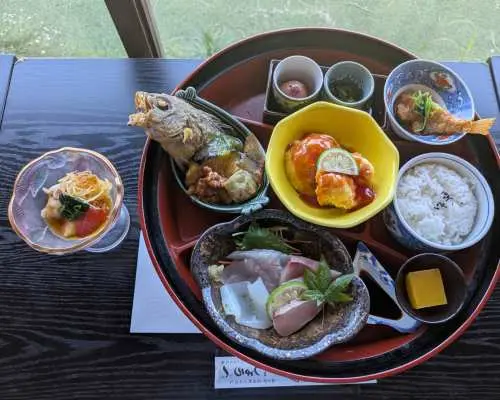
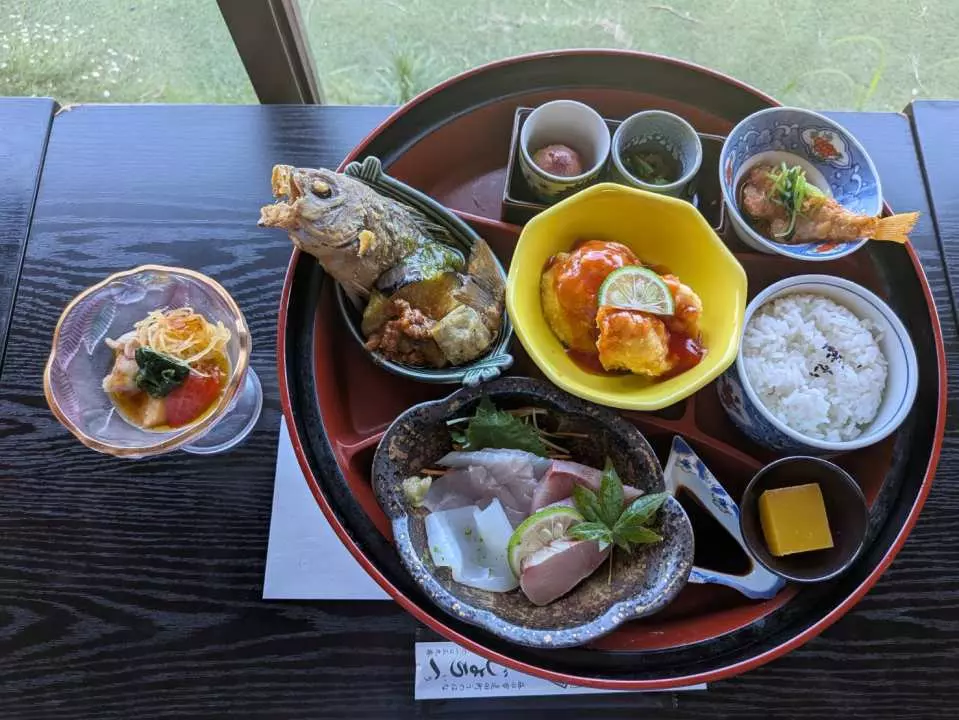
- Enjoy a traditional Japanese set meal at a restaurant renovated from an old Japanese house
Sightseeing Tours
| Tour Type | Shared tour |
| Transportation method | Transfer from meeting point |
| Departure Time | Early Departure (Before 8 am) |
| Minimum participant requirement | 10 travelers |
| Tour types | Guided tour |
| Meal arrangement | Lunch included |
| Family-friendly | Stroller-friendly, Free for children under 2 (no seat) |
| Sightseeing type | Natural sights, Museum tour, Temples & shrines |
| Transport | Charter car, Bus tour |
Product Info
The content of this product is provided by machine translation and may not reflect the actual information, please take this into consideration before booking.
- Attraction Introduction -
Grand Toit Museum of Art, Tateishimi, Shimane Prefecture
Located in Masuda City, Shimane Prefecture, the Shimane Prefectural Ishimi Museum of Art showcases works from diverse fields, including modern and contemporary Japanese crafts, design, fashion, and photography, under the theme of "the fusion of life and art." The museum alternates between permanent and special exhibitions, ensuring visitors experience a different artistic atmosphere each time they visit.
The museum's nickname is Grand Toit in French. The building is covered with more than 280,000 Ishizu tiles, showcasing a magnificent and locally distinctive appearance, hence the name "Grand Toit (Great Roof)". These red tiles are not only architectural elements, but also symbolize the continuation of traditional crafts in the Ishizu region.
Shimane Prefecture Tateishimi Museum of Art Special Exhibitions: Current Special Exhibitions
※July 5 - September 1, 2025: Solo Exhibition of Contemporary Japanese Art Master "Izumi Kato"
Izumi Kato is one of the most representative contemporary Japanese artists. Born in Shimane Prefecture, her works possess a strong sense of primitiveness, mystery, and vitality. She is adept at using various media, including canvas, oil paint, wood carving, stone, puppets, and even found-object collages. Her works often possess the quality of mystical religious totems or ancient ritual objects, imbued with a "soul" and demonstrating a high sensitivity to the "vitality of the materials themselves." Since the 2000s, Izumi Kato has exhibited at numerous important international venues, including the Venice Biennale, the Palais de Tokyo, the Mori Art Museum, and the Perrotin Gallery, making her one of the leading figures of Japanese contemporary art on the international stage.
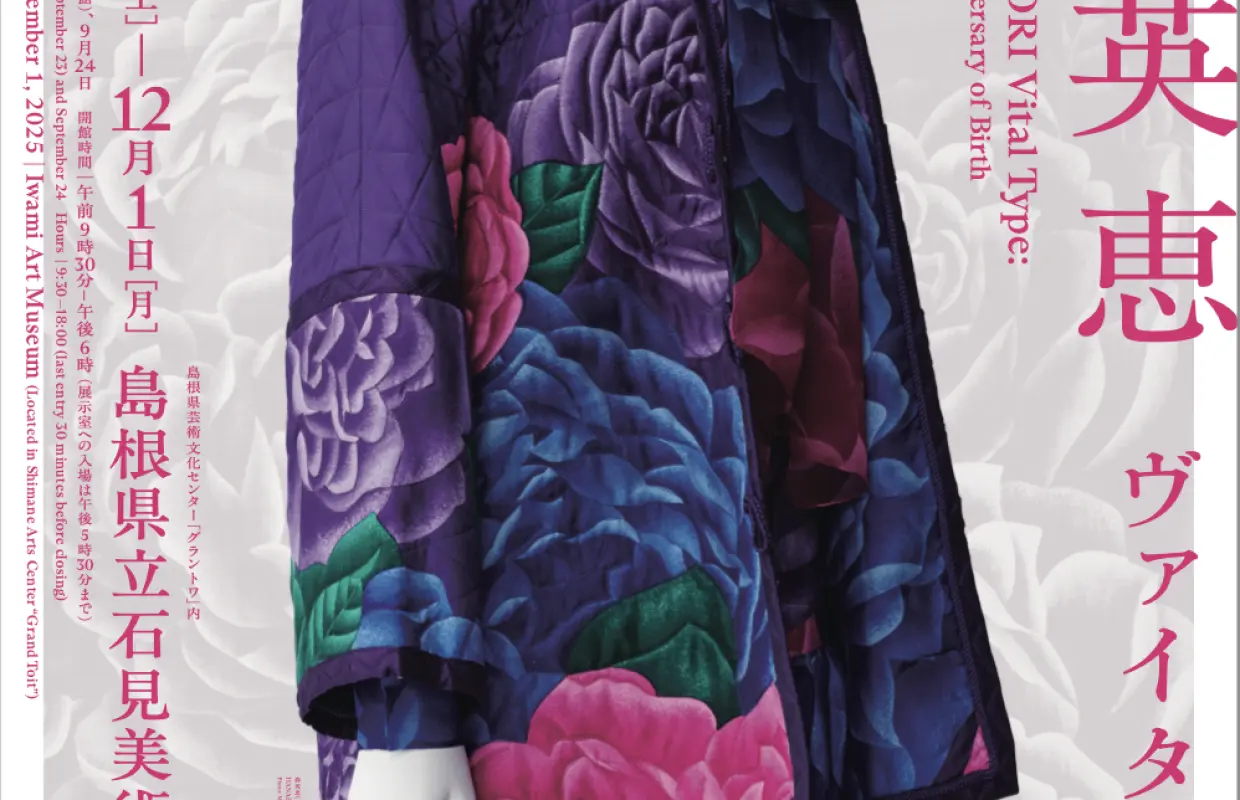
※A solo exhibition of Hanae Mori, a pioneer who rewrote the history of Japanese fashion, will be held from September 20 to December 1, 2025.
"Hane Mori" is the first Japanese designer to break into the Paris haute couture fashion circle. Born in Shimane Prefecture, she combines traditional Japanese patterns, colors and materials with Western tailoring techniques with her unique vision, creating a unique East-meets-West fashion language and becoming a pioneer in the Japanese fashion industry.
The most representative design element is the butterfly, symbolizing freedom, change, and feminine charm. Her works are elegant and fluid, often featuring soft lines and flowing textures, showcasing a poetic interpretation of "beauty."
By cleverly blending the tailoring logic of kimonos and Japanese motifs (such as butterflies, flowers, clouds, and water) with Western silhouettes, he pioneered a design language of "East-West fusion," influencing countless subsequent designers.
Beyond high fashion, "Hane Mori" has also ventured into uniform design (such as JAL uniforms for Japan Airlines and uniforms for the Japanese team at the Barcelona Olympics), stage costumes, and branded perfumes, establishing her status as a pioneer in the Japanese women's fashion industry and an international cultural ambassador.
Grand Toit - Located in Masuda City, Shimane Prefecture, the Grand Toit is themed "the combination of life and art" and exhibits works covering a wide range of fields including modern and contemporary Japanese crafts, design, fashion, photography, etc. The permanent exhibitions and special exhibitions are presented alternately, allowing visitors to experience a different artistic atmosphere every time they visit.


A solo exhibition of Japanese fashion history pioneer "Mori Hidee" will be held from September 20 to December 1, 2025


The museum’s nickname is Grand Toit in French. The museum is covered with more than 280,000 Ishishu tiles, giving it a magnificent and local look, hence the name “Grand Toit”. These red tiles are not only an architectural element, but also a symbol of the continuation of traditional craftsmanship in the Iwami region.


Traditional Japanese set meal at an old Japanese house - Enjoy a traditional Japanese set meal at a restaurant renovated from an old Japanese house

Taikodani Inari Shrine - Located in Tsuwano Town, Shimane Prefecture, Taikodani Inari Shrine is one of the most representative Inari shrines in the San'in region and a spiritual symbol of Tsuwano. Since its founding during the Edo period, it has been revered by local lords and the public alike, renowned for its promises of business prosperity, good fortune, and domestic safety. Unlike most other Inari shrines, the shrine's "Inari" (稲成) is written in a rare kanji style. "Sei" (成) means "achievement" and symbolizes the powerful energy of fulfillment and the realization of wishes. The shrine attracts numerous visitors seeking success in career, exams, and love.


The approach to the temple that stretches along the hillside is lined with hundreds of bright red torii gates, forming a spectacular torii tunnel. Passing through it is not only full of spiritual energy, but also a dreamlike scene that photography enthusiasts cannot miss.

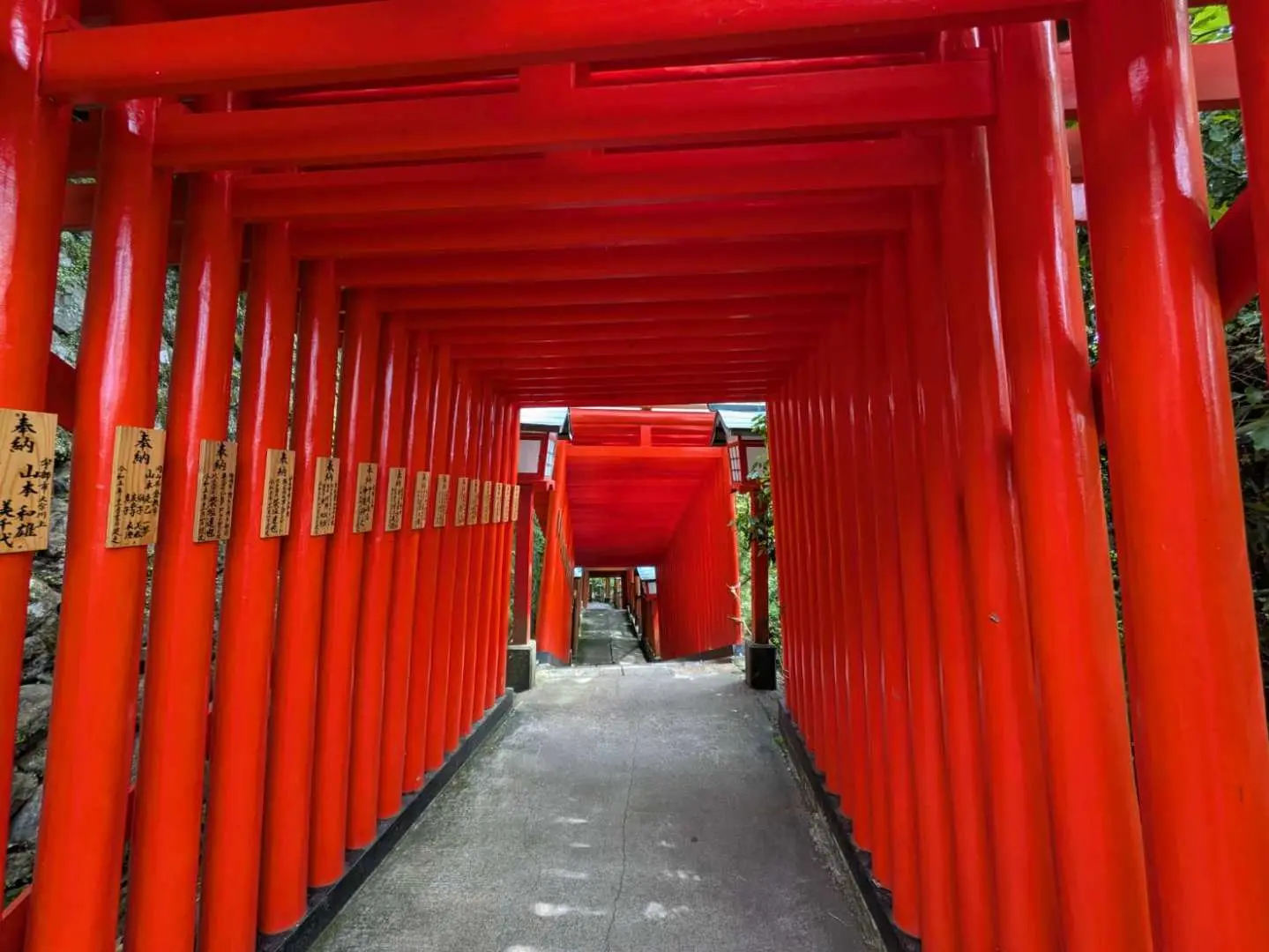
The shrine offers a variety of cute fortune sticks such as ema fortune sticks and fox fortune sticks. From the wish-fulfilling torii gates, ingenious amulets, to the anticipated fortune-writing experience, every step makes people feel the connection between culture and faith.


A walk through the Tsuwano Important Preservation Area of Traditional Buildings - Tsuwano Town, known as the "Little Kyoto of San'in", has well-preserved samurai residences, Shirakabeso earthen walls and historical streets. The core area is listed as a national important preservation area for traditional buildings, showcasing the historical streetscapes and living culture from the Edo period to the early Meiji period.


In the historical streets, you can see samurai residences with white earth walls and black wooden lattice windows, moats and waterways filled with carp, alleys and machiya buildings and shops in the style of Edo castle towns. There is no urban noise, only elegant streets, flowing streams and preserved historical memories.


Strolling through Tsuwano's important traditional architecture preservation area is like traveling back in time to the poetic space of the Edo period.


Purchase Notice
【Notes】
Group or individual package tours are subject to the Domestic Travel Standardized Contract issued by the Tourism Bureau of the Ministry of Transportation and Communications of the Republic of China. When you complete your reservation, it means that you agree and accept the provisions of the Foreign Travel Standardized Contract .
Reminders
A minimum of 10 traveler(s) are required for the tour to depart. If the number of participants does not reach the minimum requirement, the tour will be canceled. An email regarding tour cancellation will be sent 7 day(s) before the departure date
In the event of inclement weather such as typhoons or snowstorms, a decision on whether to cancel the tour will be made 1 day(s) before departure (local time 18:00). Notifications will then be sent via email
Please arrive at the designated location 10 minute(s) before the scheduled departure time, as the tour will depart on time
Please arrive at the meeting point in advance and wait. The bus will depart on time. No refunds or rescheduling will be given if you are late. Please be advised.
The above travel times are all estimated arrival times. Traffic conditions are beyond our control. Please avoid arranging activities on that night. We apologize for any delays.
Please note that the departure time and route of each sightseeing spot may be adjusted depending on the road conditions on the day.
Please be advised that no refund will be given for itinerary changes and attraction cancellations due to force majeure factors such as traffic and weather.
Please note that no refund will be given if the passenger abandons the trip due to personal reasons.
Please fasten your seat belts while the bus is in motion and do not move around. Sorry, you cannot get on or off the bus during the journey. Please be advised.
If the tourist attraction is closed (tickets required), refunds will be processed. Thank you for your understanding.
After the trip has started, if the trip is terminated due to force majeure such as weather conditions or natural disasters, the unfulfilled itinerary will be refunded according to the actual expenses incurred. However, additional expenses such as return transportation costs or local accommodation costs must be borne by the passenger.
Passengers under the age of 18 cannot participate alone and must be accompanied by a passenger over the age of 18.
The bus seats and restaurant seats used during the experience may be shared with other passengers in the same group, depending on the tour leader and facility arrangements on the day.
Due to limited space in the luggage storage box, if you wish to bring a suitcase on board, please inform us in the remarks column. Thank you for your cooperation.
The car type will be assigned based on the number of people who register on the day. If the number of people is less than 13, the small car will be dispatched without a tour leader. The driver and tour leader will provide full service. Only Chinese guides will be provided, but no language service for attraction introductions will be provided.
Children: Children under 2 years old can ride for free. One adult can only bring one child under 2 years old who does not occupy a seat or include a meal. No attraction tickets or meals will be provided. If you need to occupy a seat and include a meal, you will be charged a child fee. Please note.
Please note that the bus seats are subject to on-site allocation and cannot be specified. Please understand.
Please be careful about your own safety during free time. If you fail to heed the advice and an accident or loss occurs, you will be responsible for it yourself.
Meals cannot be customized. If you have vegetarians, please inform us in the remarks column when ordering.
Lunch will be served at a traditional restaurant. If the restaurant is full or temporarily closed, a partial refund will be made. Thank you for your understanding.
Cancellation Policy
- For cancellations made at least 41 day(s) prior to selected date, a cancellation fee of 5% will apply
- For cancellations made 31 to 40 days prior to selected date, a cancellation fee of 10% will apply
- For cancellations made 21 to 30 days prior to selected date, a cancellation fee of 20% will apply
- For cancellations made 2 to 20 days prior to selected date, a cancellation fee of 30% will apply
- For cancellations made 1 to 1 days prior to selected date, a cancellation fee of 50% will apply
- Cancellation is not allowed between 0–0 days from the selected date. Orders cannot be canceled or modified, and refunds will not be granted.
- Due to time zone differences, the confirmed cancellation date is based on the supplier’s local time. Please allow 2–5 business days to process your cancellation request, after which the cancellation fee will be charged according to the product’s cancellation policy. Once the cancellation is confirmed, you will receive your refund within 14 working days.
FAQ
Designed by renowned architect Hiroshi Naito, the Shimane Prefectural Iwami Art Museum uniquely incorporates local stones into its construction, harmoniously coexisting with the surrounding natural landscape. The complex is characterized by a sense of open space and abundant natural light, offering visitors an aesthetic experience where light interacts with the architectural structure while they admire the artworks.
The permanent exhibitions at the Shimane Prefectural Iwami Art Museum focus on works by artists from Shimane Prefecture or those with deep connections to the region, covering a broad spectrum from traditional crafts to modern art. Particularly noteworthy are its collections of local folk art unique to the Iwami region and contemporary photography, offering visitors a deep understanding of the region's cultural and artistic development.
Shimane Grand Toa is a multifaceted cultural facility with a diverse interior spatial configuration, primarily comprising the Shimane Prefectural Iwami Art Museum and the Shimane Art and Culture Center Grand Toa Main Hall. The museum section offers spacious exhibition areas, while the main hall features a professional performance venue capable of hosting various scales of artistic events. Additionally, the facility includes public areas such as a cafe and shop, providing visitors with places to rest and interact. The overall space planning effectively combines art appreciation with cultural exchange functions.
Tickets to the Shimane Prefectural Iwami Art Museum typically grant access to the permanent exhibition areas. If special exhibitions are being held concurrently, separate tickets may be required to enter those sections. It is recommended to check the current exhibition information before your visit to plan your itinerary and budget accordingly.
You can purchase tickets for the Shimane Prefectural Iwami Art Museum either directly at the on-site ticket office or by booking online through trusted travel booking platforms like KKday. Booking through KKday allows you to confirm ticket availability in advance, save time by skipping on-site queues, and enjoy a more convenient planning experience, ensuring smooth entry.
Taikodani Inari Shrine is famous for its unique 'Senbon Torii' (thousand torii gates), and walking through them is a classic part of the pilgrimage. At the shrine, you can pray to Inari Okami for success in business, smooth academic performance, and matchmaking. During your visit, it is customary to wash your hands and mouth to purify yourself before entering the main hall. You can also purchase an ema (votive tablet) to write down your wishes or obtain an omamori (amulet) as a token of your prayers.
The Important Preservation Districts for Groups of Traditional Buildings in Tsuwano is known as the 'Little Kyoto of San-in' and offers a chance to experience a rich Edo period atmosphere. Highlights include well-preserved samurai residences, historic streetscapes, and koi carp swimming in the canals. You can visit the Tottori Prefectural Museum of History and Folklore to learn about samurai culture or explore traditional shops to experience local crafts, deeply immersing yourself in Tsuwano's unique historical and cultural charm.
The unique aspect of the Japanese traditional house renovated restaurant visited during this San-in one-day tour is its revitalization of a classic Japanese architectural style, offering a dining environment filled with nostalgia and historical ambiance. Here, you can experience authentic Japanese atmosphere and savor traditional Japanese set meals made with fresh local ingredients, appreciating the original flavors of the ingredients and the craftsmanship of the chefs. This makes dining a memorable cultural experience during your trip.
Get Help


