


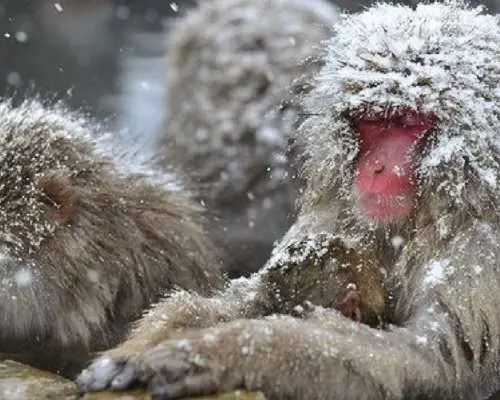
【Nagano Day Tour】Snow Monkey Park Day Tour (Departing from Nagano)
- Join this Nagano Snow Monkey bus day tour. Travel in comfort from Nagano Station to visit Zenko-ji Temple, one of the most famous tourist spots in Nagano Prefecture, and head to the Jigokudani Monkey Park to see the popular snow monkeys soaking in hot springs. Enjoy a warm and delicious Japanese sukiyaki lunch.
Product Info
Important Info
Reminders
A minimum of 15 traveler(s) are required for the tour to depart. If the number of participants does not reach the minimum requirement, the tour will be canceled. An email regarding tour cancellation will be sent 4 day(s) before the departure date
Travelers with the following conditions or other health issues that could be worsened by excessive stimulation should not participate in this activity: Pregnant women, Asthma, Heart disease, Epilepsy
Please wear your seat belt on the bus.
Please arrive at the meeting point 10 minutes in advance. The bus will leave on time and no waiting will be allowed.
Please note that the scheduled return destination cannot be changed.
This trip will be accompanied by a Japanese-speaking tour leader. The translator service will be used for auxiliary communication.
The weather is cold, and the itinerary needs to walk about 40 minutes on the snow-covered road to Jigokudani Hot Spring. It is recommended to participate in non-slip shoes and warm clothes for activities.
Please abide by the gathering time provided for each itinerary. If you are late, you will not be able to stop or continue to participate in the itinerary, and you will not be able to refund. Please note.
Do not feed food to snow monkeys.
The contents of the lunch may be changed due to factors such as the ingredients of the day or the season, please be informed.
Please understand that the itinerary may be changed or shortened due to traffic conditions or other reasons beyond human control.
Cancellation Policy
- Cancellations 11 day(s) (inclusive) before the selected date are allowed. Unused orders can be canceled for free
- For cancellations made 8 to 10 days prior to selected date, a cancellation fee of 20% will apply
- For cancellations made 2 to 7 days prior to selected date, a cancellation fee of 30% will apply
- For cancellations made 1 to 1 days prior to selected date, a cancellation fee of 40% will apply
- Cancellation is not allowed between 0–0 days from the selected date. Orders cannot be canceled or modified, and refunds will not be granted.
- Due to time zone differences, the confirmed cancellation date is based on the supplier’s local time. Please allow 2–5 business days to process your cancellation request, after which the cancellation fee will be charged according to the product’s cancellation policy. Once your refund request is confirmed, KKday will initiate the refund to your original payment method within 15 days. The actual refund timing depends on your card-issuing bank’s policy.


