


William. Tickets for Turner: Echoes of the Sublime
- The British Tate Modern's collection of masterpieces, 2025 marks the 250th anniversary of William Turner's birth
- The world's largest exhibition of William Turner's original paintings debuts in Taiwan
- Following Monaco and Shanghai, the third global stop will be held from June 27 to October 12 this year at the Chiang Kai-shek Memorial Hall in Taipei.
- Including 80 authentic works of William Turner, including sketches, oil paintings, watercolors, etc., fully reflecting his brilliant creative process throughout his life
- KKday has added another bonus, with an exclusive limited time gift of $100 Yoxi ride bonus!
Attraction Tickets
| Ticket type | E-ticket (direct entry) |
| Exhibit type | Art exhibits |
Product Info
The content of this product is provided by machine translation and may not reflect the actual information, please take this into consideration before booking.
- Exhibition Information -
- Exhibition location: Chiang Kai-shek Memorial Hall 1 and 2
- Exhibition address: No. 21, Zhongshan South Road, Zhongzheng District, Taipei City
- Exhibition Date: 2025/6/27 (Friday) - 2025/10/12 (Sunday)
- Opening hours: Monday to Sunday 10:00 - 18:00 (ticket sales and admission stop at 17:00)
- Organizer: United Digital Creative
- Co-organizer: National Chiang Kai-shek Memorial Hall Management Office
- Media Co-organizer: Collection of Art Families
- Exhibition Introduction -
Joseph Mallord William Turner (1775-1851), Britain's greatest painter, is known as the "Painter of Light". He is good at capturing the dynamics and power of nature through his outstanding control of color and light, and redefines what "landscape painting" means.
2025 is the year when William... On the 250th anniversary of Turner's birth, the Tate Gallery in the UK launched a series of commemorative activities "Turner 250". The highlight of the event is also the largest global tour of William Turner in history: "William Turner Special Exhibition - Echoes of the Sublime". After Monaco and Shanghai, the third stop in the world will be moved to Taiwan in June this year, including 80 works of William, including sketches, oil paintings, watercolors, etc. Turner's authentic paintings fully reflect his brilliant creative process throughout his life, and can be regarded as the most important art feast in Taiwan this year!
Tate Gallery, UK, an art institution that has broken the traditional museum mentality from private collection to national art gallery. Founded in 1897 by Sir Henry Tate, a sugar merchant from Liverpool, Tate Gallery in the UK developed in the direction of a national art gallery in its early years. Now it has four art galleries in the UK, including the oldest Tate Britain, Tate Liverpool, a major art center in the north of the UK, Tate St Ives, which is deeply involved in local cultural development, and the most popular Tate Modern. As the most representative and most visited gallery in the UK, the Tate Gallery has a collection of precious masterpieces from 500 years of British and Western art history, especially William Shakespeare's. The hundreds of oil paintings and tens of thousands of watercolors and sketches donated by Turner before his death are the most eye-catching and are the must-sees for people around the world. In recent years, Tate Modern has been innovating with thematic curation that breaks time boundaries, making it one of the most forward-looking art museums in the world.
The largest William in the world's history. Turner's original paintings exhibition debuts at William. Turner established a fund during his lifetime to help poor artists, which also became the most important reason why the Tate Gallery established the Turner Prize, the most famous art award in the UK. After his death, some of his paintings were bequeathed to the country, and most of his works are kept in the Tate Gallery. The Tate Gallery, which has the largest collection of Turner's works, will bring 80 authentic paintings by Turner this time, divided into 7 exhibition areas, including British landscapes, the Alps, Venice, storms at sea, between sea and sky, historical stories, and sublime aesthetics, covering his entire creative career. In order to highlight the epoch-making nature of Turner's works, Tate Gallery has selected nearly 30 works by contemporary artists to be exhibited, creating the unprecedented, largest and most comprehensive William. Turner Exhibition.
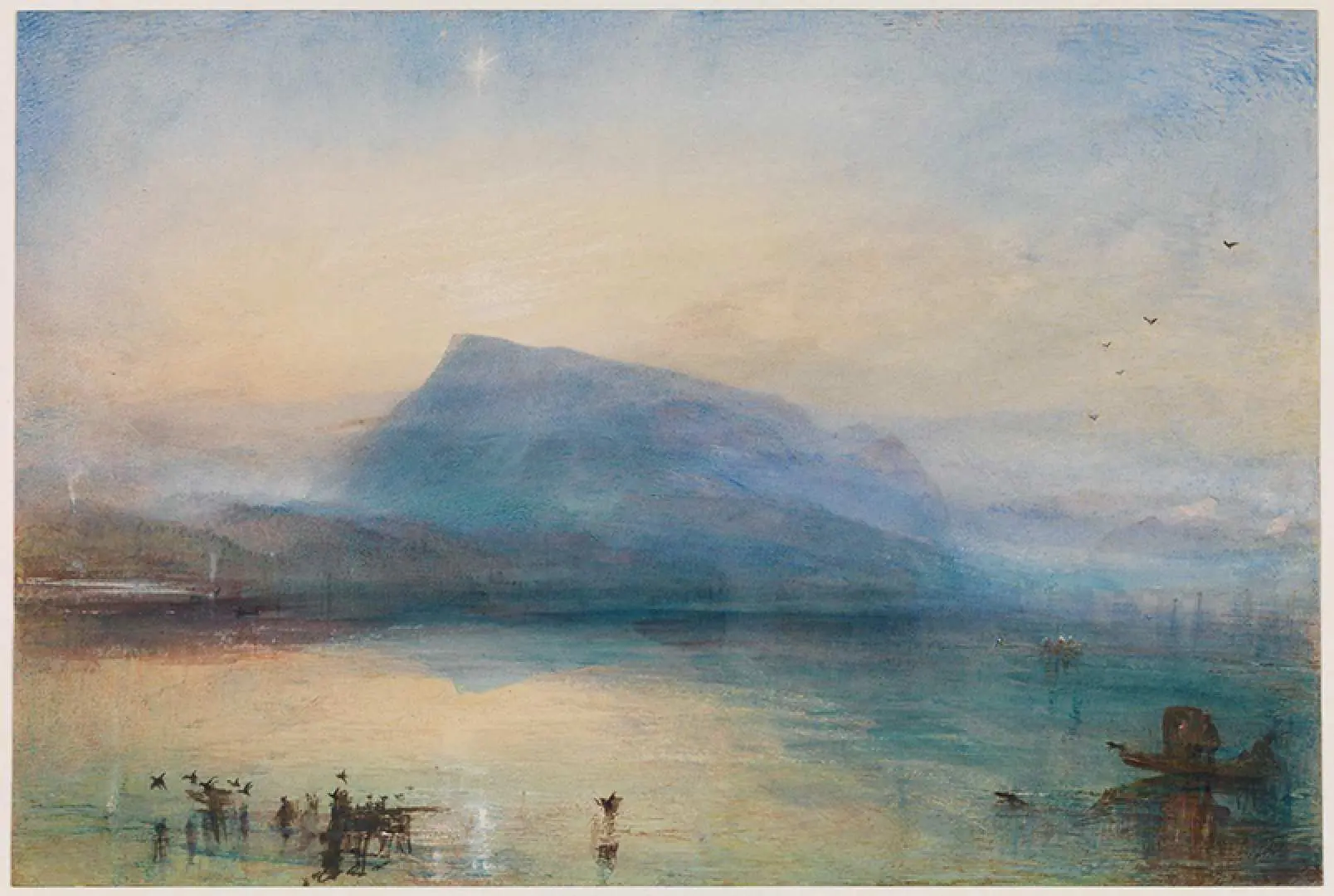
The world tour of the most comprehensive Turner exhibition in history, the first time Taiwan has seen curator Elizabeth. Elizabeth Brooke mentioned that the Tate Gallery has never loaned such a large number of Turner's works at one time, including more than 40 oil paintings. This will be an unprecedented and largest global tour, and the exhibition will also be held through cooperation with John. Yakonfa, Olafur. Eliasson, Richard. Long, Cornelia. Parker, Katie. Patterson, Mark. Roscoe, Jessica. The dialogue between the works of nearly 30 top artists including Worboys shows William. Turner's decisive influence on painting and on the representation of the sublime in Western art. She also said: "2025 is the 250th anniversary of Turner's birth, which makes the exhibition in Taiwan this summer even more meaningful. One of the most anticipated exhibits, "Blue Rigi, Sunrise", will be returned to the Tate Gallery for 10 years after the tour. We sincerely invite everyone to seize this rare opportunity to witness the charm of William Turner's art with their own eyes."
Joseph, participating artist of "William Turner: Echoes of the Sublime". Mallord. William. Joseph Mallord William Turner
John. John Akomfrah
Edward. Edward Burtynsky
Peter. Peter Doig
Olaf. Olafur Eliasson
Howard. Howard Hodgkin
Ronnie. Roni Horn
Peter. Peter Lanyon
Richard. Richard Long
Lisa. Lisa Milroy
Cornelia. Cornelia Parker
Katie. Katie Paterson
mark. Mark Rothko
Wolfgang. Wolfgang Tillmans
Jessica. Jessica Warboys
- Exhibition Highlights -
[Beginning with the British Landscape] Turner's early explorations of the British landscape made him a passionate observer of the sublime power of nature, and his detailed depictions of these natural scenes made him famous. To truly capture the atmosphere of his environment, Turner often immersed himself in nature for research, incorporating on-site sketches, memory, and imagination, and turning these elements into stunning paintings. Landscape Composition with a Ruined Castle on a Cliff by Joseph Mallord William Turner, 1792–3. (Photo source: TATE)
![[Beginning with the British Landscape] Turner's early explorations of the British landscape made him a passionate observer of the sublime power of nature, and his detailed depictions of these natural scenes made him famous. To truly capture the atmosphere of his environment, Turner often immersed himself in nature for research, incorporating on-site sketches, memory, and imagination, and turning these elements into stunning paintings. Landscape Composition with a Ruined Castle on a Cliff by Joseph Mallord William Turner, 1792–3. (Photo source: TATE)](https://image.kkday.com/v2/image/get/c_fit%2Cq_55%2Ct_webp%2Cw_960/s1.kkday.com/product_284559/20250423025145_C8N35/jpg)

[Walking into the Mountains] When Turner first traveled to Europe in 1802, he was immediately attracted by the magnificent scenery of the Alps. He began to travel through the mountains on expeditions, using sketches and watercolors to directly record his experiences. Turner was also fascinated by the unique light and atmosphere of mountains. He observed the reflections of colors in snow, water and sky, completed thousands of basic elemental studies, and used unexpected and bold colors to create striking effects. His mastery of light and color inspired Monet and the French Impressionists, and his innovative techniques influenced generations of artists. Brunnen, from the Lake of Lucerne: Sample Study by Joseph Mallord William Turner, 1843-5. (Photo source: TATE)
![[Walking into the Mountains] When Turner first traveled to Europe in 1802, he was immediately attracted by the magnificent scenery of the Alps. He began to travel through the mountains on expeditions, using sketches and watercolors to directly record his experiences. Turner was also fascinated by the unique light and atmosphere of mountains. He observed the reflections of colors in snow, water and sky, completed thousands of basic elemental studies, and used unexpected and bold colors to create striking effects. His mastery of light and color inspired Monet and the French Impressionists, and his innovative techniques influenced generations of artists. Brunnen, from the Lake of Lucerne: Sample Study by Joseph Mallord William Turner, 1843-5. (Photo source: TATE)](https://image.kkday.com/v2/image/get/c_fit%2Cq_55%2Ct_webp%2Cw_960/s1.kkday.com/product_284559/20250423025138_qtZ0r/jpg)

[Historical Story] In the 18th century, when Turner lived, he believed that paintings that vividly presented mythological or biblical stories were the most noble form of fine art, and his painting style mostly tended towards the poetic and picturesque classical style. Turner, however, broke new ground, using classical scenes and innovative painting techniques to produce paintings that were less idealistic, more emotionally affecting, and in line with emerging tastes, and that not only won the admiration of his contemporaries, but also amazed viewers for centuries to come. Story of Apollo and Daphne, Joseph Mallord William Turner, 1837. (Photo source: TATE)
![[Historical Story] In the 18th century, when Turner lived, he believed that paintings that vividly presented mythological or biblical stories were the most noble form of fine art, and his painting style mostly tended towards the poetic and picturesque classical style. Turner, however, broke new ground, using classical scenes and innovative painting techniques to produce paintings that were less idealistic, more emotionally affecting, and in line with emerging tastes, and that not only won the admiration of his contemporaries, but also amazed viewers for centuries to come. Story of Apollo and Daphne, Joseph Mallord William Turner, 1837. (Photo source: TATE)](https://image.kkday.com/v2/image/get/c_fit%2Cq_55%2Ct_webp%2Cw_960/s1.kkday.com/product_284559/20250423025142_YCspH/jpg)

[Venice: The Magnificent City] Among the many artists who have created works with Venice as the theme, Turner is one of the few who can find emotional resonance with the unique temperament of this magnificent water city. His artistic career was remarkable for its achievements and innovations, and his paintings of Venice were immediately recognized as some of his most magical and brilliant works when they were first seen by viewers. Turner’s perspective remains relevant today, expressing both the beauty and sadness of Venice, and the terrifying threat of being swallowed by the sea. Venice - Maria della Salute Joseph Mallord William Turner, 1844. (Photo source: TATE)
![[Venice: The Magnificent City] Among the many artists who have created works with Venice as the theme, Turner is one of the few who can find emotional resonance with the unique temperament of this magnificent water city. His artistic career was remarkable for its achievements and innovations, and his paintings of Venice were immediately recognized as some of his most magical and brilliant works when they were first seen by viewers. Turner’s perspective remains relevant today, expressing both the beauty and sadness of Venice, and the terrifying threat of being swallowed by the sea. Venice - Maria della Salute Joseph Mallord William Turner, 1844. (Photo source: TATE)](https://image.kkday.com/v2/image/get/c_fit%2Cq_55%2Ct_webp%2Cw_960/s1.kkday.com/product_284559/20250423025143_07AsN/jpg)

[Storm at Sea] Seascapes account for more than half of Turner's works, including paintings of whaling ships, fishing boats, shipwrecks and wars. These are his most explosive and evocative works. In his paintings, he captured the dangers of the ocean, as well as the insignificance and powerlessness of humans in the face of nature. ‘Hurrah! for the Whaler Erebus! Another Fish!’ Joseph Mallord William Turner, 1846. (Photo source: TATE)
![[Storm at Sea] Seascapes account for more than half of Turner's works, including paintings of whaling ships, fishing boats, shipwrecks and wars. These are his most explosive and evocative works. In his paintings, he captured the dangers of the ocean, as well as the insignificance and powerlessness of humans in the face of nature. ‘Hurrah! for the Whaler Erebus! Another Fish!’ Joseph Mallord William Turner, 1846. (Photo source: TATE)](https://image.kkday.com/v2/image/get/c_fit%2Cq_55%2Ct_webp%2Cw_960/s1.kkday.com/product_284559/20250423025140_Ju38a/jpg)

[Between Sea and Sky] Turner not only reflects the great power of nature in his paintings, but also emphasizes its poetic and hypnotic qualities. In his depictions of the sea and sky, he made hundreds of close studies of details such as the ethereal clouds, energetic waves, and surging surf. If these details are viewed together, you can see Turner's deepest awe for the sea and sky. The Blue Rigi, Sunrise by Joseph Mallord William Turner, 1842. (Photo source: TATE)
![[Between Sea and Sky] Turner not only reflects the great power of nature in his paintings, but also emphasizes its poetic and hypnotic qualities. In his depictions of the sea and sky, he made hundreds of close studies of details such as the ethereal clouds, energetic waves, and surging surf. If these details are viewed together, you can see Turner's deepest awe for the sea and sky. The Blue Rigi, Sunrise by Joseph Mallord William Turner, 1842. (Photo source: TATE)](https://image.kkday.com/v2/image/get/c_fit%2Cq_55%2Ct_webp%2Cw_960/s1.kkday.com/product_284559/20250423025143_y52zi/jpg)
[The Sublime Aesthetics of Nature] In his later years, Turner created many paintings that purely depict light and atmospheric elements. These abstract works contain very few figurative or topographical elements and were even considered "unfinished" works at the time. However, judging by the number of such works preserved in Turner's studio, he had completed them to his satisfaction. These works, which reflect Turner's late style, earned him the reputation as a prophet of modern painting. Three Seascapes, Joseph Mallord William Turner, 1827. (Photo source: TATE)
![[The Sublime Aesthetics of Nature] In his later years, Turner created many paintings that purely depict light and atmospheric elements. These abstract works contain very few figurative or topographical elements and were even considered "unfinished" works at the time. However, judging by the number of such works preserved in Turner's studio, he had completed them to his satisfaction. These works, which reflect Turner's late style, earned him the reputation as a prophet of modern painting. Three Seascapes, Joseph Mallord William Turner, 1827. (Photo source: TATE)](https://image.kkday.com/v2/image/get/c_fit%2Cq_55%2Ct_webp%2Cw_960/s1.kkday.com/product_284559/20250423025136_YSO95/jpg)

Purchase Notice
- Yoxi User Manual -
- Promotion rules:
1. The coupon can only be used when you use the Yoxi APP to dispatch a taxi and pay with a credit card
2. You can only use one coupon at a time and cannot use it with other coupons
3. The complete usage regulations are subject to the APP display. For more riding ranges, please refer to the yoxi official website - Discount redemption method:
1. Open the Yoxi APP and click [☰] in the upper left corner to enter the [Coupon] page
2. Enter the [Exhibition-specific discount code] in the field to complete the discount redemption - Yoxi APP download site
Reminders
Single tickets are for one person only and cannot be used repeatedly. Double tickets require two people to enter at the same time, and triple tickets require three people to enter at the same time and cannot be used separately. The Souvenir Package for Two requires two people to enter at the same time and cannot be used separately. Please redeem the Souvenir Package at the entrance with the QR code upon entry. This package is for commemorative purposes only and cannot be used for admission.
Please go to the exhibition site during the exhibition period (2025/6/27 - 2025/10/12) to redeem the guidebook package and catalogue package for the merchandise and enter the exhibition after verification. (No mailing service available)
This ticket is a valuable ticket. Please keep it properly. If it is lost, damaged, punctured, altered, stained, photocopied or torn and cannot be identified, it will be deemed invalid and will not be returned or reissued.
This ticket is valid for the duration of this exhibition (until 12/10/2025) and will be deemed invalid after the expiration date. Please contact KKday before 2025/10/12 for ticket refund or exchange. Late requests will not be accepted. .
Only tickets sold at the on-site ticket booths will be accepted for refund. Complete, unused tickets, invoices, credit card receipts, etc. must be submitted for refund.
Please follow the visiting route, exhibition rules and instructions of on-site staff. If there are large crowds, please queue up in order.
Children under 3 years old can enter for free and must be accompanied by an adult with a ticket. (You need to show relevant ID. If you don’t bring ID, your height will be judged as 90 cm or above. Your age will be calculated based on your actual age on the day of entry.)
Those who are eligible for free tickets, please show your ID for verification before entering. If you are not eligible, please purchase tickets according to your identity. Those who are eligible for preferential status (discount tickets, charity tickets) cannot request a partial refund or make up for the ticket difference after entering with the ticket.
Children under the age of 12 are not allowed to enter alone and must be accompanied by an adult with a ticket.
To enable service staff to clearly identify the disabled, the necessary companion of the disabled person should enter closely following the disabled person.
For package purchases, please note that the contents of the package must be intact and unused before a refund can be made. Please refer to the refund regulations of each ticket sales channel for processing.
If there are any changes to the exhibition business hours and regulations, please refer to the on-site or official fan page announcement. If there are any matters not covered above, the organizer reserves the right to interpret the event.
How to Redeem Your Voucher
How to Use Your Voucher
- Please present your QR code on-site
Voucher Redemption Period
- Valid for redemption within the specified period: 2025-06-27 ~ 2025-10-12; Invalid after expiration
Experience Location
Location Name: Chiang Kai-shek Memorial Hall 1 and 2
Address: No. 21, Zhongshan South Road, Zhongzheng District, Taipei CityMonday 10:00–18:00 (Last Entry Time: 17:00)
Tuesday 10:00–18:00 (Last Entry Time: 17:00)
Wednesday 10:00–18:00 (Last Entry Time: 17:00)
Thursday 10:00–18:00 (Last Entry Time: 17:00)
Friday 10:00–18:00 (Last Entry Time: 17:00)
Saturday 10:00–18:00 (Last Entry Time: 17:00)
Sunday 10:00–18:00 (Last Entry Time: 17:00)
Cancellation Policy
- Free cancellation is available for unused vouchers until 2025-10-12 (inclusive)
- Due to time zone differences, the confirmed cancellation date is based on the supplier’s local time. Please allow 2–5 business days to process your cancellation request, after which the cancellation fee will be charged according to the product’s cancellation policy. Once the cancellation is confirmed, you will receive your refund within 14 working days.
Get Help


