



Step Back in Time: Exploring Early Melbourne | Victoria
On this historical walking tour in Melbourne, take a stroll with a local guide and see the oldest buildings in the city, dating back nearly 200 years!
- Visit some of the city's most historic churches, pubs, homes and businesses
- Learn about their architecture and their stories
- Get plenty of time to take beautiful photos
Product Info
— What You Can Expect —
If a Melbourne history walking tour may not seem up your alley, think again! This is an opportunity to step back in time and discover how the city’s past and present merge. We’ll visit 9 buildings constructed before the population explosion of the Gold Rush of the 1850s, offering fascinating insight into the places that made the city.
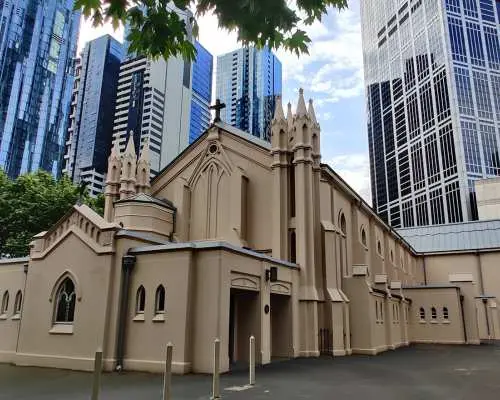
Commencing outside St James’ Old Cathedral, the oldest church in the city, our historical walking tour in Melbourne concludes at the Mitre Tavern, where you can rest your feet and buy a drink in the oldest building in Melbourne!
This walking tour covers around 4 kilometres, with plenty of stops for talking and taking photos. We recommend you wear weather-appropriate clothing with comfortable walking shoes and carry a bottle of water.
See the oldest church in the city — St James’ Old Cathedral


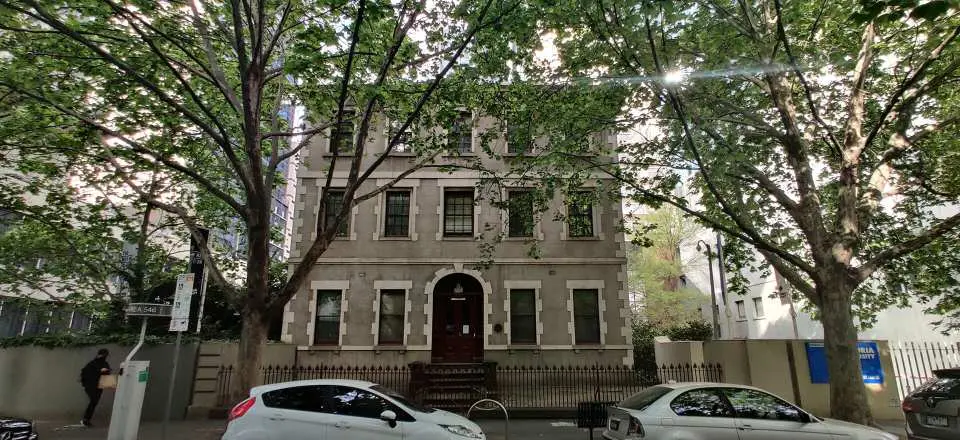
Snap a photo at the John Smith House, a rare Colonial Georgian style architectural masterpiece

Purchase Notice
- Please make sure to wear weather-appropriate, comfortable clothing and footwear. It is also a good idea to bring an umbrella and/or sunscreen
- Guests must be at least 15 years old to join
Reminders
Please arrive at the designated location 10 minute(s) before the scheduled departure time, as the tour will depart on time
Please refer to the final meeting time and location stated on your voucher
Cancellation Policy
- Cancellations 6 day(s) (inclusive) before the selected date are allowed. Unused orders can be canceled for free
- For cancellations made 4 to 5 days prior to selected date, a cancellation fee of 25% will apply
- Cancellation is not allowed between 0–3 days from the selected date. Orders cannot be canceled or modified, and refunds will not be granted.
- Due to time zone differences, the confirmed cancellation date is based on the supplier’s local time. Please allow 2–5 business days to process your cancellation request, after which the cancellation fee will be charged according to the product’s cancellation policy. Once the cancellation is confirmed, you will receive your refund within 14 working days.
FAQ
Early names for Melbourne included Bearbrass, Bareheep, and Batmania. These names often reflected the early settlements or prominent figures involved in its establishment. The historical walking tour delves into these early periods, explaining the significance behind each name and showcasing sites connected to these formative years of Melbourne's development. It provides context on why these temporary names were adopted before the official naming of Melbourne, offering a deeper understanding of the city's origins.
Melbourne was first established along the banks of the Yarra River, particularly around the area known today as Williamstown and the confluence of the Yarra and Maribyrnong Rivers. Key historical sites on the walking tour related to its founding include locations of early settlements, such as where John Batman made his controversial "treaty" with Indigenous Australians and where early European settlers first disembarked. The tour also visits some of Melbourne's oldest surviving buildings, providing tangible links to its initial establishment and growth.
Daily life in Melbourne during the 1800s was characterized by rapid growth, the Victorian gold rush, and significant social and architectural development. It was a bustling colonial city with a mix of early settlers, immigrants, and Indigenous populations. The historical walking tour illustrates this era by showcasing preserved 19th-century architecture, including early churches, pubs, homes, and businesses. Guides share stories of the people who lived and worked in these buildings, detailing their struggles, triumphs, and the everyday realities that shaped Melbourne into the city it is today.
The 'Step Back in Time: Exploring Early Melbourne' walking tour visits a diverse range of historical buildings and sites, many dating back nearly 200 years. These include some of the city's oldest churches, which played central roles in early community life, traditional pubs that served as social hubs, and significant early homes and businesses. The tour focuses on locations that offer rich architectural insights and compelling stories from Melbourne's formative years, allowing participants to experience the city's past firsthand.
During the walking tour, a knowledgeable local guide will share fascinating insights into Melbourne's rich history, from its early colonial days to its development as a major global city. They will explain the architectural styles of the oldest buildings, detailing their construction and original purposes. The guide also brings to life the stories of the people who shaped these places, including prominent figures and ordinary citizens, providing a vivid narrative of Melbourne's social, economic, and cultural evolution through its built environment.
Melbourne city center is well-serviced by an extensive public transport network, primarily trams, which are particularly convenient within the Free Tram Zone. Buses and trains also offer comprehensive coverage. For shorter distances, walking is an excellent option as many attractions are centrally located. Taxis and ride-sharing services are also readily available for more direct travel. Planning your route using a public transport app can help you choose the most efficient option.
Yes, a Myki card is generally required for using public transport in Melbourne, including trams, trains, and buses outside the Free Tram Zone. It is a reusable smartcard that you load with money (Myki Money) or a pass (Myki Pass). To use it, you simply touch on at a Myki reader when starting your journey and touch off when finishing, except for trams within the Free Tram Zone where touching off is not required. Myki cards can be purchased and topped up at train stations, convenience stores, and Myki machines.
Yes, ride-sharing services such as Uber are widely available and commonly used for getting around Melbourne, offering a convenient alternative to public transport or traditional taxis. Users can easily book a ride through their smartphone app, track the vehicle's arrival, and make payments digitally. This provides a flexible transportation option, especially for direct routes, late-night travel, or when carrying luggage, reaching various destinations across the city and surrounding areas.
Get Help


