


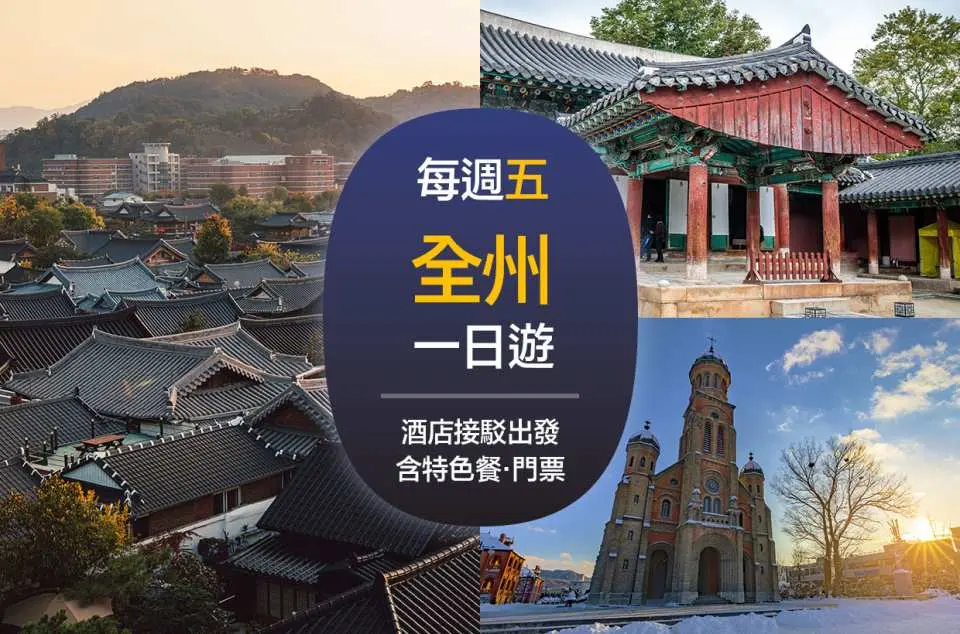
[Every Friday, Departing Seoul | 1-day Tour] Jeonju Hanok Village & Jeondong Cathedral & Gyeonggijeon + Local Specialty (Jeonju Mulgalbi)
- Check out our Jeonju 1-day tour product that departs from Seoul every Friday!
- You can comfortably tour the area after being picked up from the lobby of your hotel.
- Experience the charm of Jeonju, including Jeonju Hanok Village, Gyeonggijeon, and Jeondong Cathedral, which are famous tourist destinations in Jeonju! ✨
Package Options


Product Info
- Departing every Friday! Jeonju 1-Day Tour: Experience Korea's Largest Hanok Village!
- Pick up at your hotel lobby and enjoy a comfortable and safe 1-day tour. (Limited to Myeongdong/Dongdae/Hongdae in Seoul)
- Admission and special meal 'Jeonju Mulgalbi' are included. 😋


Purchase Notice
- The commentary for this tour is in Chinese.
- When making a reservation, please be sure to enter the correct messenger ID (Whatsapp/Line/Wechat). If you do not enter it or do not respond, etc. and cannot be contacted before departure, no refund will be made.
- Vehicle boarding location: Hotel lobby in Seoul (limited to Myeongdong/Dongdaemun/Hongdae area)
- Children under 36 months can participate in the tour for free. However, some experiences or attractions may be restricted and they cannot use the seats in the vehicle.
Reminders
A minimum of 5 traveler(s) are required for the tour to depart. If the number of participants does not reach the minimum requirement, the tour will be canceled. An email regarding tour cancellation will be sent 1 day(s) before the departure date
Please arrive at the designated location 10 minute(s) before the scheduled departure time, as the tour will depart on time
The commentary for this tour is in Chinese.
When making a reservation, please make sure to enter the correct messenger ID (Whatsapp/Line/Wechat). If you do not enter it or do not respond, etc. and cannot be contacted before departure, no refund will be made.
Vehicle boarding location: Hotel lobby in Seoul (limited to Myeongdong/Dongdaemun/Hongdae area)
Children under 36 months can participate in the tour for free. However, some experiences or attractions may be restricted and they cannot use the seats in the vehicle.
⚠️ All of our travel itineraries do not include personal travel insurance. Outdoor activities have certain risks and dangers. Guests should assess their own health and abilities. The company is not responsible for any physical damage or harm caused by accidents or unforeseen factors.
FAQ
1. How long is typically recommended to spend exploring Jeonju Hanok Village?
To fully appreciate Jeonju Hanok Village, a visit of at least 3 to 4 hours is recommended for a leisurely stroll through its traditional streets and main attractions. If you wish to engage in activities like hanbok rental, craft workshops, or enjoy extended cafe breaks and a meal, a full day allows for a more immersive and unhurried experience.
2. What unique cultural experiences can visitors enjoy at Jeonju Hanok Village?
Visitors to Jeonju Hanok Village can immerse themselves in various traditional Korean cultural experiences. Popular activities include renting hanbok (traditional Korean attire) and strolling through the village, participating in traditional craft workshops like fan making or Korean paper (hanji) art, and experiencing traditional tea ceremonies. The village also offers opportunities to taste authentic Jeonju street food and explore its charming alleyways.
3. What makes Jeondong Cathedral and Gyeonggijeon significant historical sites to visit in Jeonju?
Jeondong Cathedral is significant for its beautiful Romanesque architecture and its historical role as the site where Catholic martyrs were executed. Gyeonggijeon, on the other hand, is an important historical landmark as it enshrines the portrait of Yi Seong-gye, the founder of the Joseon Dynasty. Both sites offer a glimpse into Korea's past, from religious history to royal heritage, and are popular filming locations, adding to their appeal.
4. What local specialty food is a must-try when visiting Jeonju Hanok Village?
When visiting Jeonju Hanok Village, a quintessential local specialty to try is Jeonju Bibimbap, renowned for its rich flavors and fresh ingredients. Another highly recommended dish is Jeonju Mulgalbi, a savory pork rib stew unique to the region. Visitors can also explore various street foods like different types of skewers, handmade dumplings, and traditional sweets, offering a comprehensive culinary experience.
5. What is the most convenient transportation option for a day trip to Jeonju Hanok Village from Seoul?
Booking a guided day tour directly from Seoul offers the most convenient transportation option for visiting Jeonju Hanok Village, Jeondong Cathedral, and Gyeonggijeon. These tours typically include comfortable round-trip transportation with hotel pick-up from Seoul, allowing you to relax and enjoy the journey without worrying about transfers or navigating unfamiliar routes. This comprehensive approach ensures a seamless and stress-free visit to the region.
6. Is Jeonju Hanok Village considered a walkable destination for exploring its traditional streets?
Yes, Jeonju Hanok Village is highly regarded as a very walkable destination. Its traditional streets are well-maintained and relatively compact, making it easy and enjoyable to explore on foot. Most of the main attractions, shops, cafes, and cultural experience centers are within comfortable walking distance of each other, allowing visitors to leisurely wander and soak in the historical atmosphere.
7. How can one easily move between Jeonju Hanok Village, Jeondong Cathedral, and Gyeonggijeon?
Jeonju Hanok Village, Jeondong Cathedral, and Gyeonggijeon are all located in close proximity to each other, making it very easy to move between them on foot. These key attractions are situated within or directly adjacent to the Hanok Village, allowing visitors to simply walk a few minutes from one site to the next. This close arrangement is ideal for a seamless exploration of the area's cultural and historical highlights.
8. What kind of architectural heritage can be seen in Jeonju Hanok Village?
Jeonju Hanok Village showcases a remarkable collection of traditional Korean houses (hanok), exemplifying the unique architectural heritage of the Joseon Dynasty. Visitors can observe distinct features such as elegant curved tiled roofs, intricate wooden beams, and traditional courtyards. The village preserves the aesthetic and functional aspects of these historic buildings, offering a vivid glimpse into Korea's past residential architecture.


