

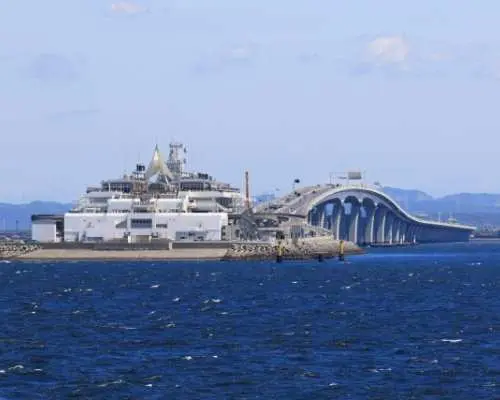

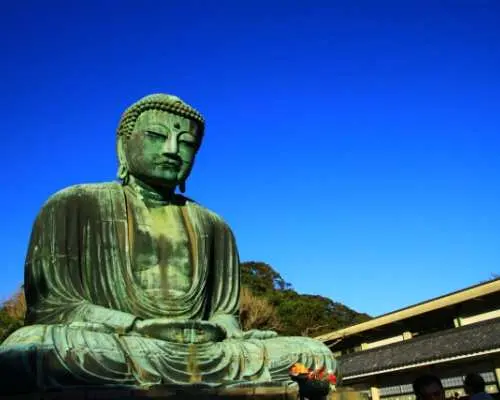

A one-day bus tour around Tokyo Bay (Aqua-Line, Tokyo Bay Cruise) and the World Heritage site of Kamakura, with a spectacular view of Mt. Fuji [departing from Shinjuku]
- This is a one-day bus tour departing from Shinjuku, driving around Tokyo Bay, and visiting the popular World Heritage site of Kamakura.
- If the weather is good, there are many spots where you can see the beautiful Mt. Fuji, such as Umihotaru on the Tokyo Bay Aqua-Line, Nokogiriyama Ropeway in Chiba Prefecture, and the Tokyo Bay Ferry that crosses Tokyo Bay.
- There will be an English-speaking guide on board, so it is also recommended for foreigners traveling to Japan.
- For lunch, enjoy seafood dishes caught in Minami Boso at a restaurant with a sea view!
Sightseeing Tours
| Tour Type | Shared tour |
| Minimum participant requirement | 8 travelers |
| Tour types | Guided tour |
| Meal arrangement | Lunch included |
| Sightseeing type | Natural sights, Japanese castles, Temples & shrines, Bus tour |
| Transport | Sightseeing cruise, Bus tour |
| Cruise type | Sightseeing boat |
Product Info
The content of this product is provided by machine translation and may not reflect the actual information, please take this into consideration before booking.
-Tour Information-
・Meeting time 8:00 / Departure time 8:10
・Meeting place: In front of the "LOVE" object at Shinjuku Island ・Course duration: Approximately 10 hours and 30 minutes ・Return: Scheduled to arrive at Shinjuku West Exit at 18:40 (scheduled between 18:30 and 19:00) *Return may be delayed depending on traffic conditions.
~ Nokogiriyama Ropeway ~ Enjoy the spectacular view of Tokyo Bay from the top of Nokogiriyama. Nokogiriyama is a low mountain with an elevation of 330 meters, but you can easily climb to the top by ropeway. On this tour, you will also take the Nokogiriyama Ropeway to the top and enjoy the spectacular view from the peak. If the weather is good, you can also see Japan's greatest mountain, Mt. Fuji, from Nokogiriyama. The view from Nokogiriyama has been selected as one of the "100 Views of Mt. Fuji in the Kanto Region" by the Ministry of Land, Infrastructure, Transport and Tourism.


~ Kotoku-in Temple (Great Buddha of Kamakura) ~ Kotoku-in Temple is affectionately known as the Great Buddha of Kamakura and is synonymous with tourism in Kamakura. The Great Buddha is 11.31m tall (13.35m including the pedestal) and weighs approximately 121t. Casting of the current gold and steel Buddha began in 1252 (Kencho 4), and it is the only Buddhist statue in Kamakura designated as a national treasure.


Hasedera Temple is an ancient temple said to have existed since before the Kamakura period. The principal image, the Eleven-Headed Kannon, is 9.18m tall and is said to be one of the largest wooden Buddhist statues in Japan. There is an observation deck on the flat ground on which the Kannon Hall stands, from which you can see the sea of Kamakura, the town of Hase, and even the Miura Peninsula.


~ Tsurugaoka Hachimangu Shrine ~ Tsurugaoka Hachimangu Shrine is also known as Kamakura Hachimangu Shrine. It was founded in the Kamakura period as the guardian deity of the Minamoto clan, and later became the guardian deity of the Kamakura samurai. As a shrine associated with Minamoto no Yoritomo, the first shogun of the Kamakura shogunate, it is a popular spot with a constant stream of worshippers. There is also a museum and cafe on the premises, where you can enjoy tea time while taking in the spectacular views.


- Komachi-dori - A street that runs parallel to Wakamiya-oji from JR Kamakura Station to Tsurugaoka Hachimangu Shrine, where you can enjoy a wide range of shopping, meals, and cafes, from traditional souvenirs and fashion goods to restaurants. On this tour, you will enjoy Kamakura after touring Tokyo Bay by bus and ferry.


Purchase Notice
[Travel conditions]
Departure point/Destination: Tokyo, Chiba, Kanagawa
Length of trip: 1 day
Transportation: Chartered bus
Bus company: Nanohana Kotsu Bus, Kano Kanko, or equivalent company
Meal conditions: Breakfast 0 times, Lunch 1 time, Dinner 0 times
Minimum number of participants: 8
Tour conductor: 0
Guides: 1
[Travel planning/implementation]
Company name: Michinori Travel Japan Co., Ltd.
Address: 13th floor, Yurakucho Denki Building, 1-7-1 Yurakucho, Chiyoda-ku, Tokyo
Registration number: Tokyo Metropolitan Government Travel Agency Registration No. 2-7182
Travel industry association: Japan Association of Travel Agents (JATA)
[Consignment sales]
KKDAY JAPAN Co., Ltd.
2nd Floor, WESTALL Yotsuya Building, 1-22-5 Yotsuya, Shinjuku-ku, Tokyo 160-0004
Japan Tourism Agency Registered Travel Agency No. 2045
Affiliated organization: Japan Association of Travel Agents (JATA)
Reminders
A minimum of 8 traveler(s) are required for the tour to depart. If the number of participants does not reach the minimum requirement, the tour will be canceled. An email regarding tour cancellation will be sent 3 day(s) before the departure date
In the event of inclement weather such as typhoons or snowstorms, a decision on whether to cancel the tour will be made 2 day(s) before departure (local time 12:00). Notifications will then be sent via email
Travelers with the following conditions or other health issues that could be worsened by excessive stimulation should not participate in this activity: High blood pressure, Heart disease, Acrophobia, Asthma, Epilepsy, Pregnant women
Please arrive at the designated location 10 minute(s) before the scheduled departure time, as the tour will depart on time
The bus departs on time. Please be on time. Please note that we cannot change your plan or refund your money if you are late.
Please note that the course and time spent at tourist spots may change due to weather, traffic congestion, and facility maintenance.
Return times may be delayed depending on traffic congestion and other road conditions.
Please note that there may be cases where you cannot see Mt. Fuji due to weather conditions. Refunds will not be given.
Cancellation Policy
- Cancellations 8 day(s) (inclusive) before the selected date are allowed. Unused orders can be canceled for free
- For cancellations made 2 to 7 days prior to selected date, a cancellation fee of 30% will apply
- For cancellations made 1 to 1 days prior to selected date, a cancellation fee of 40% will apply
- Cancellation is not allowed between 0–0 days from the selected date. Orders cannot be canceled or modified, and refunds will not be granted.
- Due to time zone differences, the confirmed cancellation date is based on the supplier’s local time. Please allow 2–5 business days to process your cancellation request, after which the cancellation fee will be charged according to the product’s cancellation policy. Once the cancellation is confirmed, you will receive your refund within 14 working days.
FAQ
Kamakura is renowned for its rich history as Japan's first samurai government capital. Its iconic attractions include the Great Buddha (Kotoku-in), a massive bronze statue, and Hasedera Temple, famous for its eleven-headed Kannon statue and beautiful gardens. Tsurugaoka Hachimangu Shrine, a significant Shinto shrine with a grand approach, also highlights Kamakura's historical and cultural importance.
Kamakura is located southwest of Tokyo, making it a popular day trip destination from the capital. Depending on the train line and transfers, a typical journey from major Tokyo stations like Shinjuku or Tokyo Station to Kamakura Station takes approximately one hour to one hour and a half by public transportation. Many bus tours also offer convenient day trips from Shinjuku, covering various destinations including Kamakura.
From Tokyo, you can reach Kamakura by train using JR lines. The Yokosuka Line offers direct access from Tokyo Station, while the Shonan-Shinjuku Line connects from Shinjuku and Shibuya. Both lines provide a convenient journey. Alternatively, some tour options, such as guided bus tours departing from Shinjuku, offer a hassle-free way to visit Kamakura along with other nearby attractions.
In Kamakura, don't miss the iconic Great Buddha at Kotoku-in Temple, known for its serene outdoor setting. Hasedera Temple offers stunning views of the coastline and houses a revered Kannon statue. Tsurugaoka Hachimangu Shrine is a prominent landmark with impressive architecture and a vibrant atmosphere. Additionally, explore Komachi-dori Street for local treats and souvenirs, adding to the cultural experience.
Within Kamakura, many of the main attractions are accessible on foot, especially around Kamakura Station. For exploring further afield or reaching coastal areas like Enoshima, the historic Enoshima Electric Railway (Enoden) is a popular and scenic option. Local buses also connect various temples and shrines. Taxis are available, but walking and the Enoden are often preferred by visitors.
Yes, IC cards such as Suica and Pasmo are widely accepted for public transportation within Kamakura, including the local buses and the Enoshima Electric Railway (Enoden). This provides a convenient cashless way to travel around the city and between its attractions, making it easier for visitors to navigate without needing to purchase individual tickets for each ride.
The Enoden (Enoshima Electric Railway) offers a charming and scenic experience in Kamakura. This historic tram line runs along the coast, connecting Kamakura Station to Fujisawa, passing through popular spots like Hase (for the Great Buddha and Hasedera Temple) and Enoshima Island. Riding the Enoden provides picturesque ocean views and a nostalgic journey through quaint towns, becoming an attraction in itself.
No, the bullet train (Shinkansen) does not directly go to Kamakura. To reach Kamakura, you would typically take a local JR train from Tokyo, such as the Yokosuka Line or Shonan-Shinjuku Line. If you were traveling from further regions by Shinkansen, you would disembark at a major station like Shinagawa or Tokyo and then transfer to a local JR line bound for Kamakura.
Get Help


