
![[KKday Discount] Historical Tour of North and South Korea: DMZ & Third Tunnel of Aggression Half-Day Tour from Seoul | South Korea](https://image.kkday.com/v2/image/get/c_fill%2Ch_800%2Cq_55%2Ct_webp%2Cw_1240/s1.kkday.com/product_22739/20240326120103_CAnZI/png)
![[KKday Discount] Historical Tour of North and South Korea: DMZ & Third Tunnel of Aggression Half-Day Tour from Seoul | South Korea](https://image.kkday.com/v2/image/get/c_fill%2Ch_400%2Cq_55%2Ct_webp%2Cw_500/s1.kkday.com/product_22739/20221123075336_6Pp8n/jpg)
![[KKday Discount] Historical Tour of North and South Korea: DMZ & Third Tunnel of Aggression Half-Day Tour from Seoul | South Korea](https://image.kkday.com/v2/image/get/c_fill%2Ch_400%2Cq_55%2Ct_webp%2Cw_500/s1.kkday.com/product_22739/20241010055104_48Aae/jpg)
![[KKday Discount] Historical Tour of North and South Korea: DMZ & Third Tunnel of Aggression Half-Day Tour from Seoul | South Korea](https://image.kkday.com/v2/image/get/c_fill%2Ch_400%2Cq_55%2Ct_webp%2Cw_500/s1.kkday.com/product_22739/20241010055106_ayBe7/jpg)
![[KKday Discount] Historical Tour of North and South Korea: DMZ & Third Tunnel of Aggression Half-Day Tour from Seoul | South Korea](https://image.kkday.com/v2/image/get/c_fill%2Ch_400%2Cq_55%2Ct_webp%2Cw_500/s1.kkday.com/product_22739/20241010055109_mSK7t/jpg)
[KKday Discount] Historical Tour of North and South Korea: DMZ & Third Tunnel of Aggression Half-Day Tour from Seoul | South Korea
- A one-day tour of the DMZ, visiting the North and South African armed zones that are difficult to reach by independent travelers.
- A personal visit to the mysterious 38th parallel north to gain a deeper understanding of the historical relationship between North and South Korea.
- Brand new bus shuttle service, professional English/Japanese/Chinese tour guides.
Package Options


Sightseeing Tours
| Transportation method | Transfer from meeting point |
| Tour types | Guided tour |
| Sightseeing type | City walking tour, Historic site tour |
| Transport | Bus tour |
Product Info
The content of this product is provided by machine translation and may not reflect the actual information, please take this into consideration before booking.
- DMZ (Demilitarized Zone)
Since the armistice agreement was signed at Panmunjom during the Korean War that broke out in 1950, Panmunjom has become one of the world's focal points. According to the armistice agreement, Panmunjom, which is only 800 meters apart in a straight line, is to be jointly defended by UN troops and North Korean troops. Due to its special nature, tourists must bring their passports and apply for entry. This place will give you a deep sense of the tense relationship between North and South Korea.
- Imjin-kaku Park
Built in 1972, Imjingak is a tourist attraction located 7 kilometers south of the Military Demarcation Line. It comprises one underground floor and three above-ground floors, including the North Korean Memorial Hall, Unification Park, and various monuments. Outside Imjingak, 12 types of military equipment used in the Korean War, such as tanks and aircraft, are displayed. The "Peace Bridge" exhibit features artifacts collected from battlefields around the world, documenting war-related content and reminding people not to forget war and the soldiers who sacrificed their lives.
- Third Tunnel
Located only 52 kilometers from Seoul, the third tunnel, like the first and second, is evidence of North Korea's intention to invade the South. In 1974, based on intelligence from Kim Boo-song, a defector, South Korea began drilling and searching in the Munsan area starting in 1975. The third tunnel was the third one discovered by South Korean intelligence, and because it was closer to the city center than the previous two, it posed a greater threat.
- Doro Observatory
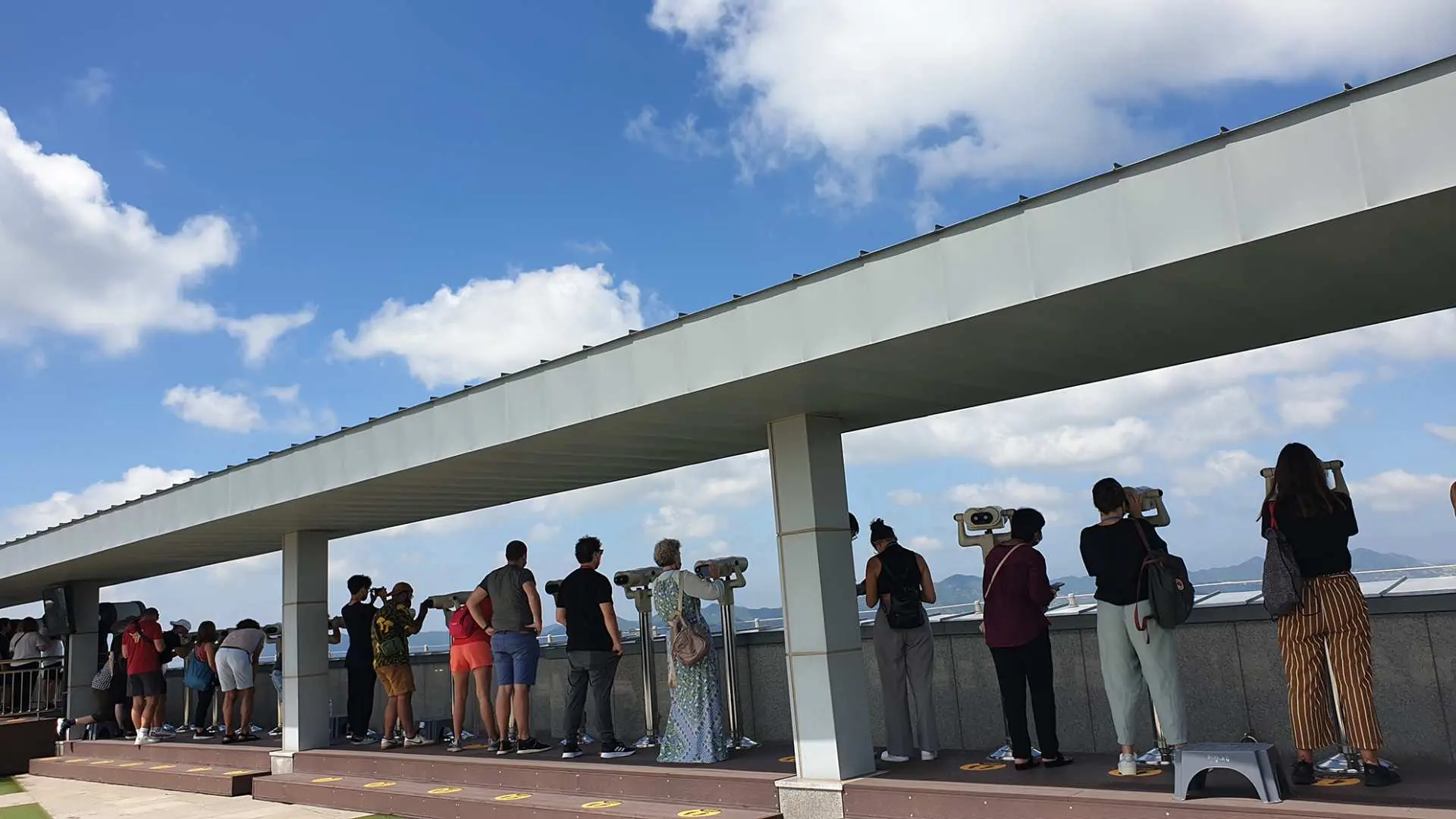
Dora Observatory is the northernmost observation deck in the DMZ (Demilitarized Zone). The sign on the observation deck, "The End of Division, the Beginning of Unification," symbolizes the belief that North and South Korea will one day achieve unification. From here, one can also use telescopes to observe the Kim Il-sung statue in Kaesong, Songak Mountain, and the daily activities of rural residents.
- Unified Village
Tongil Village is a small village located within the Demilitarized Zone (DMZ) since 1973, and it's not visible on maps. In Tongil Village, you can also purchase locally grown products from the DMZ. *The itinerary is for reference only. The day's itinerary may be slightly adjusted due to overall traffic conditions, weather, or other factors.




Purchase Notice
- Passports will be checked when entering the DMZ (Demilitarized Zone), so please be sure to bring your passport on the day of your trip.
- The itinerary may be changed on the day due to traffic or bad weather.
- If entry to the DMZ area is impossible due to inclement weather, limited capacity, or military reasons, the itinerary will be adjusted as follows, and no refund will be given. Please be aware of this.
- Alternative routes: Imjingak Park, Beat 131 Art Space (exhibition hall), Odusan Unification Observatory, Yongsan War Memorial Hall, Myeongdong Station or City Hall Station.
- Sometimes you need to transfer to the DMZ shuttle bus at Imjingak Park.
Reminders
In the event of inclement weather such as typhoons or snowstorms, a decision on whether to cancel the tour will be made 1 day(s) before departure (local time 17:50). Notifications will then be sent via email
Travelers with the following conditions or other health issues that could be worsened by excessive stimulation should not participate in this activity: Asthma, Pregnant women, Heart disease, High blood pressure
Please arrive at the designated location 10 minute(s) before the scheduled departure time, as the tour will depart on time
Passports will be checked when entering the DMZ (Demilitarized Zone), so please be sure to bring your passport on the day of your trip.
The itinerary may be changed on the day due to traffic or bad weather.
Drinking alcohol and engaging in personal activities are strictly prohibited within the military zone.
If entry to the DMZ area is impossible due to inclement weather, limited capacity, or military reasons, the itinerary will be adjusted as follows, and no refund will be given. Please be aware of this.
Alternative route: Imjingak Park, Beat 131 Art Space (exhibition hall), Odusan Unification Observatory, Yongsan War Memorial Hall, Myeongdong or City Hall (dismissal).
Sometimes you need to transfer to the DMZ shuttle bus at Imjingak Peace Park.
Infants under 24 months of age may be accompanied by a guardian on the trip, but a seat is not included.
The "DMZ Half-Day + Seoul City Tour" tour requires a minimum of 2 participants. Please register with a group of 2 or more.
Considering the potential chaos that may occur upon disbandment, which could cause significant delays, please consider this when making your reservation. We do not recommend booking afternoon sessions.
⚠️ Personal travel insurance is not included in any of our travel itineraries. Outdoor activities involve specific risks and hazards. Guests must assess their own health and capabilities. The company is not liable for any bodily injury or damage caused by accidents or unforeseen circumstances.
FAQ
DMZ stands for Demilitarized Zone. In South Korea, it refers to the heavily fortified buffer zone separating North and South Korea, established after the Korean War armistice in 1953. It serves as a neutral strip intended to prevent direct military confrontation between the two nations.
The Korean DMZ holds profound historical significance as a symbol of the unresolved conflict between North and South Korea. Its military purpose is to act as a permanent ceasefire line and a physical barrier, minimizing military incursions and maintaining stability on the peninsula. It represents a fragile peace and the ongoing division of Korea, making it a powerful educational site.
During a DMZ tour, visitors typically explore key historical and observational sites. These include the Third Tunnel of Aggression, Bridge of Freedom, Imjingak Park, and Dora Observatory. Some tours may also include the Geonaksan Suspension Bridge, which offers scenic views and a connection to battle history.
A typical half-day tour to the DMZ and its various attractions usually lasts approximately 5 to 6 hours. This duration often includes travel time from Seoul, guided visits to multiple significant sites like the Third Tunnel and Dora Observatory, and time for historical insights and reflection at each location.
Visiting the Korean DMZ and the Third Tunnel of Aggression is widely considered a deeply worthwhile experience. It offers a unique opportunity to witness a critical geopolitical boundary firsthand, gain profound insights into the Korean War, and understand the ongoing division of the peninsula. The historical context and the tangible evidence of conflict provide a memorable and educational journey.
The Third Tunnel of Aggression is one of four known infiltration tunnels built by North Korea, discovered in 1978. Visitors can walk down into the actual tunnel, which is about 1.6 kilometers long and 73 meters below ground. Inside, you can see evidence of the tunnel's construction and learn about the intense history surrounding its discovery, offering a tangible glimpse into the past military tensions.
The Geonaksan Suspension Bridge is a notable site near the DMZ, approximately 250 meters long. It is dedicated to the 1,000 British soldiers who fought bravely in the 1951 battle for Geonaksan during the Korean War. Walking across the bridge allows visitors to appreciate scenic views and reflect on the significant sacrifices made during the conflict.
Travelers can most conveniently access the DMZ and its various sites from Seoul by joining a guided tour. These tours typically include comfortable bus transportation directly from Seoul to the DMZ, covering all necessary permits and logistical arrangements. Professional guides provide valuable historical context and insights throughout the journey, making the complex visit hassle-free.
Get Help


