



Package Options


Product Info
Purchase Notice
Duration: Lasts up to 0 day
Reminders
Please refer to your voucher for final information regarding meeting points, pick-up locations, and pick-up time
Meeting point description: In front of Hagia Sophia Museum.(Sultan Ahmet Mahallesi, Ayasofya Meydanı, 34122 Fatih/İstanbul, Turkey)
Know in advance:Female guests should bring scarf to visit Hagia Sophia since it has been change to a mosque now
Fridays is not sugegsted to book this tour because of crowded Friday pray
Remember to bring:Comfortable shoes
FAQ
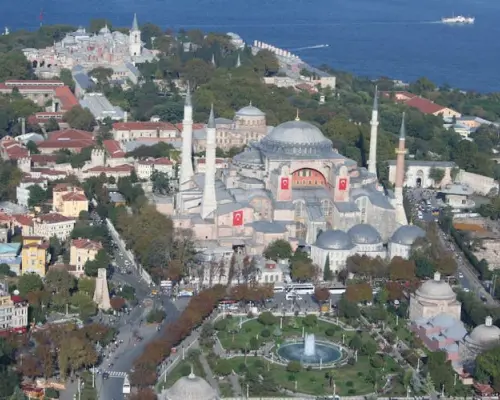
The Hagia Sophia's transformations reflect major shifts in Istanbul's history. Initially a grand Byzantine cathedral, it symbolized the center of Orthodox Christianity. Its conversion to a mosque after the Ottoman conquest of Constantinople in 1453 marked a new era for the city, becoming an imperial mosque. Its designation as a museum in 1934 by the Republic of Turkey aimed to secularize the monument and open it to all. Its recent re-conversion to a mosque in 2020 continues its complex religious and political journey.
Non-Muslim visitors are generally welcome at the Hagia Sophia. As it is an active place of worship, all visitors are required to dress modestly, covering shoulders and knees. Women must cover their heads with a scarf, which can often be borrowed or purchased at the entrance. Shoes must be removed before entering the prayer areas. Visitors should maintain respectful silence and avoid visiting during prayer times to ensure minimal disruption to worshippers.
The Hagia Sophia began its existence as an Eastern Orthodox cathedral from 537 AD until 1453. Following the Ottoman conquest, it was converted into an imperial mosque. It served as a mosque for nearly 500 years until 1934 when the secular Turkish Republic transformed it into a museum. This status lasted for 86 years until 2020, when it was re-converted back into an active mosque, which it remains today.
Istanbul's Grand Bazaar is famed for being one of the oldest and largest covered markets globally, a bustling labyrinth of thousands of shops. Its defining characteristics include its vibrant, historic atmosphere, intricate architecture with painted ceilings, and a vast array of goods. It functions as a historic trade center where artisans and merchants have operated for centuries, offering a sensory-rich experience that embodies Ottoman commercial heritage.
Visitors to the Grand Bazaar can immerse themselves in a unique cultural shopping experience. They can explore distinct sections dedicated to specific crafts, such as jewelry, carpets, ceramics, leather goods, and spices. Beyond shopping, the bazaar offers a chance to observe traditional Turkish craftsmanship, engage in the art of haggling, and enjoy local tea or coffee in historic settings, providing a glimpse into Istanbul's mercantile past and present.
To best enjoy the Grand Bazaar and navigate it more comfortably, consider visiting shortly after it opens in the morning, typically around 9:00 AM, or during the late afternoon before closing. Weekdays, particularly Tuesday through Thursday, generally experience fewer crowds compared to weekends. Avoiding peak tourist seasons can also enhance the visit, allowing for a more relaxed exploration of its many alleyways and shops.
The Grand Bazaar is impressively vast, featuring over 60 streets and more than 4,000 shops, making it one of the largest and oldest covered markets in the world. Within its sprawling layout, visitors can find an extensive range of goods. common items include exquisite Turkish carpets and kilims, intricate gold and silver jewelry, handcrafted ceramics, leather products, antique items, textiles, spices, and traditional Turkish delight and sweets.
Get Help


