



Hiroshima Peace (Heiwa) Walking Tour at World Heritage Sites
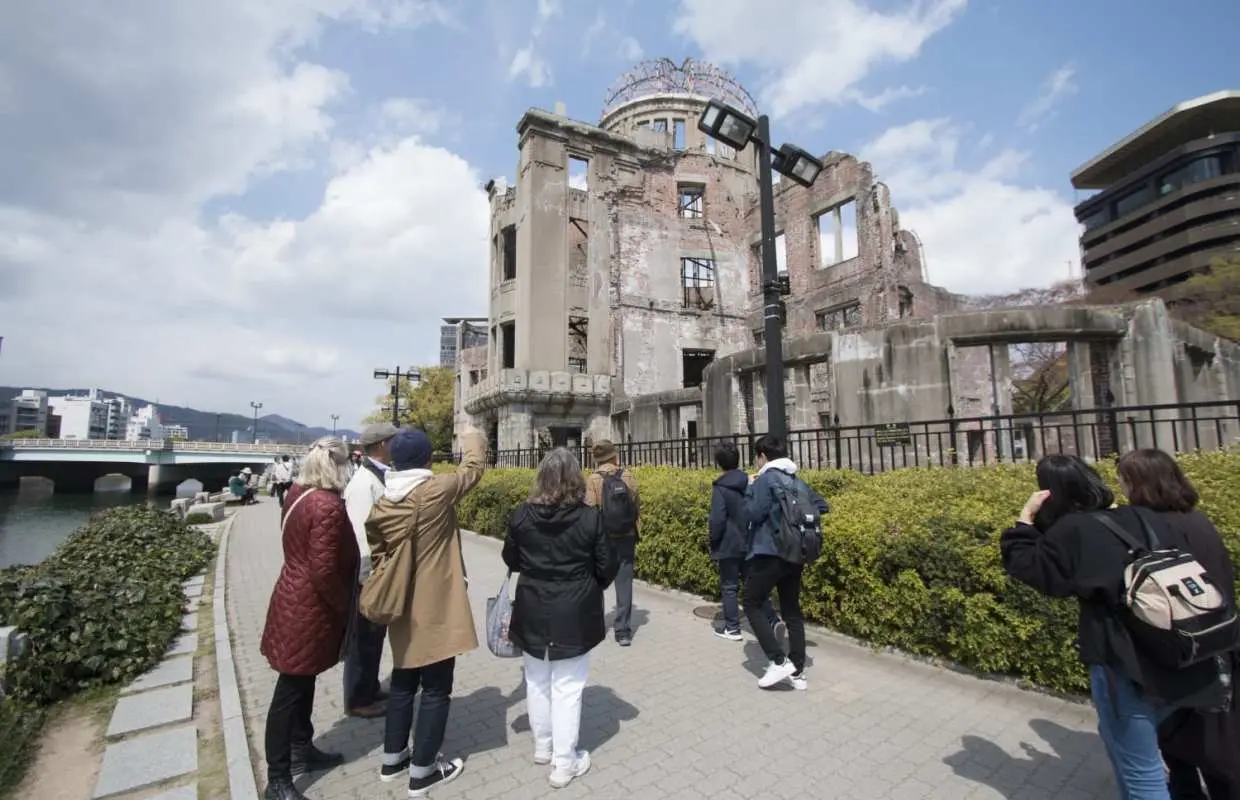
・Journey to the Peace Memorial Museum and Park, recognized as a UNESCO World Heritage site, to gain profound insights into Hiroshima's legacy.
Package Options


Product Info
Purchase Notice
Because most Japanese restaurants are not fully ready for providing vegetarian menus, limited choices of vegetarian foods in our tour is available.
We are unable to accommodate gluten-free requests for this tour.
Some exhibits contain graphic imagery that may shock young children. Please tell your guide if you have any concerns.
You do not need to pay for the guide's food and drinks
Please bring some cash for your additional orders
The itinerary for this tour includes some locations that are not accessible by a wheelchair or stroller.
Please note that we are unable to guarantee allergy-free or cater to dietary restrictions as the food is prepared in kitchens that do not belong to MagicalTrip. Additionally, there may be instances where substitutions are not possible at certain stops; however, we will make every effort to compensate at different stops throughout the tour.
Summer in Japan is very hot and humid, so we recommend that you bring water and wear a hat to prevent heat stroke.
Out of respect for our other guests and to ensure the best tour for everyone, we must start the tour on time.
Please note that if you are late for more than 15 minutes than meeting time (10 mins before the tour starting time), you will not be able to join the tour, get a refund or reschedule.
Reminders
Cancel Policy
For a full refund, cancel at least 24 hours in advance of the tour starting time.
Cancellation Policy
- Cancellations 2 day(s) (inclusive) before the selected date are allowed. Unused orders can be canceled for free
- Cancellation is not allowed between 0–1 days from the selected date. Orders cannot be canceled or modified, and refunds will not be granted.
- Due to time zone differences, the confirmed cancellation date is based on the supplier’s local time. Please allow 2–5 business days to process your cancellation request, after which the cancellation fee will be charged according to the product’s cancellation policy. Once the cancellation is confirmed, you will receive your refund within 14 working days.
FAQ
Hiroshima Peace Memorial Park commemorates the atomic bombing on August 6, 1945, and serves as a powerful symbol of peace. It honors the victims, educates visitors about the consequences of nuclear warfare, and advocates for global peace. Key structures like the A-Bomb Dome, Peace Memorial Museum, and Children's Peace Monument convey its poignant message and historical context, offering a deep understanding of this pivotal event.
The A-Bomb Dome cannot be entered directly, as it is preserved as a stark reminder of the bombing's devastation. Visitors can view it from the outside, reflecting on its historical significance and status as a UNESCO World Heritage Site. Nearby, within Hiroshima Peace Memorial Park, you can explore the Peace Memorial Museum, the Cenotaph for the A-Bomb Victims, the Flame of Peace, and various moving monuments, all offering profound insights into Hiroshima's legacy.
To thoroughly explore Hiroshima Peace Memorial Park, including the Peace Memorial Museum, A-Bomb Dome, and various monuments, a visit of approximately 2 to 3 hours is recommended. This allows sufficient time for reflection and understanding the historical narratives and exhibits. A guided walking tour, led by local experts, can enhance the experience by providing deeper insights and personal stories, enriching your understanding of the park's profound meaning.
Visiting Hiroshima Peace Memorial Park offers profound insights into human resilience and the enduring quest for global peace. It provides a solemn space for reflection on a pivotal moment in history, fostering a deeper understanding of war's impact and the importance of reconciliation. Engaging with the exhibits and memorials, especially with knowledgeable local guides, offers a uniquely authentic and educational perspective into Hiroshima's past, present, and future.
Hiroshima Peace Memorial Park is easily accessible via public transportation. From Hiroshima Station, visitors can take a streetcar (tram) on Line 2 (to Hiroden-miyajima-guchi) or Line 6 (to Eba) to the Genbaku Dome-mae (Atomic Bomb Dome) stop, which is directly adjacent to the park. Alternatively, local buses also provide routes to the park area, offering convenient access from various parts of the city.
While traditional ride-sharing services like Uber are not common in Hiroshima, taxis are readily available throughout the city. You can easily find them at major transportation hubs like Hiroshima Station, city hotels, and various public areas. Taxis offer a convenient and direct way to reach Hiroshima Peace Memorial Park, especially useful if traveling with luggage or in a group, ensuring a comfortable journey to this central landmark.
Hiroshima's tram system, called Hiroden, is efficient and user-friendly. Visitors board trams from the rear door and exit from the front, paying the fare when exiting. Local buses follow a similar payment system. For the Peace Memorial Park, take streetcar Line 2 or 6 to the Genbaku Dome-mae stop. It is advisable to have small change or use a compatible IC card (like Suica, Pasmo, or Icoca) for seamless travel on both trams and buses.
For Hiroshima's public transportation, including trams and buses, cash payment with exact change is widely accepted when exiting the vehicle. Alternatively, visitors can conveniently use various IC cards compatible with Japan's public transport system, such as Suica, Pasmo, Icoca, and others. These cards can be purchased and topped up at major train stations and convenience stores, offering a cashless and efficient way to travel around the city.
Get Help


