


Tokyo Wasanbon dried sweets making experience Welcome to the world of traditional Japanese sweets Chinese/English guide available
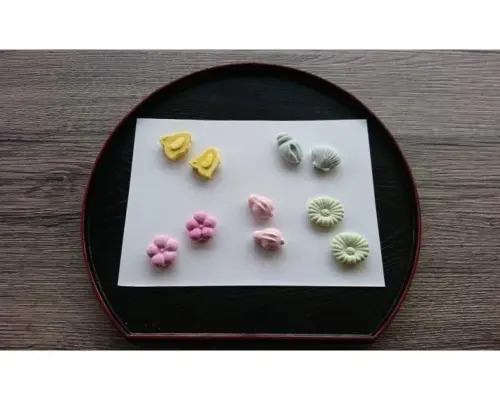
POINT2: Choose the shape of your dried sweets from cute wooden molds created by craftsmen.
POINT3: You can enjoy the deliciousness that comes from freshly made food.
Package Options
Cultural Experiences
| Location | Indoor |
| Experience type | DIY Workshop |
| Cuisine type | Wagashi (Japanese sweets) |
| Cultural experience type | Traditional culture experience |
Product Info
What You Can Expect
1 Day
- Explanation of Japanese sweets
- Making dried sweets
- photo shoot
- Time to eat and drink after the experience
- You can choose the shape of your dried sweets from cute wooden molds created by craftsmen.
- The sugar used is Wasanbon, a type of sugar unique to Japan. It is 100% Wasanbon, with no impurities, and has a mellow taste that is exceptional.


Important Info
Includes/Excludes
Reminders
Wearing a mask is optional.
The venue is on the third floor, but there is an elevator available.
Due to the nature of the program, we will not be able to hold the event to accommodate delays.
Delays without advance notice will be treated as cancellations after 10 minutes from the start.
Please refrain from bringing large luggage.
We are not responsible for any troubles between customers.
Please contact us if you would like to rent it out.
Those who do not want to try it out will not be able to enter.
Children who sit on their guardians' laps will be free of charge (only for children under 2 years old).
If you drop any bean paste during the experience, you can purchase new bean paste for an additional 100 yen. (Applicable to those who are participating in the experience using bean paste)
In principle, the seminar will be held in Japanese. If you would like the seminar to be held in another language, please contact us separately.
If the course is held in another language, an additional fee will be charged.
If you change the date and time of your reservation after the cancellation fee has been incurred, we will charge you the specified fee.
For private bookings or large groups (10 or more people), cancellation policies are different, so please contact us.
We strictly prohibit the taking, repurposing, and monopolizing of images and videos for commercial purposes. If you wish to use them for commercial purposes, please apply for coverage and use in advance.
How to Redeem Your Voucher
How to Use Your Voucher
- Please present the e-voucher on-site
Meeting Point
Location Name: Japanese Culture Experience: Iori Tokyo
Address: 〒101-0044 2-2 Kajicho, Chiyoda-ku, Tokyo 2nd Toei Building 3rd floorCancellation Policy
- Cancellations 1 day(s) (inclusive) before the selected date are allowed. Unused orders can be canceled for free
- Cancellation is not allowed between 0–0 days from the selected date. Orders cannot be canceled or modified, and refunds will not be granted.
- Due to time zone differences, the confirmed cancellation date is based on the supplier’s local time. Please allow 2–5 business days to process your cancellation request, after which the cancellation fee will be charged according to the product’s cancellation policy. Once the cancellation is confirmed, you will receive your refund within 14 working days.
FAQ
Wasanbon is traditionally made using specific sugarcane (Chikuto) from Kagawa and Tokushima prefectures. The process involves crushing the cane, extracting juice, heating and crystallizing it into a paste, pressing to remove molasses, and repeatedly kneading and drying. This meticulous multi-step process yields its characteristic fine texture and delicate flavor.
Wasanbon sugar is often considered a more refined choice due to its lower glycemic index and higher mineral content compared to highly processed white sugar. Its delicate, nuanced sweetness typically allows for less usage in recipes. It retains trace minerals from the sugarcane, offering a more natural and less intense sweetness.
Wasanbon dried sweets are distinguished by their incredibly fine, melt-in-your-mouth texture and elegant, mild sweetness with a clean finish. Unlike other sugars, Wasanbon has a unique, subtle aroma. They are frequently shaped using intricate wooden molds, reflecting seasonal beauty and traditional craftsmanship, offering both aesthetic and gustatory delight.
Wasanbon's subtle sweetness and delicate flavor make it versatile for everyday cooking. It can enhance Japanese desserts like puddings or jellies, flavor teas, coffee, or milk, and even balance savory dishes like teriyaki sauces, marinades, or glazes. Its fine texture dissolves easily, perfect for dressings or light coatings.
To preserve Wasanbon dried sweets, store them in an airtight container in a cool, dry place away from direct sunlight and humidity. This prevents them from absorbing moisture and losing their delicate texture or flavor. Avoid refrigeration, as the cold and moisture can alter their unique qualities and make them sticky.
The crafting of Wasanbon dried sweets primarily involves high-quality Wasanbon sugar as the main ingredient. Traditional wooden molds (kashigata), often intricately carved by artisans, are essential for creating various shapes. A small amount of water or starch syrup may be used for binding. Specialized presses and kneading tools are also integral during the sugar refinement stages.
The unique appeal of freshly made Wasanbon dried sweets lies in their unparalleled delicate texture and immediate, nuanced flavor profile. They melt even more smoothly on the tongue, offering a direct experience of the sugar's natural aroma and subtle sweetness that can sometimes diminish or become less vibrant in pre-packaged versions over time.
Traditional Wasanbon dried sweets are primarily made from Wasanbon sugar and water, making them generally free from common allergens like gluten, dairy, or nuts. However, specific recipes or experience centers might introduce other ingredients for color or flavor. For severe allergies, it is always advisable to confirm the exact ingredients with the provider beforehand.
Get Help


