



Barcelona Park Güell Guided Tour with Asian Language-Speaking Guide | Spain
Take the Park Güell Tour to discover Gaudí’s most captured work with a multilingual tour guide that will help you discover the hidden corners and picture-worthy spots of Barcelona's fairy-tale park.
- Secure your spot to visit one of Gaudí’s most visited works, the colorful Park Güell
- Discover all the hidden corners in this fairy-tale park with an expert guide
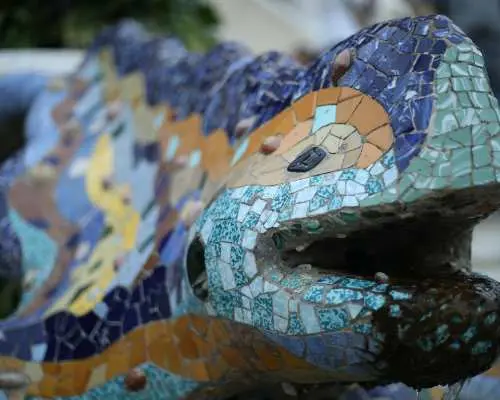
- Capture memorable moments with the icons of the park, like the famous giant salamander
- Monolingual tour with Chinese, Korean, Japanese, or English-speaking guide
Package Options


Product Info
— What You Can Expect —
Discover Park Güell, one of Gaudí’s most renowned works and the second most visited site in Spain. Over 3 million people a year visit this fairy-tale park with unbeatable views of Barcelona, thanks to its privileged position overlooking the city and the Mediterranean sea.
On this tour, you will get a fast-track ticket to access Park Güell with an expert English, Chinese, Japanese, or Korean-speaking guide. A guided tour is the best way to make the most out of your visit to this unique setting full of secrets, colorful corners, and hidden spots. The tour gives you access to all the park premises, including the higher parts but, most importantly, to the monumental area declared a UNESCO World Heritage Site. This protected zone includes some of Park Güell’s most iconic features like the giant lizard, the park keeper’s house, and the hypostyle room.
Book now and don’t miss out on Gaudí’s most colorful masterpiece where nature, mosaic, and wild imagination come together to create one of the most memorable experiences you’ll take home from your trip to Barcelona!
— Important Info —
- Departure point: Carrer Larrard, 57, 08024 Barcelona
*Your guide will be holding a sign with The Touring Pandas logo - End point: Park Güell
Check out the stunning views of Barcelona from Park Güell


Explore the place by taking the stairs leading to the Square of Nature


Discover the famous salamander at Park Güell


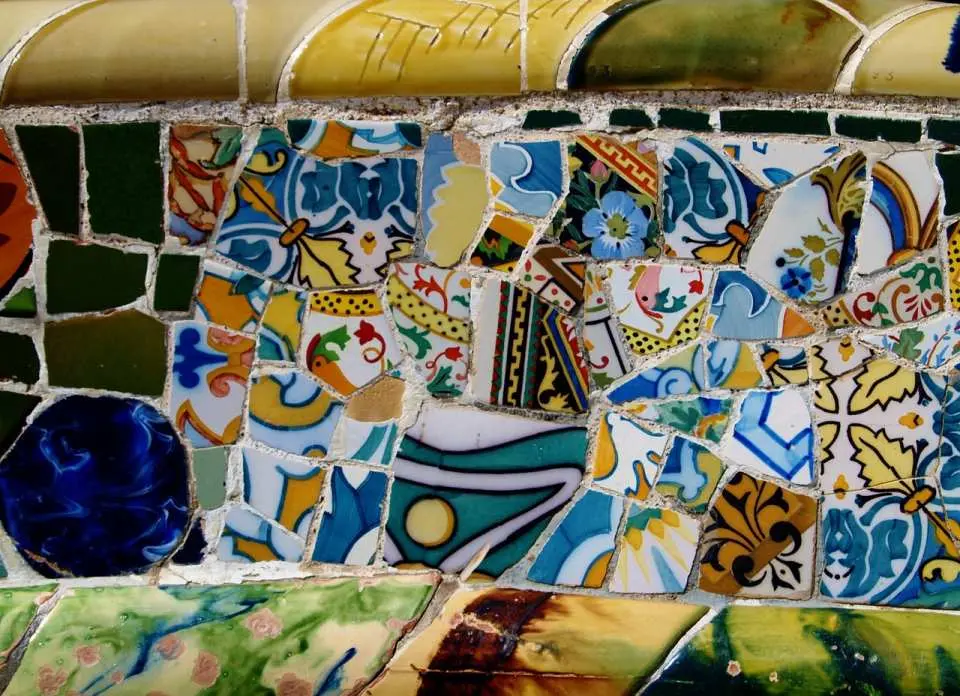
Adore the amazing detail of the Park Güell mosaic

Purchase Notice
- Please note that Park Güell has several entrances.
- All the tours are monolingual and available in Chinese, Japanese, Korean, or English
- The itinerary is for reference only. In the case of force majeure including but not limited to attraction closure due to holidays or unforeseen circumstances or adverse traffic or weather conditions, etc, the local tour company has the right to modify alternative arrangements or cancel the itinerary. No prior notice and no compensation would be provided
- Refunds or compensation will not be granted to travelers who leave the tour halfway through or miss the entire tour due to personal reasons (e.g. lack of travel documents, late arrival, sickness, accidents)
Reminders
In the event of inclement weather such as typhoons or snowstorms, a decision on whether to cancel the tour will be made 1 day(s) before departure (local time 10:00). Notifications will then be sent via email
Please arrive at the designated location 10 minute(s) before the scheduled departure time, as the tour will depart on time
The tour involves walking inside Park Güell. Make sure to wear comfortable shoes
Park Güell has several access gates.
Reaching Park Güell from the city center takes 45 minutes. All participants must access Park Güell as a group. Latecomers won't be able to access the Park without the guide, please arrive on time
Cancellation Policy
- Cancellations 3 day(s) (inclusive) before the selected date are allowed. Unused orders can be canceled for free
- Cancellation is not allowed between 0–2 days from the selected date. Orders cannot be canceled or modified, and refunds will not be granted.
- Due to time zone differences, the confirmed cancellation date is based on the supplier’s local time. Please allow 2–5 business days to process your cancellation request, after which the cancellation fee will be charged according to the product’s cancellation policy. Once the cancellation is confirmed, you will receive your refund within 14 working days.
FAQ
A guided tour of Park Güell enhances the visit by providing expert insights into Gaudí's unique architectural style and the park's history. Guides can reveal hidden corners and picture-worthy spots often missed by individual visitors, explaining the symbolism behind features like the famous giant salamander. It allows for a deeper appreciation of the colorful mosaics, intricate designs, and the overall fairy-tale ambiance, ensuring a comprehensive understanding of this UNESCO World Heritage site.
A typical guided tour of Park Güell usually lasts approximately 1.5 to 2 hours. This duration allows enough time to explore the main highlights of the Monumental Zone, including the iconic main terrace, the dragon staircase, the hypostyle room, and other significant architectural elements, while benefiting from an expert guide's explanations.
Yes, tickets are required to enter the Monumental Zone of Park Güell, which includes Gaudí's most iconic works like the Dragon Stairway and the Hypostyle Room. This area has controlled access to preserve its delicate structures. There are also free public areas outside this zone, but they do not feature the main architectural masterpieces. It is advisable to secure tickets in advance, especially during peak season, to guarantee entry.
Park Güell is divided into a free public area and the Monumental Zone. The free areas are open to everyone and include charming gardens, paths, and some architectural elements, offering pleasant views. The Monumental Zone, however, requires a ticket for entry. It contains Gaudí's most famous works, such as the colorful main square with its serpentine bench, the iconic dragon staircase, the Hypostyle Room, and the porter's lodge, providing a concentrated experience of his unique artistry.
The most convenient public transport options for Park Güell include the metro or bus. For the metro, take the L3 line to Lesseps or Vallcarca station, followed by an uphill walk (with escalators near Vallcarca station). Alternatively, several bus lines, such as H6, D40, and V17, have stops closer to the park entrances, reducing the uphill walk. Planning your route beforehand is recommended.
To reach Park Güell from Barcelona El Prat Airport (BCN), you can first take the Aerobus or the R2 Nord train to the city center. From Plaça Catalunya or Passeig de Gràcia (if coming by train), transfer to the metro L3 line towards Canyelles or Trinitat Nova. Disembark at Lesseps or Vallcarca station, then follow the signs for a short uphill walk to Park Güell. The total journey takes approximately 60-90 minutes.
From the Barcelona Cruise Port, you can take the PortBus (Blue Bus) service to the Drassanes metro station. From Drassanes, take the L3 metro line towards Canyelles or Trinitat Nova and get off at Lesseps or Vallcarca station. From there, Park Güell is an uphill walk, with escalators available near Vallcarca. This combined method is efficient for reaching the park from the port.
A Park Güell guided tour explores iconic architectural highlights such as the vibrant mosaics of the serpentine bench, the famous Dragon Stairway featuring the giant salamander, and the Doric columns of the Hypostyle Room. Guides also help discover hidden corners and less obvious details, like the intricate tiling, unique viaducts, and the symbolic natural elements integrated into Gaudí's design, providing context to his visionary work and the park's history.
Get Help


