

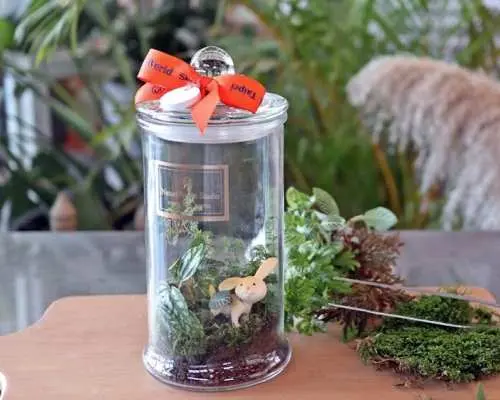

Pingtung|Plant ecological bottle DIY/sustainable recycling
- No basic knowledge required, suitable for novices
- Diverse self-service experience
- Price is for 1 person
- Only 1 person can form a group, no accompanying persons are allowed
- Understand the mystery of the earth’s cycle and the law of the ecological bottle
- Simple and easy to take care of, simple to become a green finger
- Learn about the healing power of plants
Package Options
Cultural Experiences
| Location | Indoor |
| Activity level | Beginner |
| Experience type | Ikebana |
| Minimum participant requirement | 1 traveler |
| Flower art type | Terrarium making |
Product Info
Important Info
Includes/Excludes
- Dining expenses
- Insurance
Reminders
Notes on event registration. In order to protect the quality of the course and your own rights, please be sure to read it carefully. After placing an order, you will be deemed to have agreed to the regulations of the experience provider.
Since live plants cannot leave the country, foreign tourists are not recommended to sign up for plant-type experience activities.
Weather effects: In the event of unforeseen natural disasters, such as typhoons and earthquakes, the organizer reserves the right to reschedule and change experience content.
For the course of the day, since the handmade teacher materials and venue location have been prepared, no refunds or extensions will be accepted on the day of the event. Those who do not show up or are late for more than half an hour will be deemed to have given up the right to experience the event.
The organizer will take side photos of the experience activities based on needs and upload them to the community after the event. In the future, the organizer may use photos and images containing your portrait for event records or other recruitment channel promotions. If you do not want to be photographed, you can inform the staff at the event site and we will take note and make special arrangements.
How to Redeem Your Voucher
How to Use Your Voucher
- Please present the e-voucher on-site
Meeting Point
Location Name: Original ecological land
Address: No. 18-15, Gongping Road, Yanshu Village, Gaoshu Township, Pingtung CountyCancellation Policy
- Cancellations 8 day(s) (inclusive) before the selected date are allowed. Unused orders can be canceled for free
- For cancellations made 4 to 7 days prior to selected date, a cancellation fee of 30% will apply
- For cancellations made 1 to 3 days prior to selected date, a cancellation fee of 50% will apply
- Cancellation is not allowed between 0–0 days from the selected date. Orders cannot be canceled or modified, and refunds will not be granted.
- Due to time zone differences, the confirmed cancellation date is based on the supplier’s local time. Please allow 2–5 business days to process your cancellation request, after which the cancellation fee will be charged according to the product’s cancellation policy. Once the cancellation is confirmed, you will receive your refund within 14 working days.
FAQ
The Pingtung plant ecological bottle DIY experience guides participants through a hands-on process. Typically, you'll start by selecting suitable miniature plants, carefully layering the substrate (such as pebbles for drainage, activated charcoal, and specialized soil), and then introducing the chosen plants. The final step involves adding decorative elements and ensuring the bottle is properly sealed to establish a stable micro-environment. This workshop is designed for novices, ensuring everyone can successfully create their own green world.
A Pingtung plant ecological bottle creates a miniature, self-sustaining ecosystem by replicating Earth's natural cycles within a sealed environment. Plants perform photosynthesis, producing oxygen and moisture. This moisture condenses on the container walls and returns to the soil, creating a continuous water cycle. Decaying plant matter provides nutrients for the living plants, mimicking a closed-loop system that requires minimal external intervention once established.
For the Pingtung plant ecological bottle DIY experience, various transparent containers are suitable, allowing light to penetrate for plant growth. Common choices include glass jars, decorative bottles with wide openings, or even repurposed clear containers. The key is to select a vessel that can be adequately sealed to maintain humidity and a stable internal environment, facilitating the self-sustaining ecosystem. The workshop explores different options to inspire creative choices.
Yes, the Pingtung plant ecological bottle DIY workshop is specifically designed to be highly suitable for beginners. No prior basic knowledge or gardening experience is required. The course provides clear, step-by-step guidance, allowing participants to enjoy a diverse self-service experience while learning about plant care and ecological principles. It's a perfect opportunity for anyone to become a 'green thumb' effortlessly.
The Pingtung sustainable recycling workshop introduces participants to core concepts of environmental sustainability and practical recycling methods. It covers how to identify recyclable materials, understand the journey of waste, and implement simple yet impactful sustainable practices in daily life. The workshop aims to enhance interaction and identification with the environment, fostering a deeper understanding of the earth's cycle beyond just recycling.
The Pingtung sustainable recycling workshop emphasizes key 'R' principles to guide sustainable living. These commonly include 'Reduce' (minimizing consumption), 'Reuse' (finding new uses for items), and 'Recycle' (processing waste into new materials). Other related principles like 'Refuse' (declining unnecessary items), 'Repurpose' (adapting items for different uses), and 'Repair' (fixing broken items) may also be discussed to provide a comprehensive understanding of sustainability.
Caring for a Pingtung plant ecological bottle is remarkably simple once its ecosystem is established. It generally requires very little maintenance. Place it in a spot with indirect sunlight, avoiding direct heat or extreme cold. The sealed environment maintains its own humidity, eliminating the need for frequent watering. Occasional observation is sufficient to ensure the plants are thriving, making it an easy-to-care-for green addition to any space.
In the Pingtung plant ecological bottle workshop, participants typically use small, slow-growing plants that thrive in humid environments, such as various mosses, small ferns, or resilient miniature foliage plants. Essential materials include a drainage layer of pebbles or gravel, activated charcoal for air purification, and a specialized substrate (soil mix) to support plant growth. These components are carefully selected to ensure the creation of a balanced and healthy micro-ecosystem.
Get Help


