



4D3N Mulu Pinnacles & Show Caves Tour with Airport Transfer and Accommodation | Malaysia
- Venture through the Borneo Rainforest and visit the most stunning caves
- Sail along the Melinau River on a longboat
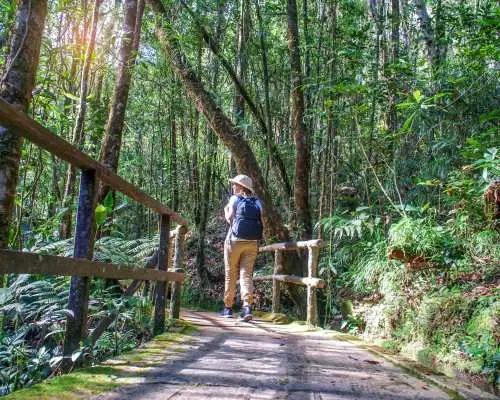
- Trekking through the Borneo Rainforest
- Climb to the summit and marvel at the Mulu Pinnacles
- Book with KKday and enjoy a convenient airport pick-up/drop-off service
Package Options


Sightseeing Tours
| Tour Type | Shared tour |
| Tour types | Guided tour |
| Meal arrangement | Breakfast included, Lunch included, With dinner |
| Accommodation type | Resort, Cabin |
| Additional service & facility | Transfer included |
| Sightseeing type | Natural sights, Forest bathing, Eco-tourism, Nordic walking |
| Transport | Sightseeing cruise, Walking |
Product Info
Purchase Notice
- Schedules are estimated and for reference purposes only. Actual times will be provided prior to your departure
- This is a shared tour; you will be joining other guests
- Guests must be aged 16 years and above to join this tour
- Outskirt Hotels Pick-Up & Drop Off Surcharges are not applicable
- Guests are required to take a morning flight to Mulu on Day One of this tour. Direct flights are available from Kuching, Miri, and Kota Kinabalu
- Mulu Airport is very small with a limited supply of items offered at the Airport Canteen. Guests are advised to purchase their food and drinks before arriving at Mulu
- Kindly pack your items separately. Please prepare one bag for Days 1–2 as you stay at Mulu Park HQ Longhouse or Benarat Lodge, and another bag for Days 2–3 for outdoor activities
- Drinking water is refillable at Camp 5
Day 1:
- Guests are recommended to wear light clothing (T-shirt, bermudas, or shorts), cap/hat, sandals/shoes that can get wet), leech socks (if it is rainy season), and trekking/sports shoes
- Guests are recommended to bring their own drinking water (2–3L is recommended), head torch/torch light, waterproof backpack, valuables (such as passport, money, and phone), swimming suit, and sunblock
Day 2
- Guests are recommended to wear a T-shirt, long pants/tights, cap/hat, trekking/sports shoes
- Guests are recommended to bring extra socks, water bottle, raincoat, waterproof backpack, head torch/torch light, towel, sleepwear, toiletries, sunblock, sleeping sag or light blanket, insect repellent, first aid kit, energy bars and snacks (such as chocolate, energy gels, oatmeal bars, sweets), drinking water (1.5L is recommended), windbreaker, and valuables (passport, money, and phone)
Day 3
- Guests are recommended to wear light clothing (T-shirt, bermudas, or shorts), cap/hat, sandals/shoes that can get wet, leech socks (if it is rainy season), trekking/sports shoes
- Guests are recommended to bring their own drinking water (2–3L is recommended), gloves, waterproof backpack, head torch/torch light, valuables (such as passport, money, and phone), packed lunch, energy bars and snacks (such as chocolate, energy gels, oatmeal bars, sweets), and first aid kit
Day 4
- Guest are recommended to book flight depart after noon time
Reminders
Travelers with the following conditions or other health issues that could be worsened by excessive stimulation should not participate in this activity: High blood pressure, Heart disease, Acrophobia, Asthma, Epilepsy, Pregnant women
All clients who enter Mulu Park must bring 1) their Passport/ID Cards and 2) a photocopy of their Passport/ID Cards to present it to the park management office upon check-in & registration
Cancellation Policy
- For cancellations made at least 30 day(s) prior to selected date, a cancellation fee of 40% will apply
- For cancellations made 15 to 29 days prior to selected date, a cancellation fee of 75% will apply
- For cancellations made 8 to 14 days prior to selected date, a cancellation fee of 85% will apply
- For cancellations made 5 to 7 days prior to selected date, a cancellation fee of 95% will apply
- Cancellation is not allowed between 0–4 days from the selected date. Orders cannot be canceled or modified, and refunds will not be granted.
- Due to time zone differences, the confirmed cancellation date is based on the supplier’s local time. Please allow 2–5 business days to process your cancellation request, after which the cancellation fee will be charged according to the product’s cancellation policy. Once the cancellation is confirmed, you will receive your refund within 14 working days.
FAQ
The Mulu Pinnacles are razor-sharp limestone karst formations, towering up to 50 meters high, situated on the slopes of Gunung Api within Gunung Mulu National Park, Malaysia. These unique geological structures resemble a forest of stone needles and are a spectacular natural wonder, formed over millions of years by erosion and weathering processes.
Their striking resemblance to a 'stone forest' with jagged, pointed formations, some reaching impressive heights, makes them a unique geological phenomenon. The challenging multi-day trek required to witness them also adds to their appeal, offering a profound sense of accomplishment amidst a pristine Borneo rainforest environment. It's a natural spectacle rarely seen elsewhere in the world.
Reaching the Mulu Pinnacles viewpoint involves a challenging multi-day trek. Visitors typically start from Gunung Mulu National Park headquarters, take a longboat ride along the Melinau River to Kuala Litut, then trek to Camp 5. From Camp 5, the strenuous climb up Gunung Api via a steep, roped trail leads to the Pinnacles viewpoint, requiring good physical fitness.
Gunung Mulu National Park is renowned for its exceptional biodiversity and spectacular cave systems. Beyond the Mulu Pinnacles, it boasts some of the largest and most extensive caves in the world, including Deer Cave, Lang Cave, Cave of the Winds, and Clearwater Cave. It is also a UNESCO World Heritage Site recognized for its dramatic karst formations and tropical rainforest ecosystems.
The Clearwater Cave system in Gunung Mulu National Park is one of the longest cave systems in Southeast Asia, with over 200 kilometers of explored passages. It is particularly known for its extensive underground river, which is one of the longest in the world, flowing through vast chambers and galleries before emerging into a picturesque jungle setting.
Clearwater Cave is characterized by its stunning underground river and intricate network of passages. Key features include impressive stalactites and stalagmites, flowstones, and helictites, all formed by mineral deposits over millennia. The cave's entrance is framed by lush vegetation, and unique plant life, like ancient ferns, can be seen clinging to its walls.
The Mulu Pinnacles trek is considered very challenging and typically takes 3-4 days to complete. The final ascent to the viewpoint from Camp 5 involves a steep 2.4 km climb with ropes and ladders, which can take 2-3 hours one way. Trekkers need a good fitness level, strong knees, and a head for heights due to the arduous terrain and vertical climbs.
Besides Clearwater Cave, visitors can explore Deer Cave, famous for its massive chamber and spectacular bat exodus at dusk. Lang Cave is known for its delicate stalactites and stalagmites. Cave of the Winds features impressive King's Room formations and cool breezes. Each cave offers a unique geological and ecological experience within the park.
Get Help


